Hello everyone. Welcome to another presentation on IN THE WHITE. I hope you all are in good health.
As in the past few days most of us must have seen, read or heard about attempted Russian invasion of Ukraine.
Today, I will be highlighting why I support Russia in its effort to invade Ukraine.
Russian and Ukrainian flag pair on a desk
Now at this point, many would think I am not concerned about the numerous Ukrainian live that will be lost or loss of Ukrainian independence.
Frankly speaking, it is always the case that if a war breaks out, the loss of lives especially innocent lives will be lost.
Anyways, coming back to the topic, I back Russian invasion for a number of reasons.
Firstly, we must understand the historical background of the two countries. It is important to keep in mind that Ukraine was once part of the Union of Soviet Socialist Republic (USSR) and when it collapsed in 1991, countries like Ukraine gained independence. So, this separation still seems to be fresh in the minds of the Russian President Vladimir Putin.
I see this as a natural state of nature of the Russian leader. Its historical attachment looks to be a dear to Russia.
List of NATO members
Another crucial reason for the Russian invasion of Ukraine is Putin’s insecurity of Ukraine joining the North Atlantic Treaty Organization (NATO). If this happens, NATO countries would be extremely close to Russia. This is why the Russians do not want Ukraine to be a member of NATO, despite it being an independent state, which gives Ukraine full right to join international institutions. It is this insecurity that has kept Russia anxous.
Just to give a mini overview of why NATO was formed? It was established in 1949 by the United States, Canada and other western European states to provide collective security against the USSR.
It is no doubt that this little piece of information is at the back of Putin’s mind.
Similarly, Russia’s distrust on the United States could said to be another factor in the Ukraine issue. Given that the United States has a bigger Say when it comes to NATO’s decision making. The difference in ideologies could well escalate the lack of trust, knowing one is a communist and the other a democrat.
Having this disbelief on the U.S is likely for a country such as Russia, given the incident of 2003 in Iraq, where Saddam Hussein, the state’s President was accused of keeping weapons of mass destruction, but in truth he did not have any.
Before ending this write-up, I wish say that I am indeed moved by the brave leadership of the Ukrainian President Volodymyr Zelenskyy. His refusal to flee the country indicates his willingness to defend his nation together with the Ukrainian people.
Well, will Ukraine be successful in defending its land or the Russians will prevail, that only time will tell, but the question that comes to mind is, if Russia had not invaded and Ukraine had formally Joined NATO, how could one guarantee Russia’s sovereignty would not come under threat?
That follows another question of those countries today condemning Russia for invading Ukraine, would they have supported Russia if they were in trouble because of U.S and it’s NATO Allies?
While the battle between two states continues, the least we can do is hope and pray for things to normalize and the war comes to a halt with minimum fatalities and damage.
Hello everyone! Welcome back to another presentation on IN THE WHITE. I hope you all are taking good care of yourselves and loved ones, as we continue to battle the COVID-19 Pandemic.
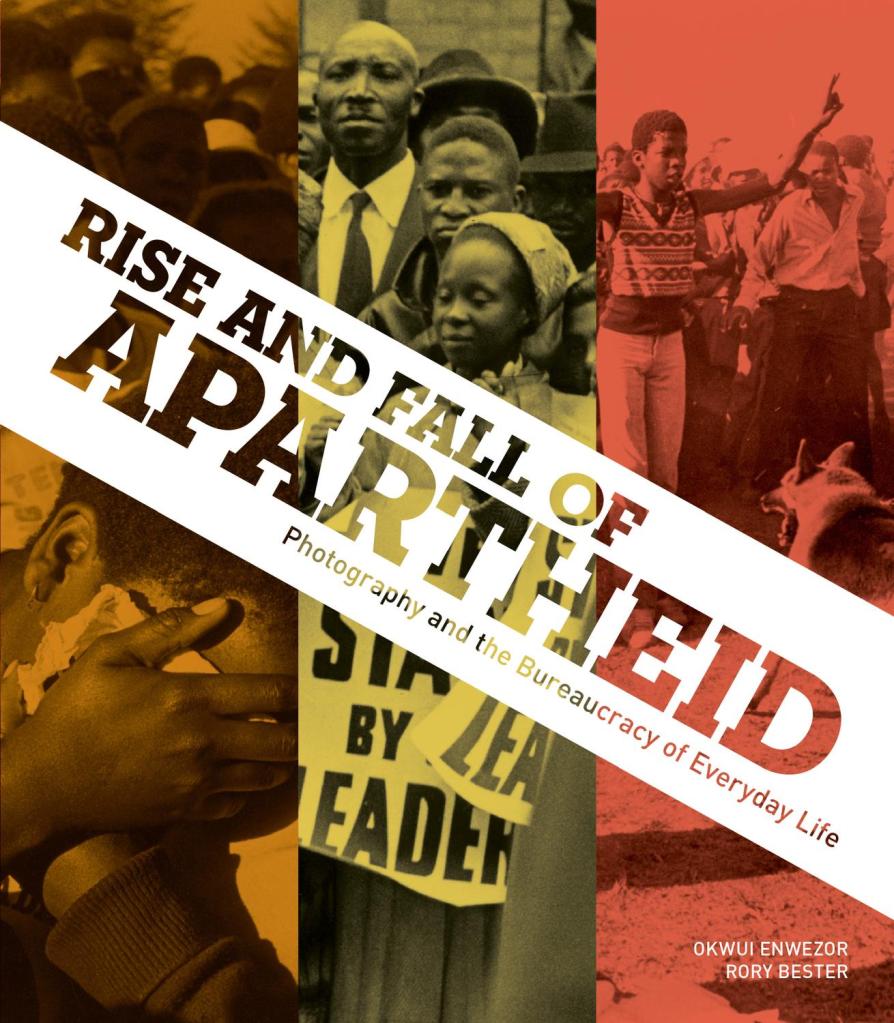
In today’s article, I will be talking on the Apartheid in South Africa. I had mentioned this term in an earlier blog post titled “Say No to Racism”, where I used apartheid as an example of racism. In this write-up, I will be discussing on apartheid in more detail.
The apartheid period in South Africa began in 1948, when the National Party came into power.
Soon after taking charge, the government started to enforce existing policies of racial segregation.
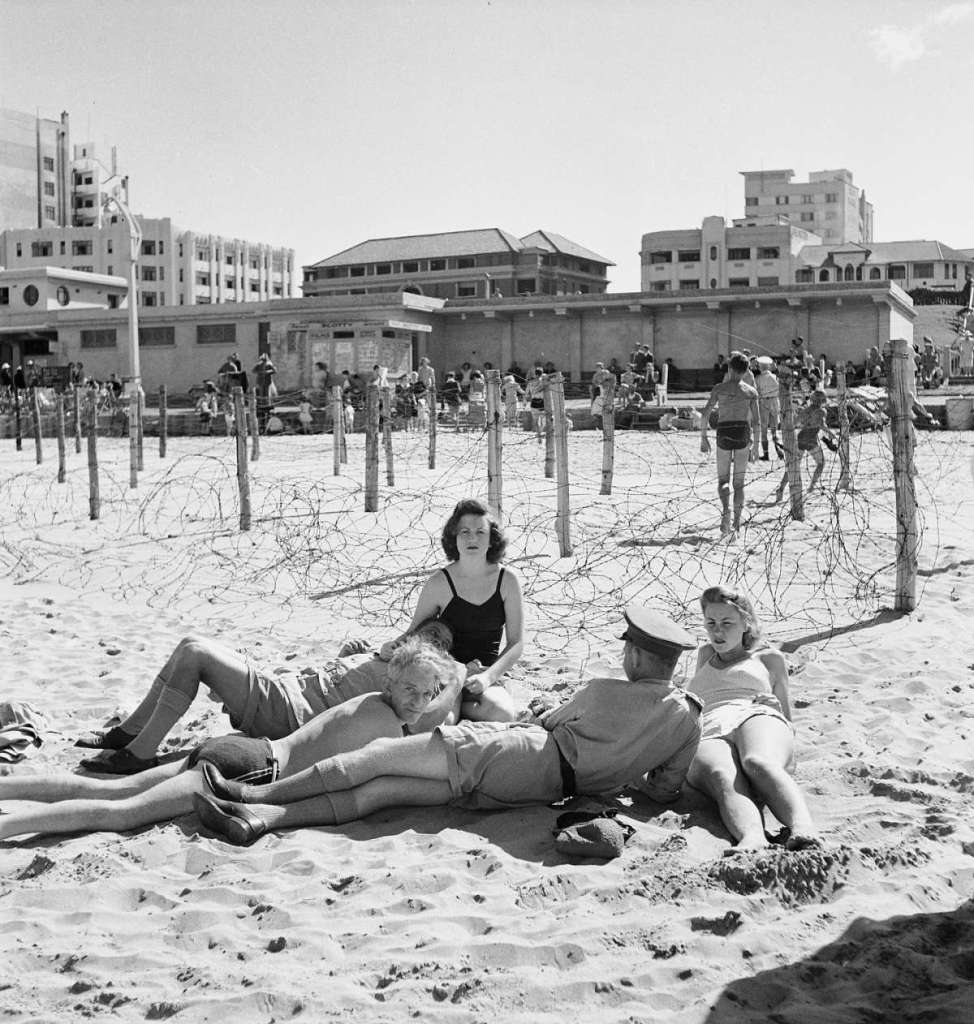
Under the new law, non-whites, which consisted majority of the indigenous population were forced to live in separate areas from the whites, and used different public facilities, such as schools hospitals and shops.
Even purchase of land for non-whites were criminalized. It is said to learn that the natives of South Africa (Afrikans).
Between 1961 and 1994, around 3.5 million Africans were forced to relocate, while their lands were sold to white farmers at a cheaper price.
Apart from the deprivation of land, education and other services, freedom of movement was restricted as well.
The non-whites carried a passbook to enter different areas. If I deeply think about this, then I would describe it as keeping the blacks as hostages in their own country.
The End of Apartheid
South Africa’s last white President- Frederik Willem de Klerk
It would not be wrong to say that the fight against apartheid was always peace. The battle to end apartheid also had violence that emerged from widespread protests.
It all started in 1976, when students outside Johannesburg voiced against the use of Afrikaana language requirement for black African students.
With things getting out of control, police had to use tear gas and bullets to get the situation under control.
Protest pressure, government crackdown and economic recession drew great international attention.
The United Nations then publically declared apartheid illegal and restricted the sale of arms to South Africa.
International pressure caused the governing leader of the National Party, Pieter Botha to eradicate pass laws and remove the ban on interracial sex and marriage, but was not enough to install confidence in Botha’s government, forcing him to step down.
Frederik Willem de Klerk’s government abrogated the Population Registration Act, alongside other laws that formed the baseline for apartheid.
He was also the man who freed Nelson Mandela from prison and contributed to the formation of a new constitution that abolished apartheid, and set the platform for a new South Africa, which was free from discrimination and one where everyone had equal rights.
It is fascinating to learn the history of this “Rainbow Nation” and the way it has grown out of the apartheid era, even though the country has faced numerous political and social instability following independence in 1961, we can only hope that things change for the better.
Before I bring this piece of writing to a close, there are a few questions for us to dwell on.
Firstly, given that apartheid is no longer legal, have we really grown out it? Secondly, has governments of states and the international community done enough to combat discrimination around the world. And thirdly, who takes responsibility for acts of discrimination, if international institutions become perpetrators of it themselves.
With those thoughts and questions, I hope you enjoyed this short presentation and will be looking forward for more as time progresses.
Hello everyone! Welcome to another presentation on IN THE WHITE. I hope you all are well as we continue to battle this global Pandemic.
In today’s session, I will be discussing on the recently concluded HSBC Malaga 7’s, focusing on the Men’s side of the draw.
Souh Africa win 2022 Nalaga 7’s
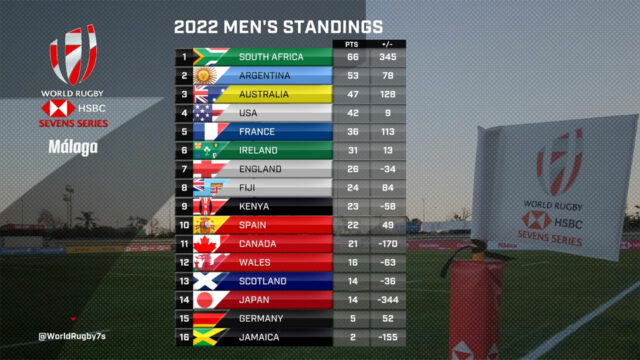
The third World Sevens Series tournament that headed to Spain for the first time in the competition’s history has been won by South Africa, following a late try from Selvyn Davids to snatch a 24-17 victory over Argentina.
It was a thrilling final that saw the lead exchange on couple of occasions. It was Argentina who struck first through Rodrigo Isgro, after which JC Pretorius and Selvyn Davids scored a try each to take the Blitzboks into the lead.
Argentina’s Joaquin de la Vega then scored two quick tries to put his side back in front. However, Justin Gedulud’s try locked both teams at 17 all, before Davids crossed over the line for his second and the match-winning try, which was also converted by Branco du Preez.
Performance & Analysis
Argentina win silver medal in Malaga
Looking at the overall performance of the teams that participated in the tournament, Argentina were one of the sides that really put a show over the three days, and I must they deserved to be in the final. Despite losing to the United States (24-17) in the last pool match, the Pumas beat Jamaica 31-7 and hosts Spain 40-12, to advance into the cup quarter-finals where they hammered Ireland 29-5 and did extremely well to beat England 26-17 in the semi-final.
Teams such as Ireland Germany were also quite impressive, especially Germany’s 12 all result against Australia in the group stages were emphatic.
Ireland on the other hand, were marvelous in the pool stages with wins over Japan (33-14), Germany (24-7) and Australia (10-5), before falling in the knockout stage.
As for the champions, South Africa in top form from day one with victories against Scotland (27-7) and England (43-0), while the match with Fiji was recorded (0-0) for both sides and three points awarded to the Bitzboks after Fiji could not make it to the tournament due to a few players alongside some management staff testing positive for COVID-19.
Missing Teams
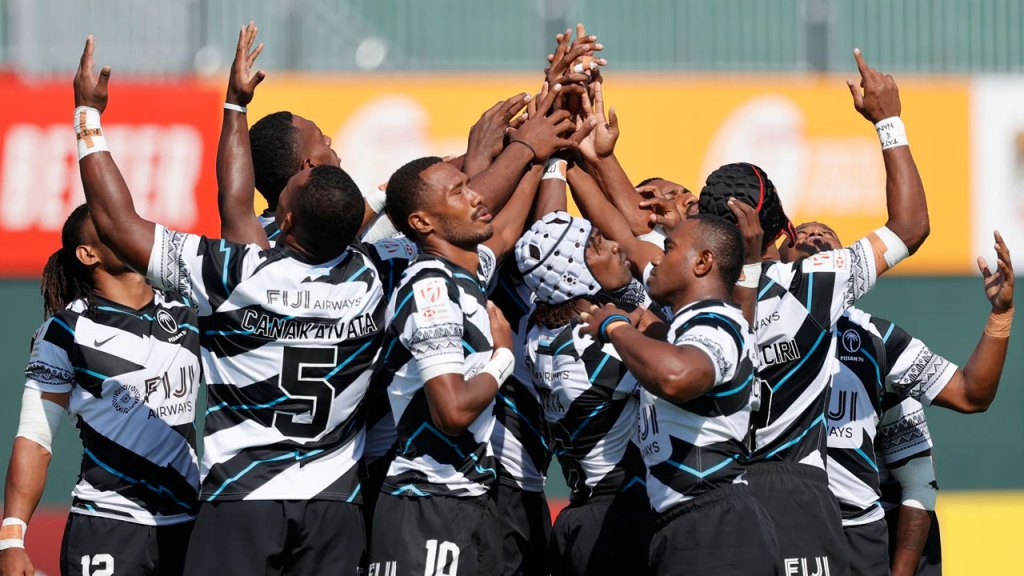
Fiji 7’s team- one of the missing teams at Malaga 7’s 2022
It is unfortunate that teams such as Fiji, New Zealand and Samoa who were to take part at the event did not participate due to travel restrictions amid the global Pandemic.
This was done as no replacement could be arranged, since the news of the COVID positive test result came in quite late, giving the organizers not enough time to find a substitute team.
In comparison to New Zealand, who were replaced by Germany in Malaga and will be again swapped by Belgium at the Seville 7’s this week. Likewise, Jamaica were in place of Samoa last week and will be part of the competition this week, together with Germany.
Coming up Next
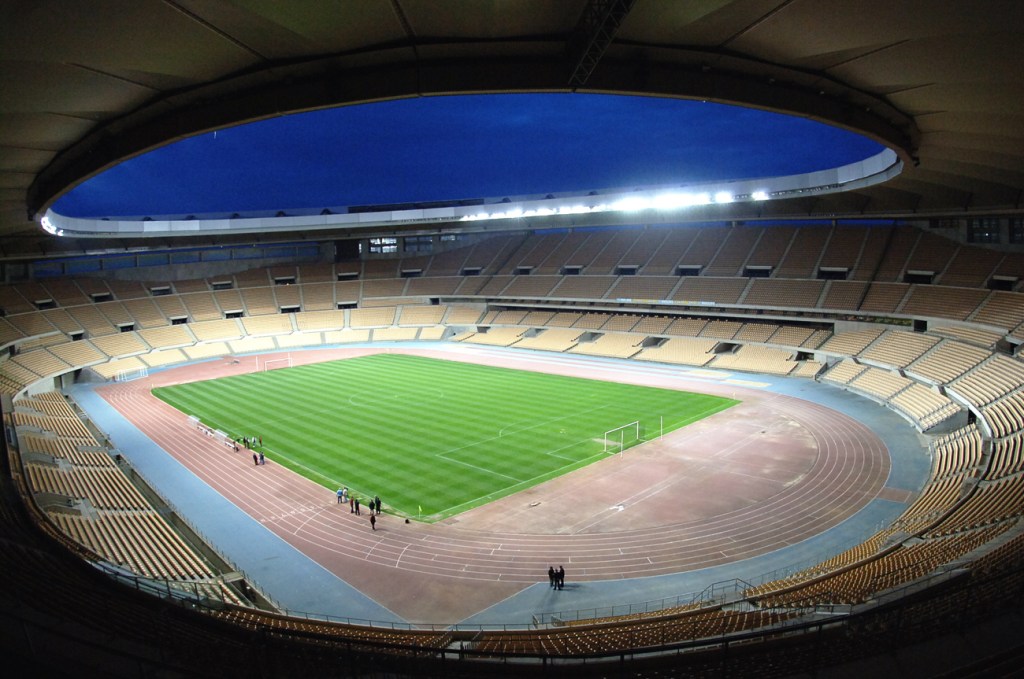
Estadio de La Cartuja– tournament venue
Well, we remain in Spain for round four of the HSBC World 7’s series, as we travel to Seville for the first time in the history of the competition.
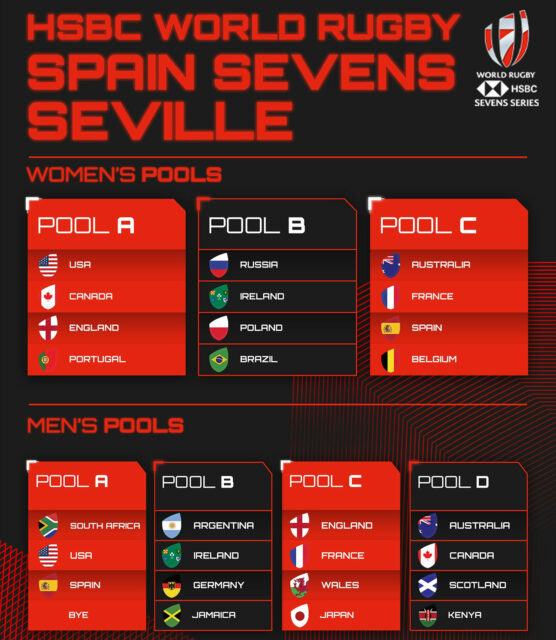
The pools have been drawn for the Seville 7’s which comprises of fifteen (15) teams, with Pool A having only three teams, as shown above.
Women’s & Men’s pools for Seville 7’s 2022
Undoubtedly, South Africa will be favorites to win again this weekend following back to back wins in Dubai last December and in Malaga a week ago.
With that being said, I place my bet on the Blitzboks to come away with the win once more.
I hope you enjoyed this short presentation. Below are the highlights from the Malaga 7’s. Enjoy it!!!
Hello everyone! Welcome back to another presentation on IN THE WHITE. I hope you all are good and coping well in this time of the Pandemic.
We continue with the Human Rights Series with the second part, in which I will be focusing on Poverty & Global Inequalities.
Global Inequality and Poverty
I know, we have been talking about poverty and inequalities for a long time and undoubtedly the COVID-19 Pandemic has stretched this gap between the rich and the poor even further.
According to the 2022 World Inequality Report, wealth inequality remains at an extreme level in all regions.
The report suggests that Middle East & North African nations such as Iran, Iraq, Israel, Algeria, Egypt, to name a few have been listed as the world’s most unequal region.
Just by looking at the names of these countries, I am not surprised at all to see them makeup the list, given their economic and political situation.
For many of these nations, natural resources like oil exportation plays a major role in the growth of the country’s economy.
While the World Bank forecasts a growth of up to 4.2%, in GDP for MENA countries compared to 2.8 % in 2021. However, this is subject to the Pandemic situation. A poor handling of the crisis could deplete the economy, while a controlled condition would see MENA states reaching its projected target.
POVERTY
Poverty Banner
Poverty is another major challenge faced by many people around the globe.
Just as things seemed to be slightly improving, the Coronavirus made matters worse by pushing about 100 million more individual into poverty, as a cause of lockdown and unemployment.
This raises a very important question of what do we do now? How do we at least try and reduce poverty?
Well, I believe one thing good about this Pandemic is that, it has enabled every individual to look for potentials within themselves and discover new abilities.
So I feel, one way we can overcome poverty is to encourage people to explore themselves and identify skills such as cooking, mechanical work or do artworks like paintings and drawings.
I have been a fan of good artworks for a long time, and I am sure the world does not have a shortage of good artists either.
All in all, recognizing the talent within oneself, together with a competitive job market can help uplift a country’s economy and reduce poverty rates.
Stronger laws and law monitoring systems are needed in highly politically unstable states to overcome social and political crisis in war like scenarios.
With that being said, I wish to conclude this write-up and hope you found it interesting and informative.
Thank you for reading and enjoy the following video.
A simple explanation on global inequality & Povery
Hello everyone. Welcome back to another presentation on IN THE WHITE. I hope you all are in good health and enjoying your time back at work, home, and school or wherever you are, it is a pleasure to start a new writing series on some human rights issues.
Say no to racisn banner
In today’s session, I will be touching on one of the most sensitive but important topics that is “Racism”.
The best example of racism I could give is “Apartheid”. Even though it was a policy that segregated blacks from whites in South Africa, the concept of racism is no different.
It is unfortunate to witness or hear cases of racism, despite living in a more developed and educated world.
This raises serious questions on not only the perpetrators, but also those who let it happen.
Perhaps an even bigger question come towards our society, of what type of community we want to live in? Do we want a world of discrimination or a world of peace? And the biggest question we must ask ourselves as individuals is “why are we doing this in the first place?”
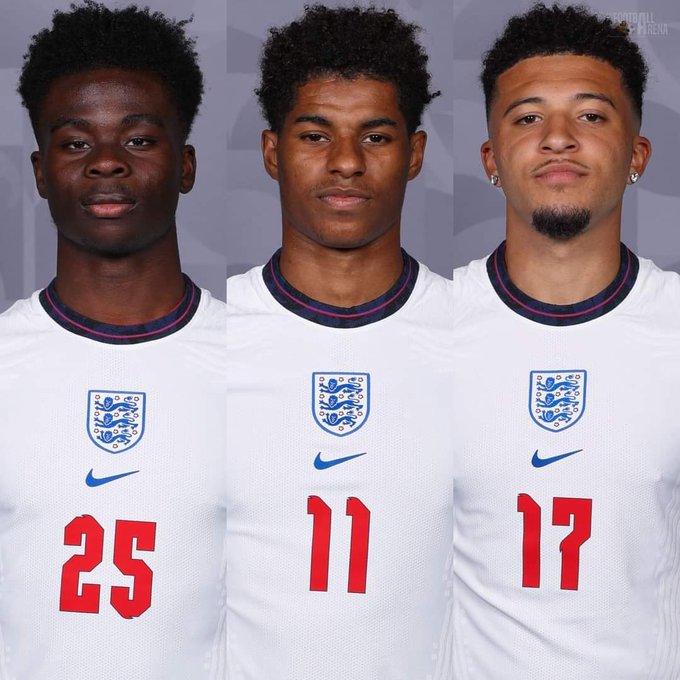
England players at the center of racism
Looking at the sporting world, it hurts to learn that professional footballers like Marcus Rashford, Jadon Sancho and Raheem Sterling were racially victimized on social media following their penalty shootout loss to Italy at the 2020 (2021) European Championship final.
I must say, I am pleased with the fact that players are taking a knee in English Premier League matches, in an effort to fight against racism.
I strongly feel stricter laws needs to be implemented to deter players, fans or any other individual from judging people on the bases race.
Even governments need tighter social media policies, since digital media is now a major platform from which things like racism can be easily spread.
We also cannot only rely on lawmakers and law enforcing bodies like police or the court to ensure every person is viewed equally, but I believe it comes down to individual character, values and how we perceive people in our respective communities.
I see it as our duty of care to create a world free from any form of discrimination, whether be it against race, color, gender, religion or ethnicity.
Before I end this write-up, I know putting a permanent end to discrimination may seem over ambitious, but I remain optimistic that if we stop viewing people on their cast, race, religion, skin color or social status, but see every individual as a normal human being then I am sure we can at least reduce discrimination in our society to some extent.
With those words, I hope you liked this short presentation and found it interesting, as well as informative.
Hello everyone! Welcome to another presentation onIN THE WHITE. I hope you all are doing fine and in good health too.
Today’s presentation is a special one for me, as it is an essay I wrote for one of my politics course at The University of the South Pacific.
The write-up discusses Fiji media reporting during elections and political events leading up to the polls.
Since the article is based on a particular country, please note the author does not intend to support any political party or government through this writing, and wishes to inform its readers that the information provided in this write-up has been trough desk research.
Introduction
Media & Elections
The media is a vital institution of any government as it is tasked to disseminate information and keep the public informed at all times. In a developing country like Fiji, the pressure can get doubled given its history of political instability due to coups between 1987 and 2006. Although criticisms and skepticism from the public and stakeholders are part of the journalism life, in an ideal democracy media’s way of reporting election related matters should be free and fair but in Fiji it has sometimes been seen biased and unjust. This paper wishes to examine if Fiji’s traditional media such as newspapers, television and radio has covered elections freely and fairly post-independence.
With Fiji’s media outlets enjoying a “self-regulated media “framework for a long time under an ineffective “Fiji Media Council” established after 1970 (Robie, 2008). The self-regulation came under real threat following Bainimarama’s takeover in 2006 (Singh, 2015). The document provides an analysis on the self-regulated media function in a country battling political upheavals amid ethnic tensions. It discusses media’s role and environment under self-regulation rule and the 2010 Media Industry Development Decree together with the laws impact on the Political situation of Fiji and it’s after independence elections.
It is necessary to note after the 2006 military takeover Fiji did have elections until 2014, which saw the rise of media censorship and a lot of executive power vested in the Prime Minister and the Attorney General who control major appointments. Apart from the 2010 media decree, other laws like “Public Emergency Regulations 2009 (PER) (Singh, 2015) and “Television Cross-Carriage Designated Events Decree 2014” (Morris, 2015) were used to control the media.
As mentioned, 2014 marked a significant year with Fiji’s return to democracy after eight years. The write-up argues that the media was somewhat “neutral as well as bias towards certain political parties (Anon., 2014) in the 2014 general election, as highlighted in the 2014 report of the Multinational Observer Group.
The essay concludes by looking at social media’s role in Fiji’s 2018 general election. With key focus on FijiFirst’s Facebook page and reactions such as “most loved, laughed and angered” (Tarai, 2019) social media posts. In its final remarks, the document looks at some of the recommendations proposed in the 2014 general elections report of Multinational Observer Group.
Literature Review
Literature Review – photo
The first article reviewed for this project is “The evolution of media laws in Fiji and impacts on journalism and society”. Written by Shailendra Singh, the article elaborates on the Media Industry Development Decree 2010 (Singh, 2015). It argues that the current media law has put journalism under threat, and since the Bainimarama government took power following the 2006 coup, media censorship was a challenge faced by many news organization. It emphasizes that regulating the media was in the minds of many politicians but no action had been taken until the introduction of the 2010 Media Decree. However, it acknowledges various sections of past legislations such as the “1997 Constitution, the Crimes Act 2009 and the Public Emergency Regulation” (Singh, 2015). Singh also indicated signs of media biasness, particularly by “The Fiji Times” as it refused to publish advertisement of political party during the 1999 general election campaign (Singh, 2015).
The second article up for review is labeled “Fiji media regulation: Emerging from ‘worst of times’ to the ‘best of times’” by Ricardo Morris. It provides a strong understanding of the current media environment by arguing that the present media decree is “repressive and intimidating” (Morris, 2015). It cites the effects of “brain drain as a result of 1987 coup” which saw mass migration of skilled population including journalists. It claims those experienced reporters that remained were either moved to non-controversial roles or forced to keep their mouths shut (Morris, 2015).
Morris states that the 2010 media law is not the only legislation lawfully binding media outlets in Fiji. But other laws such as “Television (Cross carriage of Designated Events) Decree 2014” also has a role. He says the Fijian media is not only restricted to covering of local events but international as well. While discussing the visit of Chinese President, Xi Jinping to Fiji in November 2014, and Morris claims only Chinese journalists accompanying the President were allowed to listen to his speech, with the local media excluded and told to get official transcripts from “Xinhua News Agency.” In this way foreign officials impose themselves on local media. And the Fijian press could not force themselves into the event because of the fear of fines that could cripple any news agency because of the media decree. (Morris, 2015).
“‘Unfree and unfair’? Media intimidation in Fiji’s 2014 elections” by David Robie is the third document reviewed for this assignment. It lays out for challenges to “freedom of information “that impacts media freedom in Fiji. Robie claims “excessive power is held by the office of the Prime Minister and the attorney-General (Robie, 2016), as they legalize appointments of the judiciary and independent commissions, therefore, Fiji’s 2013 constitution fails to offer structural protection for the courts independence. Political appointment of the Chief Justice fears journalists of abuse of power and that the court system could be used against them as a shield.
Robie further discusses “limitations on many rights “under the Bill of Rights of the 2013 Constitution (Robie, 2016) will not need to be justified by future governments as vital in a free and democratic state. “Self-censorship of the media has perhaps been a key factor in Fiji’s media industry before the 2014 election and has been the influencing factor ever since its presence.
The author also disputes about the blackout period in Fiji just 48 hours before Election Day (Robie, 2016) where the press was restricted from providing media coverage on either traditional or new media platforms.
Another article of David Robie titled “Freedom of the gatekeepers: A free media study of NZ and Fiji – self-regulation or state intervention?” he provides an outline of how Fiji’s media functioned following the country’s independence in 1970. Robie states about the concept of free media and mentions the “Self-regulation” (Robie, 2008) of the press. It highlights the review of the structure, roles of the “Fiji Media Council” as well as reforms of some of the media laws such as “Official Secrets Act, the Newspapers Registrations Act and Defamation Act” (Robie, 2008). Robie’s document also cites a media statement, claiming that the Bainimarama administration used the survey report to justify the plan to merge all media laws under the “Public Order Act” (Robie, 2008), when he took power after the 2006 military coup.
The 2014 Fijian Elections Final Report by the Multinational Observer Group is another important document for the purpose of this research as it highlights the “media environment, the Media Industry Development Decree and the effectiveness of the press” (2014 Fijian Elections Final Report of the Multinational Observer Group, 2014) during the 2014 election. It suggests recommendations for the government to consider under each of the subheadings mentioned. The report notes “restrictive and unclear media framework” (2014 Fijian Elections Final Report of the Multinational Observer Group, 2014) provided media limited ability to investigate allegations made by candidates and political parties (2014 Fijian Elections Final Report of the Multinational Observer Group, 2014). Jope Tarai’s document “Social media and Fiji’s 2018 national elections” provides commentary on the use of social media during the 2014 and 2018 Fijian general election, with particular focus on the 2018 one. It defies the role of social media in the two general elections by arguing that “FijiFirst, the current governing party had great advantage in the country’s social media scenery” (Tarai, 2019). The write-up notes an increase in the use of social medial platform like “Facebook” (Tarai, 2019), from the 2014 election, by political parties and candidates to gain maximum votes. Tarai shows interesting data such as “Reactions to Party before polling day, analytical data from official political party pages and Facebook audience insights” (Tarai, 2019).
Shailendra Singh in the article labelled “Life under Decree No. 29 of 2010: The Fiji Media Development Decree” looks at the impact of the media Decree in Fiji questioning its ability to introduce similar laws in other Pacific island countries, in trying to control the media. He claims the legislation brings an end to the formerly used self-regulated media (Singh S. , 2010). Singh disputes that fines and jail terms proposed by the current government is harsh. The author carefully discusses the “Emergency Regulations and the Media Industry Development Decree” and raises questions the applicability of orthodox journalistic approaches, which places priority on conflicts as a news value (Singh, 2010).
Overview of research question, Aim & Objective of the research and Research method
Desk research being conducted
Research Questions
Some of the important questions that this document seeks to address includes; how did the political parties perceive the media in Fiji after independence and its role in post-independence elections? What was the media environment like before the 2010 Media Decree was introduced? Where there existing laws to govern the media and its impact on the media industry? Was the 2014 General Election freely and fairly reported by the Fijian media and what are the areas of improvement outlined by the Multinational Observer Group? What role has social media played in Fiji’s 2014 and 2018 general elections?
Aim/ Objectives
The purpose of this research is to find out how the Fijian media covered elections and whether the media outlets did free and fair reporting or not. The writing will focus on the reaction of political parties to reports of media favoritism, discuss laws that were implemented in the post-colonial era and the impact it had on media organizations and how it formed the political situation in the country.
Research Method
This will be a desk research since a field study cannot be carried out due to restrictions in place caused by the Coronavirus Pandemic. The study will use data collected from credible sources such as journals, books, websites and other online published materials relevant to the research topic.
Research Findings & Analysis
Data Analysis
To begin with the discussion of the findings, it is important to understand that prior to the introduction of the “Media Industry Development Decree 2010”, Fiji used a more free style “self-censorship” (Robie, 2008) media where there were no strict legislations governing the press. Now, saying this does not that there was no media control at all. The “Fiji Press Council” (Robie, 2008) was created to deal with media complaints which failed in its objectives. Later, the institution was rebranded as “Fiji News Council” (Robie, 2008), where the Fijian government carried out a revision of the “Official Secrets Act, the Newspapers Registration Act and Defamation Act” (Robie, 2008) in an effort to strengthen the “council’s independence, public credibility and effectiveness” in handling complaints against the media (Robie, 2008).
In 1998, a “Self-regulatory Media Council” (Robie, 2008) was set-up together with a “Complaints Committee”, but both elected and non-elected governments continued to blame the council for its inconsistent behavior and inability to enforce ethical guiding principles and professional standards (Robie, 2008). A common problem encountered by the Fijian media council was that, its entities were publishing unbalanced news items and were unwilling to correct mistakes (Robie, 2008). It would not be wrong to say that this attitude of the press has cost them dearly in the form of the 2010 Media Decree.
David Robie in his article “Freedom of the gatekeepers: A free media study of NZ and Fiji – self-regulation or state intervention?” attributes the “lack of ethical guideline and deficiency in professionalism” to the brain drain caused by the 1987 coup (Robie, 2008), which saw many experienced and trained journalists leave our shores, and the ones left behind do not have the expertise to meet the required criteria.
When a review on the “media freedom in Fiji” (Robie, 2008) was conducted under the Rabuka government, it was found that there was a large loophole in information pertaining to media independence, and press freedom in Fiji, especially data relating to “Media ownership, media workers, censorship and advanced technologies” (Robie, 2008). Evidence of the failure of the “Fiji Media Council” also reflects in its inability to provide a through information on media complaints and legal judgments despite having an official webpage (Robie, 2008). This lack-city by the council could be seen as a major cause of hostile media laws being imposed on the media industry. With the lack of data, a proper legislation benefiting the press cannot be drafted.
Although it had taken long, but a media law was finally introduced in 2010, which put an end to the self-regulatory system of the media (Singh, 2015). Commonly known as the “Media Industry Development Decree 2010” (Singh, 2015) is now the rulebook governing all media organizations in Fiji. Where others failed, the Bainimarama government brought in the decree to improve media professionalism standards and create “social stability” (Singh, 2015), which had been under threat as a result of ethnic tensions both before and after independence.
Many politicians had been pushing for a regulated media after it had been accused of biasness to political parties. The oldest newspaper of Fiji, “The Fiji Times” had been frequently a frequent victim of the Fiji Labor Party. In an article published by the Pacific Islands News Association titled “The Fiji Times rejects allegations of news media bias in elections”, where Mahendra Chaudhry, leader of the Fiji Labor Party blamed the newspaper for giving “more coverage to other political parties and deny his party the chance to win the 1999 general election” (Anon., 1999). Chaudhry also pointed finger at a Hindi radio station, Radio Navtarang for refusing to air a Fiji Labor Party campaign advertisement, while the General Secretary of a coalition party blamed “The Fiji Times” of attempting to keep the 1987 coup leader Sitiveni Rabuka in power (Anon., 1999).
The Labor Party leader did not seem to stop his attacks on the media, particularly The Fiji Times, when it was once again accused of using the newspaper as a mode to further their own interests (Singh, 2015). He further accused the news agency of “rebellious action, infuriating racism and sedition” (Singh, 2015).
The 2000 coup shielded media freedom in Fiji, as the Chaudhry govern collapsed, causing future governments to increase media censorship. After being elected in 2001, the Laisenia Qarase government tabled the “Media Council of Fiji Bill”, bur had to postpone the idea due to continuous pressure through a “No media bill campaign” led by members of the press industry (Singh, 2015). However, Qarase was determined to enforce a media law after being reelected in 2006. But again failed, when Bainimarama’s military took over government by force.
A point to note is that, not all media organizations were badly treated the Fiji Sun” has been well-known to be supportive of the government, especially of the Bainimarama regime. It is often believed and witnessed that the newspaper has been “loudly supportive of government’s policies and visions” (Morris, 2015). Claims have also been made of the Fiji Sun being greatly rewarded for its efforts in marketing the government’s agenda in the form of government advertisements alongside government entities being advertised exclusively in the Fiji Sun (Morris, 2015). Morris in his article, “Fiji media regulation Emerging from ‘worst of times’ to the ‘best of times’” believes that this was done to “punish The Fiji Times for its anti-government behavior in the post 2006 coup era” (Morris, 2015).
The “Public Emergency Regulation (PER) came into effect on 10th April 2009, which gave the government the authority to censor news and cancel licenses of guilty media agencies (Singh, 2015). The PER was constantly in force till 2012 and was replaced with the 2010 Media Industry Development Decree. The right to censor news and cancel media licenses was reflected in the media decree. The impact of the provision was strongly felt by Fiji Television Limited, who at one point were granted license of only six months, whereas Fiji Broadcasting Cooperation whose Chief Executive Officer is the brother of the Attorney-General has an operating license of twelve years (Morris, 2015).
Not only that, but Fiji Television was force to share live feed of the Gold Coast Sevens tournament with FBC Television and Mai TV, which Fiji TV had exclusive rights to. The television company was forced to comply with the “2014 Cross-Carriage of Designated Events Decree” (Morris, 2015), which binds television companies to share broadcasts of events concerning national interest. Interestingly, FBC is excused from complying with this law (Morris, 2015).
The Media Industry Development Decree was legitimized under the 2013 Fijian constitution gave powers to the Prime Minister and the Attorney-General (Robie, 2016), to appoint all judiciary and commissions, which worry the media fertility, especially journalists who fear that the court may not be fair in its rulings given the political appointments (Robie, 2016). A case of 2009 can be attributed to this situation whereby the “High Court” fined “The Fiji Times” for publishing an admission of contempt of court in in relation to publication of a letter to the editor from a person living in Australia. It is alleged that the Attorney-General was not happy with the newspaper’s apology and urged the judiciary to put heavy penalties for the offenders (Anon., 20009).
The final report of the Multinational Observer Group on the 2014 general election noted “neutrality and partiality among local media” (Anon., 2014) during the campaign period. The report highlights while some broadcasting media outlets like Fiji Television Limited and Communications Fiji Limited allocated airtime through special election programs, others alluded to biasness by leaning towards FijiFirst and other larger parties, with smaller parties struggling to get their views across the country to some extent. However, the observer report does mention of access to the media for political parties was there, for the people to make their choice (Anon., 2014).
Another critic of the 2014 general election was the “48 hour blackout period” (Robie, 2016), which prohibited the media from covering election related materials or broadcasting any political campaign advertisements and only allowed information provided by the “Fijian Elections Office”, vetted by the Media Industry Development Authority to be published. This was highly condemned by the International Federation of Journalists, believe the blackout rule violates press freedom at a time when the public needs the media the most (Robie, 2016). This rule also applied to international journalists who were accredited with the Media Industry Development Authority to cover the general election.
The FijiFirst social media audience was the largest in both the 2014 and the 2018 general elections, which has been assisted through its “political position within the country’s affiliated resources” (Tarai, 2019). As FijiFirst (FFP) was the governing party, it is fair to note that it attracted (110,694 individuals, which was the biggest fan base compared to its major political rivals the National Federation Party (34,407) and Social Democratic Liberal Party (SODELPA) (25,665) (Tarai, 2019). The FFP page also had the highest number of reactions (76,961) shares (4652) and comments accounted for (20,465).
Another attractive fact about the 2018 online campaign is the reactions to political party posts. The content that generated the most anguish reaction was a 2 hour 43 minute video during a campaign rally in Savusavu, which was ranked 8th in the most loved category generated an estimated 2,498 comments in heated exchange between FijiFirst and SODELPA fans (Tarai, 2019). This content also received the most LOL (Laugh Out Loud) reaction along with five other posts falling in the same category with all of them posted on the FijiFirst Facebook page (Tarai, 2019).
The highest loved content in the top ten “most loved” grouping was a 2 minute 37 second video posted by Lynda Tabuya of SODELPA four days before election which earned more than 65,000 view, “was shared more than 750 times, got over 7,000 reactions virtually and got more than 450 comments (Tarai, 2019).
Conclusion & Recommendations
The Wrap-up
Conclusion
To conclude, it can be understood that Fiji’s media was under self-regulation for much of post-independence period. It was governed by the Fiji Media Council which was accused of not having enough capabilities to handle media complaints. The Fiji Times had been constantly blamed by political parties, especially by the leader of the Fiji Labor Party who accused the newspaper and Hindi radio station Radio Navtarang for refusing to publish or broadcast their party advertisements. The Fiji Sun is considered to be the government’s mouthpiece, certainly after the Bainimarama military takeover in 2006 which saw the rise in media censorship and massive control of the press. Laws such as Public Emergency Regulations 2009, Media Industry Development Decree 2010 and Television Cross Carriage of Designated Events Decree 2014 were used to keep the media in check.
The report on the 2014 general election by the Multinational Observer Group highlights neutrality and partiality by Fijian media in the buildup to the 2014 polling day, while institutions such as International Federation of Journalists greatly criticized the 48 hour blackout period, citing violation of press freedom. Social media, Facebook in particular played a crucial role in 2018 Fijian general election where candidates and political parties adopted an online campaign strategy, where the ruling FijiFirst Party had the largest fan base of over 110,000. The party’s 2 hour 43 minute campaign video generated great interest and was in the top ten most angered and laughed video respectively. Alongside, SDELPA’s Lynda Tabuya’s 2 minutes 37 seconds video clip was the most loved in the top ten most loved category.
Recommendations
It is recommended that:
Stronger laws and an independent institution be setup to deal with media biasness and create an equal level playing field for candidates during elections (Anon., 2014).
If the Media Industry Development Authority is to be maintained in future, an independent organization should be established to maintain the media’s independence and hold the press accountable for its actions. If found guilty of any breach, it must be punished according to law set by the court and in accordance with the country’s constitution (Anon., 2014).
Powers vested in the Prime Minister and the Attorney General must be reviewed and given to an independent media regulated body to avoid abuse of power.
All major appointments relating to media’s main governing body such as media councils or associations must be carried out independently, to indicate freedom of the press and impartiality of government.
So with that, this presentation comes to an end. I hope you found it interesting and informative.
Below are the list of sources which were used to copile this research. The author once again wishes to emphsize to its readers that it does not support any political party or cause any form of instability in the country mentioned in this article.
Bibliography
Anon., 1999. “The Fiji Times” rejects allegations of news media bias in elections, s.l.: Pacific Islands News Association.
Anon., 20009. “Fiji Times” fined over article, newspaper publisher and editor receive suspended prison sentences, s.l.: Pacific Islands News Association..
Anon., 2014. 2014 Fijian Elections Final Report of the Multinational Observer Group, s.l.: Parliament of the Republic of Fiji.
Morris, R., 2015. Fiji media regulation Emerging from ‘worst of times’ to the ‘best of times’. Pacific Journalism Review, May.
Robie, D., 2008. Freedom of the gatekeepers: A free media study of NZ and Fiji – self-regulation or state intervention?, s.l.: AUT University.
Robie, D., 2016. ‘Unfree and unfair’?:Media intimidation in Fiji’s 2014 Election. Canberra : Australian National University Press.
Singh, S., 2010. Life Under NO.29 of 2010:The Fiji Media Development Decree. Pacific Journalism Review, December.
Singh, S., 2015. The evolution of media laws in Fiji and impacts on journalism and society. Pacific Journalism Review, March .
Tarai, J., 2019. Social media and Fiji’s 2018 national election. Pacific Journalism Review, July .Volume 25.
Hello everyone! Welcome to another presentation on IN THE WHITE. I hope you all are doing fine and in good health too.
Today’s presentation is a special one for me, as it is an essay I wrote for one of my politics course at The University of the South Pacific.
The write-up discusses China- Japan relationship from a realist point of view, alongside highlighting some constructivist elements. So, without any further delay, here I present my document.
China-Japan state flags
Introduction
Located in the East Asia region, with just 3,045 Kilometers apart, China and Japan share a sweet and sour relationship. Their friendship can be traced centuries back and now so can be their rivalry. Understanding the China-Japan relationship could be a little complicated given the economic, social and political connection they share. This essay uses the international relations theory of realism with a little of constructivism to explain China’s relationship with Japan. Some of the key points that this paper wishes to highlight includes; China-Japan economic relations which takes a more liberal stance before discussing disputed territory of the Senkaku/Diaoyutai islands, the first and second Sino-Japanese wars. Then the document shifts focus to post world war two China-Japan relations where it looks at the rise of China, its nuclear weapons, the Japan-US alliance, the sudden increase in Japan’s defense budget mean to China and why visits to the Yasukuni shrine by Japanese Prime Ministers continues to hinder Japan-China relations. Realism provides the best understanding of the Sino-Japanese relationship is the key objective of this paper.
China-Japan Economic Relations
Japanese Yen (Top) Chinese Renminbi (Bottom)
Before diving into the bitter bits of the China-Japan relationship, it is important to note that both countries once had a very strong and healthy relationship. This can be attributed to economic means when the “China-Soviet divide occurred in 1959-1960” (Howe, 1990), it quickly enabled China to strengthen economic ties with Japan by allowing them to become its “trading partner and supplier for new technology” (Howe, 1990). A spot previously occupied by the Soviet Union. Interestingly, trade between China and Japan in the 1960’s were in the form of “agreements with selected and approachable firms” (Howe, 1990), which were relatively small, but were determined to work together despite non diplomatic connections between them.
Nonetheless, when diplomatic talks resumed between the two countries, economic activities began to increase and international trade institutions like “The Japan-China Economic Association” (Howe, 1990) was setup. Through this platform Japan made bigger commitments such as “supplying fertilizer, petrochemical plants and establishing a large steel rolling facility in Wuhan” (Howe, 1990). In the early 1970’s China realized its potential in “finished steel and downstream products of the oil industry (Howe, 1990) and prioritized it to make it the “first China boom” (Howe, 1990). Further to this, an anti-Americanism campaign was generated by setting up a magazine agency called “Peoples China”, which promoted Japan-China propaganda and published anti American articles (Howe, 1990). Although the paper discusses China-Japan relations with respect to realism and constructivism, it is fair to state that the concept of trade and international institutions highlighted above are part of liberal democratic principles which cannot be ignored in this relationship.
Even though the growing economic strengths of the 1960-70’s between China and Japan indicates an unbreakable bond, its diplomatic or political rivalry can be traced back to history.
Dispute over Senkaku/Diaoyu island
The Disputed Teritory of the Senkaku’s
One of the many causes to this sour relationship is the dispute over the Senkaku/Diaoyu islands. Situated “170 Kilometers southwest of Okinawa and about 380 Kilometers north of China’s mainland” (Drifte, 2013), the interest of both states on the inhabitant island which comprises of “five islets and three barren rocks” (Drifte, 2013) are vast for numerous reasons. Historically, Japan claims its full right to the island after occupying it in 1895 citing that the land was vacant at the time of occupancy (Drifte, 2013). However, China claims that it had discovered the island long ago, dating back to the “Ming Dynasty between 1368-1644” (Drifte, 2013) who label the island as part of China. It’s fair to say that since China claims Taiwan as its own territory, it will definitely support Taiwan over the Senkaku/Diaoyu dispute.
From a realist lance, who view the world as anarchic and dangerous place believe China’s quest for power is to maximize its strength to become a regional, then a global hegemonic power (Santos, 2017). Their desire to capture the Senkaku/Diaoyu islands for resources such as “oil, gas, fish and seabed’s” (Drifte, 2013) are efforts to increase economic power and strengthen national security through it, as well as have a stronger influence in the region, which could have an effect at the global stage. Whereas, a constructivist who believes “the world socially constructed” (Theys, 2018) would argue that it is not about the interest in economic resources mentioned earlier, but the nature of historical relationship that China and Japan have between them. This can be further explained by event of 2012, when Japan decided to purchase some islands of the Senkaku group from its private owner. This was a bigger hit to China compared to the 2010 incident whereby “Japanese officials arrested a Chinese captain of a fishing vessel at one of the islands boundaries after a coalition with the Japanese coast guard vessel” (Drifte, 2013).
Sino-Japanese Wars
First Sino-Japanese War
image from first Sino-Japanese War
The China-Japan war better known as the “Sino-Japanese war” is another major reason of hiccup in the China-Japan relationship. Fought from 1894-1895, the war was to determine who would gain control over Korea. Fascinatingly, China had great interest in Korea as it considered the Korea its great trading partner. However, the strategic location of Japan sparked its own interest in Korea because of coal and iron resources (Kim, 2012). In 1875, Japan who had started to adopt western technology pressured Korea to open itself to the outside world, particularly trading with Japan. The effect of the Japanese strengthens reflected in the modernization of the Korean government. Despite the situation in Korea, China continued its support Japanese officials surrounding the royal family, until 1884, when “a group of Japanese reformers tried to take over the Korean government”. The Chinese were quick to react and managed to protect the Korean king, murdering numerous Japanese lawmaking guards in the process. As a result, a war like scenario was avoided between the two states by signing the “Li-Ito convention” (Kim, 2012), where both parties agreed to withdraw troops from Korea.
The constant modernization together with the impact of Japanese nationalism began to be seen in Korea in 1894. The killing of “pro-Japanese Korean leader” (Kim, 2012) by Chinese authorities recreated tensions, forcing the Japanese to send armed troops to Korea. The Korean king then requested China for assistance China’s aid was seen as a violation of the Li-Ito convention. Japan then destroyed a ship carrying more Chinese soldiers, which ignited the war. The battle ended in a Chinese defeat, resulting in Japan occupying some of China’s islands. Japan’s quest for power over Korea could be seen as an act of maximizing power (Santos, 2017) which is a key element in the realist view. At the same time, China’s fall could be seen as transition in power (Rathus, 2010) given that it had the upper hand over Japan but failed to prevail.
Second Sino-Japanese War
Image from second Sino-Japanese War
Fast-forward to 1937 when the second Sino-Japanese war occurred. This time the war broke out of Chinese resistance to the growing Japanese influence in their state (Anon., 2020). The Japanese had occupied the area of Manchuria for most of the 20th century and ruled it through its railways and land leases (Anon., 2020). It undermined Chinese sovereignty by seizing many Chinese islands like “Hankou, Tianjin and Shanghai” (Anon., 2020). It is this second Sino-Japanese war where the Chinese believe their opponent had caused the most sinful acts such as the “murder of more than 300,000 civilians and the rape of thousands of women” (Anon., 2020) were conducted by Japanese solders upon the directive of the Japanese commander. It is important to note that despite earning victory in the first Sino-Japanese war, the victors did not seem to be satisfied and desired to conquer the whole of China, in which they were quite successful by capturing more Chinese land areas like “Hankow, Canton, Peiping and Shansi” (Anon., 2020). From a realist view this raises serious question of “how much power is enough” (Santos, 2017) for any state. If “offensive realist theory” (Steinssom, 2014) is applied, then Japans attitude of self-interest and power maximization (Steinssom, 2014) in particular could be used as justification to ignite both the Sino-Japanese war, even though he second battle is cited as a retaliation by China of Japan’s increasing power (Anon., 2020), which seems to be more of a defensive realist approach (Santos, 2017).
China-Japan relationship post World War 2
Post world war 2 China-Jaan Relationship
Looking at post world war two China-Japan relations, the rise of China is of great concern for Japan. Its growing military capability has forced the Japanese to tighten its own defense force. For instance, in response to the Senkaku/Diaoyu territorial dispute, the Japanese up skilled its infantry and created an “Amphibious Rapid Deployment Brigade” (Katarigi, 2018), a marine unit to deal with threats in the area. Japan’s intention to send over “160-800 troops to Ishigaki, Miyako and Amami islands close to Okinawa” (Katarigi, 2018) are another set of territories that the Japanese are trying to safeguard. It is also noteworthy, that Japan’s security concern is not limited to land, but has tensions in the air as well. The involvement of “Air Defense Unit equipped with patriot missiles and Fighter Squadron” setup at the Tsuiki Air Base (Katarigi, 2018) reflects that Japan has great security concern over China. Arguably, from defensive realist point of view, Japan could be seen acquiring sufficient power to defend itself from China.
China’s military might a concern for Japan
China’s military force
China’s rise could be viewed as another “Power transition” (Rathus, 2010). An interesting fact about China’s military is that, it is pretty secretive and selective about its military budget disclosures. Experts claim that figures provided by the Chinese authorities are “untrue” (Rathus, 2010) as it cannot be easily verified and believe that the numbers given could be double than what it suggests. Some also say that the Chinese government itself does not have any idea of how much it has spent on military development since the 1990’s. Therefore, unclear military budget and doubtful data is strong enough to create tension among neighboring countries like Japan. Another factor to note is while China increased its military might, Japan’s military declined (Rathus, 2010): (Khoo, 2014), which likely to increase insecurity on the Japanese side.
China’s Nuclear power
The Chinese Missles
If China’s military Power is not sufficient to create enough tension, than its intention to acquire “sophisticated weapons “(Rathus, 2010) surely does. The purchase of “Sovremenny-class missiles, strategic missiles, alongside short to medium range of ballistic missiles” are capable of attacking ships at distance of 1,000 Kilometers (Rathus, 2010). China’s strong nuclear capability is something that Japan is worried about and is fearful of being attacked by China. While China may see the use missiles as an act of self-defense, Japan’s concern over its rival’s nuclear power is understandable from a constructivist thought, given the bitter history of the two sides (Santos, 2017).
Japan-US Alliance a concern for China
China (Left) United State (Middle) Japan (Right) flags
Japan’s alliance with the United States is of great concern to China. The Chinese strongly believe that the Japan-US partnership is a method of countering China’s military power. The “Ballistic Missile Defense program” (Garcia, 2014) agreed to between the allies is seen as the shield aimed at China, even though Japanese authorities say the missile shield is to protect itself from nuclear might North Korea (Garcia, 2014). China views Japan as a state with “great power ambitions” accusing it of having “six Aegis missiles with over a dozen missiles” of the same brand after aligning with the United States (Garcia, 2014). It is evident that possession of nuclear weapons and US assistance to construct the Ballistic Missile Defense system is causing a security dilemma in the Japan-China relationship. To the realists, it is this security concern that makes war inevitable between states, while Japan will consider its friendship with the US an act of balancing power, China will look to maximize its strength to keep pace with the United States (Khoo, 2014).
Why increase in Japan’s Defense Budget worries China?
The Japanese Defense Force
Japan’s defense budget and nationalistic behavior are another set of matters that concerns China. Beijing worries that the recent increase in Japanese military budget of up to 49 billion Yen could spark “an arms race or military confrontation (Anon., n.d.)” between the two sides. From a realist viewpoint, China’s reaction and attitude towards Japan makes it clear that battle for power between states is endless and reaffirms that international system is anarchic. Visits by Japanese Prime Ministers to the Yasukuni shrine angers neighbors China as they view Japan promoting nationalistic view and claim that it has not been able to forget the disaster of world war two (Lewentowicz, 2013). While Japan with many others see China’s reactions as an act of interference in its domestic affairs, the point remains that visits to Yasukuni shrine by Japanese leaders hurts the already wounded China-Japan relationship.
Conclusion
China-Japan Relations post World War 2 & beyound
To conclude, while it is clear that economic ties between China and Japan indicate a healthy liberal connection, disputes over the Senkaku/Diaoyu islands, bitterness of the first and second Sino-Japanese war, the rise of China, its nuclear arms, the Japan-US alliance, sudden increase in Japan’s defense budget and visits to the Yasukuni shrine by Japanese Prime Ministers provides realist views with a couple of constructivist arguments. It can also be noted that after world war two tensions between China and Japan has further intensified and does not seem to be returning to normalcy anytime soon. This keeps the realist position intact that states need power for survival, for which states with less power like Japan seek to balance its strength by forming alliances with greater power like the United States. The competition for power continues in this way, making war more likely between countries.
With that, this presentation comes to an end. I hope you enjoyed reading it and found the writng informative.
Below are a list of refences you could use for frther research.
Bibliography
Anon., 2020. Second Sino-Japanese War, s.l.: Online.
Drifte, R., 2013. THE SENKAKU/DIAOYU ISLANDS TERRITORIAL DISPUTE BETWEEN JAPAN AND CHINA: BETWEEN THE MATERIALIZATION OF THE “CHINA THREAT” AND JAPAN “REVERSING THE OUTCOME OF WORLD WAR II”?, s.l.: University of Newcastle.
Garcia, Z., 2014. China’s Military Modernization, Japan’s Normalization and its Effects on the South China Sea Territorial Disputes, s.l.: Florida International University.
Howe, C., 1990. China, Japan and Economic Interdependence in the Asia Pacific Region. The China Quarterly, December.
Katarigi, N., 2018. Between Structural Realism and Liberalism: Japan’s Threat Perception and Response. International Studies Perspectives, 7 August .19(4).
Kim, K. H., 2012. The Sino-Japanese War (1894-1895): Japanese National Integration and Construction of the Korean “Other”. International Journal of Korean History, Febeuary.17(1).
Lewentowicz, S. E., 2013. In response to Yasukuni: the curious approach the Chinese and South Korean governments take toward an unresolved link to the past, s.l.: Naval Postgrduate School.
Rathus, J. M., 2010. Japan’s response to the Rise of China:Implications for Regional Institutions, s.l.: University of Adelaide.
Santos, D., 2017. Post-War Sino-Japanese Relations: A Constructivist, s.l.: Hong Kong University.
Steinssom, S., 2014. John Mearsheimer’s Theory of Offensive Realism and the Rise of China, s.l.: s.n.
Theys, S., 2018. Introducing Constructivism in International Relations Theory, s.l.: E-International Relations.
Hello everyone! Welcome to another presentation on IN THE WHITE. I hope you all are doing fine and in good health too.
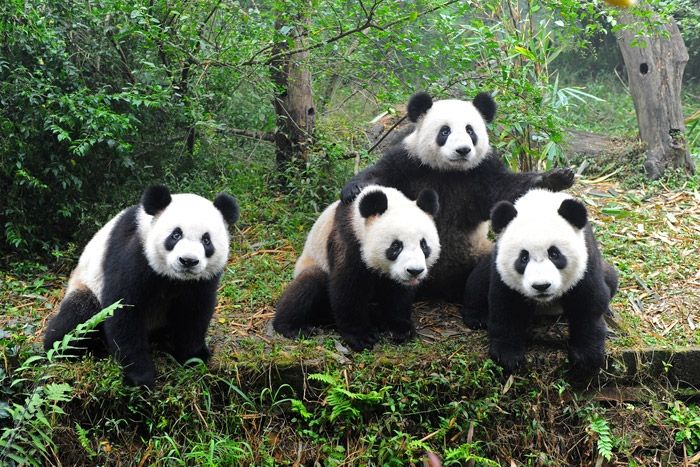
There are numerous animal species in the world, who have their own beauty and spatiality. Among those is a charming animal of the bear family called Panda. The reason I call it charming is because of its round shaped face and black & white color. Its cuteness is as such, that an anguish person can forget their anger, the sad can brighten up with delight and a non-animal lover’s heart be melted with love.
In today’s write-up I will be highlighting some of the interesting facts about giant pandas, so be sure to read it till the end.
Facts about Giant Pandas
A sitting Giant Panda
A panda’s body is designed in such a way that it can protect itself in both cool and warm conditions. Its whiter part helps hide in the snow, while the black fur assists pelting in the shade.
Panda’s eyes have vertical slit pupils, a feature that distinguishes them from other bear species.
Just like babies are close to their mother when they are born, there is no difference when it comes to animals. Mother Panda keeps its cubs attached to it for nearly a month. Attachment is not the main reason why they keep their babies intact.
In fact, pandas are born blind and helpless. They are so stranded that the fetus cannot excrete waste on its own or regulate its body temperature due to its small size and pinkish skin color. So they rely on their mother for milk and protection.
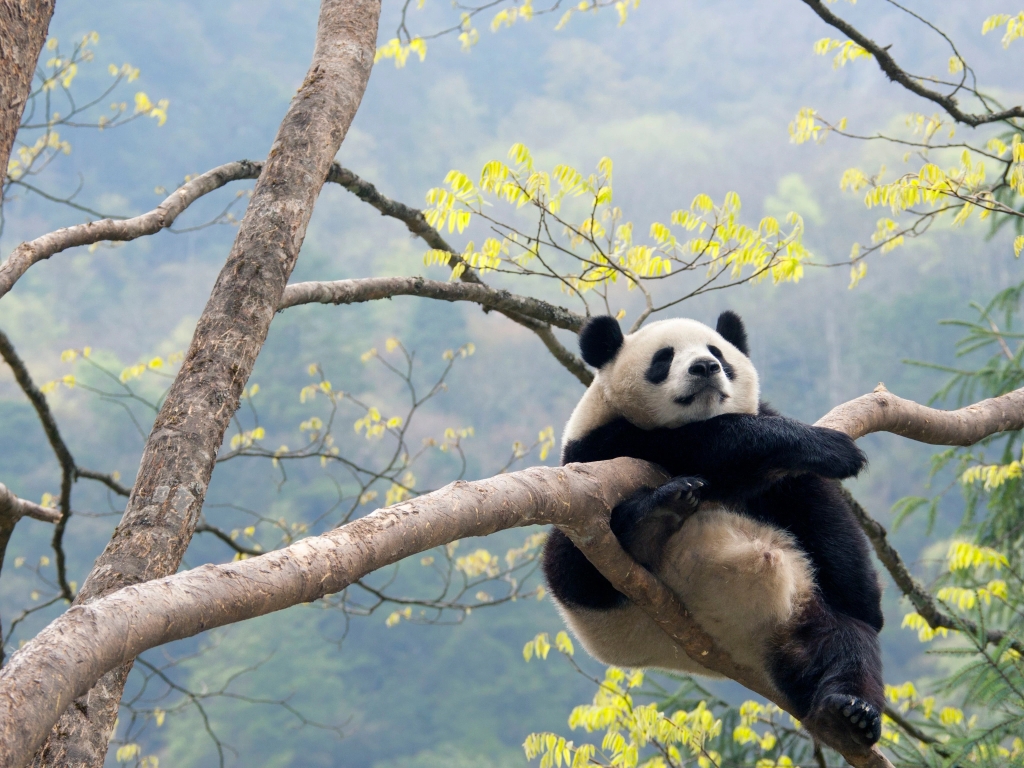
At five months old baby pandas learn to climb, sometimes they practice this by climbing on their mum.
Pandas sometimes do handstands- they climb a tree backwards with their hindfeet until they are in a full handstand mode.
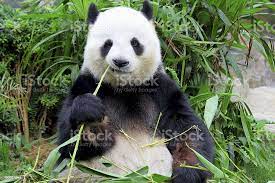
This gorgeous creature has an extended wrist bone which they use like a thumb to grip food.
Its maximum height could go up to 90 centimeters and minimum 60 centimeters.
An adult panda can weigh around 70-120 kilograms. With a gestation period of 95-160 days.
According to the 2014 census data collected by the World Wildlife Fund, there are 1,864 pandas left in the wild.
While this may be a good news in some sense, let’s hope more pandas are born and its population increases, for our future generation to see this adorable animal.
With those words, I hope you enjoyed reading this presentation as well as fond it interesting. Thank you.
Australia Women’s (Left) & South Africa Men’s (Right) win round 1 of world rugby 7s series
Hello everyone and welcome back to another presentation on IN THE WHITE. I hope you all are in good health and looking forward to the festive season ahead of us.
At this moment, I am proud to commence a train of writing series focused on the 2021\2022 world rugby sevens series events.
With 2021/22 season already off and running with a double tournament in Dubai, held on 26-27 November and 3-4 December respectively. It is the south Africa Men’s and Australia Women’s teams who emerged victorious in the two competitions.
For the purpose of this article, I will be focusing on the men’s competition in particular.
South Africa win 8th Dubai 7s title
So, as I said earlier, South Africa men’s side were victorious in round one and two in Dubai.
They demolished the United States of America (USA) 42-7 in the final of the first round of the competition, after a dominant performance in the group stages with win over Ireland (28-7), Japan (52-12) and Great Britain (31-12).
Round 1, Day 1 of Dubai 7s
The team defeated Australia 29-5 in the Quarter final, followed by a 17-7 triumph over Argentina in the Semifinal.
Round 1, Day 2 of Dubai 7s
They continued their dominant form a week later, in front of thousands of fans who missed the previous tournament due to COVID-19 restrictions.
The Blitzboks were once again in full force from the start as they beat Japan (48-0), Ireland (21-12) and Great Britain (21-7) in the pool matches.
Round 2, Day 1 of Dubai 7s
They overcame Kenya 31-19 in Quarter final and edged France 19-12 in the Semifinal to set an Australia v South Africa cup final.
Round 2, Day 2 of Dubai 7s
It was a thrilling finale that finished 10-7 in favor of the Blitzboks, who now see their winning streak extend to 24 matches as the side are unbeaten since Vancouver and Edmonton 7’s tournaments in Canada, which were played earlier this year as part of the 2021 sevens series.
South Africa win 9th Dubai 7s title
Although semifinal and final victories were by narrow margins for the South Africa 7’s side, player fatigue and mental tiredness does kick in at some point, I believe one has to agree on that, as well as playing back-back weekends are never easy.
Also you cannot ignore the fact that players are humans too, so I think it is natural that they cannot always perform to our expectations.
I see this physical and psychological exhaustion a key factor as to why the Springbok 7’s performance dropped towards the conclusion of the second round of the competition.
Now, this reason does not only apply to one team, but to all the participants. Some may have additional factors to cite. For instance, Fiji fielded eleven new players for the Dubai leg, of which, some were travelling overseas for the first time. So adopting to a new environment and being away from home does have some kind of impact on a player’s mindset and individual performance.
Teams to look out for in Spain
South Africa 7s the team beat
With teams like New Zealand and Samoa returning to the world sevens series circuit in Malaga, Spain next month, after a lengthy skip due to the global Pandemic. It will be interesting to see what these teams have in store.
Team Great Britain will now revert to as England, Scotland and Wales for the remaining series legs after participating as “Great Britain” in 2021 series in Canada and the two weeks in Dubai.
Other teams such as France and Argentina have also been impressive in Dubai by making it through to the cup side of the draw, a rare occurrence from these nations to feature in cup quarters or semi’s.
Talking about rare occurrence, who would have thought a major upset was on the cards in the second week of Dubai 7s as Spain handed Fiji their consecutive defeat of the tournament. Spain’s 33-19 win meant Fiji were out of cup contention following their 22-17 loss to France in the opening pool match.
Coming Up Next
Pools for Malaga 7s 2022
We travel to Spain next month for round three and four of the HSBC World Sevens Series, where Estadio Ciudad de Málaga, Malaga will be the host from the 21st-23rd, then Estadio de La Cartuja, Seville will be the venue for thefourth round a week later.
Till the next time we meet, enjoy the read and take very good care of yourselves. Bye for now.
Hello everyone! Welcome back to another presentation on IN THE WHITE. Today, I will be discussing some of the psychological impact of the COVID-19 Pandemic and how we can deal with it.
To start things off, I must say that the Coronavirus Pandemic is not anything new to us given that we have been up against it for more than a year now.
As of 10th August 2021, there has been 204,641,443Coronavirus cases recorded globally alongside 183,727,933recoveries and 4,324,427deaths. I know the numbers are scary right? But that is how things stand at the moment.
At this point in time I feel it necessary to mention that within a year we have managed to get a vaccines such as Pfizer- BioNTeh, Modena, Johnson & Johnson’s Janssen available. Regardless of the fact there are different types of vaccines administered worldwide, there is no doubt that each of them have one factor in common and that is to provide immunity to every human being keeping in mind of the variety of strengths and weaknesses each one possess.
Image of the Coronavirus wallpaper
Moving on to the central theme of today’s topic, saying that the global Pandemic has one way or the other affected us all would be an understatement, as we are now all are aware that not even a newborn is risk free from the virus and the mental health impacts it brings to adults, children, the elderly and the society as a whole.
There are numerous factors causing stress which is why people are behaving in a certain way these days.
The number one reason I would attribute the tensions to be the longer period of lockdowns or the constant lifting and imposing of COVID-19 measures can be tiring and frustrating at times.
Unemployment or working on reduced hours and pay can easily add to the rising tension of food security and survival despite the number of people a family might have, having sufficient food supply for everyone is always a challenge, especially when there is only one breadwinner in the family of many.
Tensed home environment and other social instability factors like robberies and domestic violence are some issues we can be faced with and must be handled carefully and with great understanding so the socio-economic effect can be overcome.
Talking about vulnerable groups who must be really cared for are our children. I do understand it may be difficult at times to control them, particularly from outdoor activities but it is important that they also follow the protocols in place such as mask wearing, to ensure that they do not contract and transmit the virus onto others.
There is no two ways about the point that children’s education has greatly been affected by the Pandemic, especially for small island developing states like Fiji, who has been battling the second wave of the disease for nearly four months now, with schools still closed and students encouraged to do online learning via worksheets provided by the Education Ministry along with the opportunity to learn from the Bula Kids television series which was launched in May this year, in partnership with UNICEF.
This shapes nicely to the next part of the write-up which tries explaining what we can do in such circumstances.
How to deal with Mental Health Issues
Coping with Mental Health Issues during COVID_19 Pandemic
Given the fact that we often associate mental health with depression and emotions, it is important to stay in contact with friends and families, as this a time where we need each other the most.
I know it is easier said than done but communication at this point in time could not have been much simpler and easier with the use of mobile phones and technological features such audio and video calls. Arguably, video calling may not reduce physical presence of a person but it certainly provides a form of relief whereby you could actually see the person you are chatting with.
Doing regular exercises and eating healthy food can keep one’s body and mind active at all times. This can keep a person happy and stress free.
Listening to music is another way to divert your mind from stress and change the way a person thinks and acts.
Last but not the least, doing something you are good at can make one feel better and who knows you could possibly earn a few dollars which could provide some form of finical support one needs for survival this stage of the Pandemic. Click here for more tips on mental health.
Short video on Mental Health
With that being said, this short piece of writing comes to an end. Hope you enjoyed reading it and was helpful and informative.



















 IN THE WHITE