The Role of International Actors and its Influence on Poverty Policies in Fiji

Hello everyone! Wishing you all a Happy New Year and welcome to the first blog of 2024 on IN THE WHITE.  

This write-up is an essay I had written for one of my postgraduate unit’s in 2023, hope you find it interesting and informative.

Flag of the Republic of Fiji Islands

Overview 

Situated in the South Pacific region, a small island developing state called Fiji is no stranger when it comes to the topic of poverty. While it has its own social, economic, and political challenges that has contributed to poverty in Fiji, the threat posed by multiculturalism and the influence of international actors cannot be ignored. It is important to note that poverty is a broad topic and documented evidence surrounding this topic is limited, when it comes to research in the Pacific, especially on a specific country like Fiji. However, this Independent Policy Analysis Paper uses several journal articles and book chapters such as “Public Spending and the Poor: Theory and Evidence,” Poverty in Fiji: Who are the Urban Poor? Poverty and Affirmative Action Policies in Fiji: Paradigmatic Fault lines, Introduction: Poverty in Fiji-Evidence from Recent Data, Social Welfare and Poverty Alleviation Programs in Fiji: Are they pro poor? And Strengthening Fiji’s national poverty policies in the context of regionalism “to support its claims.

In the initial stages of this paper, it is necessary to highlight that Fiji gained its independence from the British on 10th October 1970, and majority of its policies developed during the pre, and even post-independence era were based on race, ethnicity, and economic status. Notably, there were two major racial groups at that time comprising of the Indigenous Fijians and Indo-Fijians communities (Kumar, n.d.) who were imported from India under the indentured labor system. To this research paper, major discussions will cover poverty in Fiji from the period of the 1990’s to the early 2000’s.

Furthermore, the role of international actors cannot be overlooked in the context of Fiji, as it heavily relies on its international partners for development aid, trade, and other diplomatic relations. It may not be as straightforward as it looks since countries seek to benefit from other states through their actions.

Image of a globe

Rationale

 The primary objective of this research paper is to assess the role of international actors and their influence on poverty policies in Fiji. some of the key aspects that this document will elaborate on includes poverty based on race, employment opportunities, the use of aid diplomacy and the effectiveness of social welfare programs. While most authors cited in this essay argue that Fiji’s poverty policies and schemes were a failure (Kumar, 2007); (Kaitani, 2007), this write-up will try to investigate the reason(s) behind such claims and possibly propose alternatives to improve the lives of the poor. 

This research is important as it concerns those who do not have a stable income, struggling to put food on the table for themselves or their families or those who cannot afford proper housing. These are common issues faced by people under the poverty line. It is sad to note that there are limited articles relating to poverty in Fiji and this document could add to the limited resource list available. The essay hopes to educate its readers about the poverty situation in Fiji and inspire further research in this area.

Theoretical Framework

This essay will be aligned with the concept of neoliberalism. Although those against neoliberalism question the relevance of the concept to the current political spectrum, claiming neoliberalism is just another form of capitalism (Feldman, 2019), others think neoliberalism was once relevant has now lost its touch in the modern political era. Nonetheless, the author Guy Feldman in his article “Neoliberalism and poverty: An Unbreakable Relationship” notes that “the state, the market and people of the present generation” (Feldman, 2019) play a vital role in understanding how the poor are ruled.

According to Feldman, “restructuring of the welfare state” (Feldman, 2019) took place in the early stages of the 1970’s when economic crisis such as the “inflation and stagnation” (Feldman, 2019) were on the rise.  The welfare state nature of countries after World War two raised serious concerns in the neoliberal camp as they claimed welfare states created a burden on the economy by depending heavily on the state for their well-being. Hence, this would discourage the poor through limited opportunities and push them further into poverty (Feldman, 2019).

The growing uncertainty and inequality are another form of poverty highlighted by Guy Feldman. The labor force is the most affected, especially those who are on short-term contracts, as they face the risk of automatic termination if the contracts are not renewed (Feldman, 2019). Also, the pay is not sufficient to lift the people out of poverty. The author gives examples of such scenarios from the United Kingdom and the United States, but similar situations can be easily found in the Pacific with unskilled labor. The construction industry in Fiji is one where workers are vulnerable to short-term assignments and less income.

Feldman also emphasizes on the “fabrication of entrepreneurial subjectivity” (Feldman, 2019), claiming that neoliberalism has changed the perception of citizenship and what it means to be a good citizen. Feldman believes in the current neoliberal order, citizens are viewed as nothing less than a mechanism of “market actors” (Feldman, 2019), who compete against each other and search for ways to increase their market value.

In line with another document titled “Public Spending and the Poor: Theory and Evidence”, which was reviewed for this essay, a popular Indian economist Amartya Sen highlights the “political economy of targeting” (Walle, 1995), where he views taking a targeted approach would enable assistance to reach as many poor people as possible, at the same time is cost efficient and minimizes wastage (Walle, 1995). While the point put forward by Sen is valid, he is also concerned about ““information distortion” (Walle, 1995) where he states if the subsidies are given to the poor through a specific criteria, those that do not qualify for the scheme or program will pretend to do so to take advantage from the system. The author notes that this is a communal problem around the world. Yet, he proposes to take a targeted approach. This is something that Fiji has tried to do for a long time now, but have they been successful or not is a question that needs to be addressed.

Main Discussion of Relevant Literature

A prominent feature of Fiji is its multiculturalism that gives this island nation a unique identity. But the same diverse ethnic groups became a thorn in Fiji’s development. A journal article titled “Poverty and Affirmative Action Policies in Fiji: Paradigmatic Fault lines” by Sunil Kumar mentions of “affirmative action policies” that were used by governments in ethnically divided countries (Kumar, 2007). As Kumar argues, racial politics in Fiji remained intact after independence in 1970, but a lot of psychological changes took place after the 1987 coup. Those in authority after the coup believed that affirmative action policies were the way forward to achieving equality between Indo-Fijians and the Ethnic Fijians, especially in the fields of business and education. Interestingly, the affirmative action policies did bare fruits of positivity, but came at the expense of racial discrimination and unfair treatment against the Indo-Fijians. Kumar further in his article refers to the 1990 Fijian constitution (Kumar, 2007) that had legal provisions for affirmative action policies favoring the native Fijians in particular. Whereas the 1997 constitution mandated the government to introduce affirmative action policies, to ease the economic communities (Kumar, 2007), which looked like a better option.

In a more general term, the then government policies, especially relating to welfare assistance were concerning as it lacked clarity in mainstream welfare policies (Kumar, 2007). The lack of knowledge and understanding of welfare issues amongst newly appointed employees created a gap in coordination and loss of direction amongst the program administrators. Also, there were no proper mechanisms or procedures to monitor cases once it is approved.

If we are to look at Fiji’s poverty situation post-independence, the challenges faced by urban dwellers cannot be overlooked from those in the rural setting. Some of the authors of this publication are also working on these related projects: Sustainable Commercial Use of Customary Land in the Pacific 2016-17 View project Indigenous Pacific Approaches to Climate Change View project Jennifer Joy Bryant‐Tokalau in her article “Poverty in Fiji: Who are the urban poor?” the author notes that “one in every right people residing in Suva was a squatter settlement resident, where access to basic amenities such as water and electricity were limited. Tokalau notes that 56.7 percent of people living in squatters where Indo-Fijians, 39.6 percent Fijians, while the rest comprised of other races (Bryant-Tokalau, 2006). If squatter settlements are to be viewed as a base for poverty, then it can be implied that the two major races in Fiji live in poverty.

In economic aspects, those who lived in squatters were mostly employed in the informal sector. The ability to save money were extremely challenging as people spent more in a week, than they could save (Bryant-Tokalau, 2006). Earning around 50-70 dollars a week (Bryant-Tokalau, 2006) is surely not enough for a family of nine to ten people. If there are sick or elderly people in the house, it is added extra cost for the family to cater for the person’s travel and treatment at medical clinics. Local or international remittances played a vital role for the poor as family and friends from villages or overseas sent money to their loved ones. It is fascinating to know that remittances were sent locally although we did not have digital mechanisms as we have today. According to a 1991 survey cited by Tokalau, whatever the poor saved was spent on paying school fees for their children, repaying credit to grocery store owners, or paying utility bills. Hence, they did not get the opportunity to invest in land or house purchasing.

This leads to an interesting question of whether the government assistance schemes are in favor of the poor or not. Miliakere Kaitani’s article “Social Welfare and Poverty Alleviation Programs in Fiji: Are they Pro-Poor?” clearly indicates that the assistance by the government was not enough to meet the needs of the poor. Kaitani considers assorted reasons for this. Firstly, the government does not want to turn Fiji into a welfare state, as it creates dependency on the state, as well as become unsustainable for the country’s economy to survive (Kaitani, 2007). Agreeably, efforts to reduce poverty have not been successful for Fiji due to the unstable political and economic environment, lack of proper wealth distribution machinery or failure to use project funds for its intended purposes (Kaitani, 2007). While income of Indo-Fijians and ethnic Fijians were almost similar, some viewed the Indo-Fijians as slightly above their other ethnic counterparts by six percent whereas the ethnic Fijians and others dropped by ten percent  (Kumar, n.d.), which could be seen as a driving force for discrimination based on race.

Lastly, “foreign aid” (Gounder, 2007) is critical for a developing country like Fiji. These international aid programs have helped the Fijian economy in the past. Sadly, not much priority was given by the government to secure external funds in poverty alleviation. In fact, Rukmani Gounder, in her article titled “Strengthening Fiji’s national poverty policies in the context of regionalism” notes that the government pored in a lot of money through various grants such as bilateral aid, grant aid, and technical co-operation grant aid had enabled the government to inject funds in areas such as economic infrastructure, production sectors and rural education (Gounder, 2007). However, it is time that the government prioritizes and invests in poverty alleviation programs to ensure poverty gap between the rich and the poor is enclosed.

Conclusion

To conclude, Fiji is a Pacific Island nation that is no stranger to poverty risks. Its small economy and unstable political nature increase the threat of pushing more people into the poverty line. This research paper used neoliberal theoretical perspective to look at poverty in Fiji. It is important to note that after independence, the then administration, introduced race-based policies favoring the ethnic Fijians. This was so evident that it was reflected in the 1990 constitution. Notably, there was a competition like environment between the ethnic Fijians and the Indo-Fijians, despite not being a hug poverty gap between the two.

While the author of this document acknowledges that rural poverty exists in Fiji, it highlights the economic challenges faced by urban dwellers, which indicates people in the city and towns were not immune from poverty. Additionally, the findings suggest that most of the poor families lived in squatter settlements with employment in the informal sector where they survived on a 50-70 dollar per week income, with their expenses being much higher. Those that managed to do savings ended up spending on their Childrens’ school fees, repaying grocery credit or utility bills. They were lucky if investment in land or housing was achieved.

Finally, the failure of the government to prioritize poverty reduction programs and seek foreign assistance in this regard, shows that the government was unwilling to improve on the existing packages. Although it claimed not to make Fiji a welfare state and encouraged traditional method of family support. This does not mean the state is not responsible for the well-being of its citizens.

Thank you for reading. I hope you found this piece of writing interesting and knowledgable.

References

Bryant-Tokalau, J. J., 2006. Poverty in Fiji: Who are the Urban Poor. Singapore Journal of Tropical Geography, August.13(2).

Feldman, G., 2019. Neoliberalism and poverty: An unbreakable Relationship. In: Routledge International Handbook of Poverty. s.l.:Routledge.

Gounder, R., 2007. Strengthening Fiji’s national poverty policies in the context of regionalism. Pacific Economic Bulletin, 17 January.22(2).

Kaitani, M., 2007. Social Welfare and Poverty Alleviation Programs in Fiji: Are they Pro Poor?. Fijian Studies: A Journal of Contemporary Fiji, 5(2).

Kumar, S., 2007. Poverty and Affirmative Action Policies in Fiji: Paradigmatic Fault Line. Fijian Studies; A Journal of Contemporary Fiji, 5(2).

Kumar, S., n.d. Introduction: Poverty in Fiji- Evidence from Recent Data. Fijian Studies: A Journal of Contemporary Fiji, 5(2).

Walle, D. V. D. W. &. K. N. ed., 1995. The Political Economy o Targeting. In: Public Spendingand the Poor: Theory and Evidence. s.l.:World Bank, pp. 12-13.


Racism as a key to understanding America’s decision to colonize and treatment of the Philippines from 1898 to 1920

Hello everyone! Welcome to IN THE WHITE. Hope you all are doing well and enjoying the current festive season. The following write-up is an essay I wrote sometime ago for one of my Politics unit. Hope you find it interesting and informative.

USA flag (Left) Philippines flag (Right)

The Begining

Whenever the agenda of colonialism is discussed, the topic of race is often followed. It is like the two go hand in hand. In most colonized countries the race card was commonly used by the colonizers to rule its colonies. This was no exception in the case of the Philippines when the United States took power in 1898. This essay looks at “Race” as a key element to understand the United States’ decision to colonize and the brutal treatment in the Philippines between 1898 and 1920.

Before contextualizing the concept of race and concluding the American choice of colonizing the Philippines. First, it is important to note how race was perceived in the context of the Filipinos. The Americans had two different perspectives of the natives of the Philippines. One group consisting of military soldiers, who had been on the island since its occupation labeled the Filipinos as “nigggers”.[1] The term was commonly used to distinguish class between the Filipinos and the Americans, hence, indicating white superiority. The other view was of an imperial mind, where Albert Beveridge read a speech before the senate in 1900, where he labeled the Filipinos as a “Barbarous race”[2], referring to the three centuries of contact with the Spanish. Beveridge claimed that as a result of their biological constitution, “Filipinos were incapable of governing themselves.”[3] He described the Filipinos as “Orientals and Malaya’s,” although they differed biologically, blood and stock.[4]

To begin with, the Philippine- American war is a major event in understanding the U.S. decision to colonize the Philippines, particularly in the context of race. The battle which is referred to as the “race war”[5] was fought between 1899 to 1902. While addressing a large crowd on Memorial Day at Arlington Cemetery, U.S. President Theodore Roosevelt classified his country’s soldiers brutal acts in the Philippines as a “race war.” Although aware of the atrocities done by the U.S. soldiers, Roosevelt justified the actions by saying “for every American atrocity, a very cruel and treacherous enemy had done a hundred acts of far greater atrocities.”[6] Like Roosevelt, Stuart Creighton Miller in his writing puts “racism at the core of the U.S. troops conduct.”[7]  

Racial ideologies and changes in strategy moved side- by side in a dark, violent spiral. Political culture and patterns of warfare gave the Philippines its racial status from the Europeans and Americans. The U.S. natives disliked the way the Filipinos fought the war and classified them as “civilized” and the others “savage.” The civilized were the ones who understood the conventional war, while those who did not were tagged as guerrillas. Given the nature of the fight, the American soldiers saw the Filipinos as savage[8].

The war at Manila Bay marked the start of a crucial six months for both the Philippines and the United States, as the two sides faced off for the first time, unaware of each other’s strengths and weaknesses. The first inaugural encounter between the Filipinos and the Americans was over “food, liquor, transport, and sex”[9]. Constant pressure forced the U.S. to capture Manila and its municipal government, which did not go well with the Filipinos who tried to avoid defeat. At this stage, “colluding interests, mutual suspiciousness and questions over laws easily sparked conflicts”[10] where drunk American soldiers labeled Filipinos as “filthy, diseased, lazy and sometimes described them as niggers”[11].  One black solder recalled the war and said, “The confrontation had not have initially taken place if the Americans had treated us like humans.”[12] It is unfortunate to learn that the American media and its citizens saw the Spanish empire as a threat and deemed its destruction as necessary to establish their own[13]. The Americans viewed themselves as heroes of civilization and peace on the island.     

The “1898 Treaty of Paris”[14]  is a significant document in the Philippines-American conflict as it transferred the country’s governing powers from Spain to the United States for a sum of twenty million dollars, which saw the U.S. expand its powers and desires. The United State political agenda, literature, and scientific racism promoted westernization and living standards. According to the U.S. government, the Filipinos were not to run the affairs of their island nation due to a lack of guidance “on a more civilized western culture.”[15]   

It comes as no surprise, that class, social status, and hierarchy played a strong role in this game of race. According to the organized structure, Anglo-Saxons were put at the very top and people of color were placed at the bottom. The colonizers believed that they had a duty to civilize the lowest-ranked colored population using “culture, religion and political values”[16] of the foreign powers.

Further to this discrimination, it is interesting to learn how a few educated Americans viewed Filipinos. One of America’s prominent experts on the Philippines noted a typical understanding of white superiority. C. Worcester, the man who carried out research work on the Philippines described the Filipinos as having a childlike nature, possessing deceitful traits and dishonesty. Worcester claims that there are more than eighty ethnic groups in the Philippines that were put into three different categories, namely “Malayans, Indonesians and wooly headed, black, savage dwarf and Negritos,” who were later excluded from the human count at once.[17]  

Talking about American contact with the Filipinos after 1898, there was very little change to the perceptions of the Americans regarding the islanders. They continued to view the Filipinos as “lazy and having childish behavior.”[18] The U.S. Army General, Robert Hughes once said in a congress meeting that the Filipino’s only worry was “to attend cock fights, gamble and whet their bolos.”[19] The Americans were quick to make comparisons between the Filipinos and other non-whites, sometimes comparing them to American Indians. Another example of this comparison is reflected in the U.S. Army General, Charles King’s comments, where he describes the Filipinos as “utterly without conscience and full of treachery as the people of Arizona.

The term “nigger”[20] was again emphasized on by Mark D, van Ells, in his article called “Assuming the White Man’s Burden: The Seizure of the Philippines, 1898-1902”, where he also mentions of a new word “gugu” or goo-goo” invented by the Americans as a hate vocabulary for the Filipinos. Filipino women were not spared of this dirty game of racism either, as a Filipino women were labeled as “squaw”[21] by the whites.

As far as the Filipino culture is concerned, the Americans refused to accept that the Filipino culture once existed. This, after Filipino elites were seen as “Glib” and able to run off phrases”[22], from what they had learnt in Spanish developed universities, but had hardships understanding difficult concepts. The catholic and protestant dispute also impacted the Philippines as as the Americans disliked the blending of the two cultures with the Filipino traditions.

To further stress on the point that there is “nothing such as Filipino culture”[23], Worcester claimed that the islanders were not fit for self-governance as a result of being derived racial segregation. He argued that the Philippines was not a nation, but made up of several tribes and its population’s loyalty are to their tribes[24]. However, when the statement was revisited many years later by Dr. Trinidad H. Pardo de Tavera, he found the idea of race and racial origin was primitive along with its ideological views superseding its contribution scientific veracity.     

Moreover, the ordinary American population viewed the Filipinos as models in a parade. The featuring of Filipinos in “various ethnological exhibitions throughout the United States and around the world”[25], could easily make one believe that the Filipinos were treated as objects of entertainment. The 1904 Louisiana Purchase Exposition is a good example of this modeling, whereby the Philippine’s “mestizo class, the clever Visayans, the “strong followers of Mohammed and monkey-like” Negrito population”[26] were showcased in the event.   

Additionally, Philippines labor industry also felt the brunt of the ongoing racial marathon in the country. There were several labor programs introduced under the American regime to increase export market, as well as showcase its economic and military might. The issue of “education and race management”[27] was a major challenge for colonizers, therefore, they set up industrialized schools, a concept derived from the European and American continents. To tackle the problem of race management, stricter laws such as “imprisonment”[28] was put in place. Fascinatingly, Muslims in the Southern part of the Philippines were chosen to spread the developments made by the United States Empire, throughout the country. It is without a doubt that the elites benefited marvelously from this racial division. 

Lastly, the sports arena was not safe either, filled with racist remarks as Dean Worcester, in a 1914 publication claimed that prior to the arrival of the Americans the Filipinos did not know how to play and had no name worthy athletes. He states that it was the Americans who taught the Filipinos to play baseball and boxing, in order to strengthen their muscles and wrist. Another reason to encourage baseball was that, it was the United States official sport, and the fact that the Philippines was now a U.S. territory. The American led “Manila Times” went on to declare “baseball more than just a game but rather a method of influence or power for good.”[29] The impact of the sport was so strong that Filipino children began trying out the game long before the American teachers in 1901, and the inclusion of girls in the sport commenced in 1903[30]. This is somewhat a clear indication of the media and baseball being used as tools to transform Philippines into another United States[31].   

The Conclusion

To conclude, the Philippines became an American colony in 1898 when the Spanish ceded the island for a price of twenty million dollars and the Treaty of Paris. In an effort to refuse American rule, the Philippine-American war broke out, which is often referred to as “Race War” by American scholars and leaders. Dean C. Worcester, a prominent researcher on the Philippines, among other writers claim that the Philippines were not fit to govern themselves. The west argued that the Filipinos lacked the expertise of self-governance and needed to be westernized. It is sad to note, how the Americans saw the native Filipinos as filthy, lazy niggers. The bitter level was so high that new words such as “gugu” or “goo-goo was invented. To impose their governance, the whites questioned the existence of Filipino culture and origin. Apart from dictating the Philippine’s social, economic, political and industrial sectors, the U.S. also influenced the country’s sports arena by introducing the game of baseball and boxing to the Filipinos. Baseball in particular was highly rated as it was the official national sport of the Americans. Prior to the introduction of sports, the Americans perceived that the Filipinos did not have any idea of games or sporting activities. Finally, the events that took place in the Philippines under the colonial leadership of the United States suggest, that racism was used as a driving force to assert the powers of the U.S. around the world.  

Thank you for reading.


Bibliography

Ablett, Phillip. 3024. Colonialism in Denial: US Propaganda in the Philippine-American War. ResearchGate , July. Accessed June 9, 2022. https://www.researchgate.net/publication/260125750 .

Blanco, John D. 2011. “Race as Praxis in the Philippines at the Turn of the Twentieth Century.” Southeast Asian Studies (Online) 49 (3). Accessed June 5, 2022. https://kyoto-seas.org/wp-content/uploads/2012/03/490302.pdf.

Cadusale, M. Carmella. 2016. Allegiance and Identity: Race and Ethnicity in the Era of the Philippine-American War, 1898-1914. Youngtown State University , August. Accessed June 5, 2022. https://etd.ohiolink.edu/apexprod/rws_etd/send_file/send?accession=ysu1472243324&disposition=inline.

Charbonneau, Oliver. 2022. Colonizing Workers: Labor, Race, and U.S. Military Governance in the Southern Philippines. Online, Cambridge University Press, March 29. Accessed June 20, 2022. doi:https://doi.org/10.1017/mah.2021.4 .

Ells, Mark D. Van. 1995. “Assuming the White Man’s Burden: The Seizure of the Philippines, 1898-1902.” Ateneo ( Ateneo de Manila University ) 43 (4). Accessed June 5, 2022. https://www.jstor.org/stable/42634171.

Gems, Gerald R. 2014. “The Athletic Crusade: Sport and Colonialism in the Philippines.” International Journal of History of Sport (Online) 1-4. Accessed JUNE 9, 2022. doi:10.1080/09523360412331305983.

Go, Julian. 2004. ““Racism” and Colonialism: Meanings of Difference and Ruling Practices in America’s Pacific Empire.” Article in Qualitative Sociology (University of Chicago) 35-58. Accessed June 9, 2022. doi:10.1023/B:QUAS.0000015543.66075.b4.

Kramer, Paul A. 2006. “Race-Making and Colonial Violence in the U.S. Empire: The Philippine-American War as Race War.” Oxford Journals (Oxford University Press) 30 (2): 169-210. Accessed June 5, 2022. https://www.jstor.org/stable/24915090.

Does Fiji Media Report Elections Freely and Fairly? 

Casting a Ballot

Hello everyone! Welcome to another presentation onIN THE WHITE. I hope you all are doing fine and in good health too.

Today’s presentation is a special one for me, as it is an essay I wrote for one of my politics course at The University of the South Pacific.

The write-up discusses Fiji media reporting during elections and political events leading up to the polls.  

Since the article is based on a particular country, please note the author does not intend to support any political party or government through this writing, and wishes to inform its readers that the information provided in this write-up has been trough desk research.

Introduction

Media & Elections

The media is a vital institution of any government as it is tasked to disseminate information and keep the public informed at all times.  In a developing country like Fiji, the pressure can get doubled given its history of political instability due to coups between 1987 and 2006. Although criticisms and skepticism from the public and stakeholders are part of the journalism life, in an ideal democracy media’s way of reporting election related matters should be free and fair but in Fiji it has sometimes been seen biased and unjust. This paper wishes to examine if Fiji’s traditional media such as newspapers, television and radio has covered elections freely and fairly post-independence.

With Fiji’s media outlets enjoying a “self-regulated media “framework for a long time under an ineffective “Fiji Media Council” established after 1970 (Robie, 2008). The self-regulation came under real threat following Bainimarama’s takeover in 2006 (Singh, 2015). The document provides an analysis on the self-regulated media function in a country battling political upheavals amid ethnic tensions. It discusses media’s role and environment under self-regulation rule and the 2010 Media Industry Development Decree together with the laws impact on the Political situation of Fiji and it’s after independence elections.

It is necessary to note after the 2006 military takeover Fiji did have elections until 2014, which saw the rise of media censorship and a lot of executive power vested in the Prime Minister and the Attorney General who control major appointments. Apart from the 2010 media decree, other laws like “Public Emergency Regulations 2009 (PER) (Singh, 2015) and “Television Cross-Carriage Designated Events Decree 2014” (Morris, 2015) were used to control the media.   

As mentioned, 2014 marked a significant year with Fiji’s return to democracy after eight years. The write-up argues that the media was somewhat “neutral as well as bias towards certain political parties (Anon., 2014) in the 2014 general election, as highlighted in the 2014 report of the Multinational Observer Group.

The essay concludes by looking at social media’s role in Fiji’s 2018 general election. With key focus on FijiFirst’s Facebook page and reactions such as “most loved, laughed and angered” (Tarai, 2019) social media posts. In its final remarks, the document looks at some of the recommendations proposed in the 2014 general elections report of Multinational Observer Group.

Literature Review

Literature Review – photo

The first article reviewed for this project is “The evolution of media laws in Fiji and impacts on journalism and society”. Written by Shailendra Singh, the article elaborates on the Media Industry Development Decree 2010 (Singh, 2015). It argues that the current media law has put journalism under threat, and since the Bainimarama government took power following the 2006 coup, media censorship was a challenge faced by many news organization. It emphasizes that regulating the media was in the minds of many politicians but no action had been taken until the introduction of the 2010 Media Decree. However, it acknowledges various sections of past legislations such as the “1997 Constitution, the Crimes Act 2009 and the Public Emergency Regulation” (Singh, 2015). Singh also indicated signs of media biasness, particularly by “The Fiji Times” as it refused to publish advertisement of political party during the 1999 general election campaign (Singh, 2015).

The second article up for review is labeled “Fiji media regulation: Emerging from ‘worst of times’ to the ‘best of times’” by Ricardo Morris. It provides a strong understanding of the current media environment by arguing that the present media decree is “repressive and intimidating” (Morris, 2015). It cites the effects of “brain drain as a result of 1987 coup” which saw mass migration of skilled population including journalists. It claims those experienced reporters that remained were either moved to non-controversial roles or forced to keep their mouths shut (Morris, 2015).  

Morris states that the 2010 media law is not the only legislation lawfully binding media outlets in Fiji. But other laws such as “Television (Cross carriage of Designated Events) Decree 2014” also has a role. He says the Fijian media is not only restricted to covering of local events but international as well. While discussing the visit of Chinese President, Xi Jinping to Fiji in November 2014, and Morris claims only Chinese journalists accompanying the President were allowed to listen to his speech, with the local media excluded and told to get official transcripts from “Xinhua News Agency.” In this way foreign officials impose themselves on local media. And the Fijian press could not force themselves into the event because of the fear of fines that could cripple any news agency because of the media decree. (Morris, 2015).

“‘Unfree and unfair’? Media intimidation in Fiji’s 2014 elections” by David Robie is the third document reviewed for this assignment. It lays out for challenges to “freedom of information “that impacts media freedom in Fiji. Robie claims “excessive power is held by the office of the Prime Minister and the attorney-General (Robie, 2016), as they legalize appointments of the judiciary and independent commissions, therefore, Fiji’s 2013 constitution fails to offer structural protection for the courts independence. Political appointment of the Chief Justice fears journalists of abuse of power and that the court system could be used against them as a shield.

Robie further discusses “limitations on many rights “under the Bill of Rights of the 2013 Constitution (Robie, 2016) will not need to be justified by future governments as vital in a free and democratic state. “Self-censorship of the media has perhaps been a key factor in Fiji’s media industry before the 2014 election and has been the influencing factor ever since its presence.

The author also disputes about the blackout period in Fiji just 48 hours before Election Day (Robie, 2016) where the press was restricted from providing media coverage on either traditional or new media platforms.

Another article of David Robie titled “Freedom of the gatekeepers: A free media study of NZ and Fiji – self-regulation or state intervention?” he provides an outline of how Fiji’s media functioned following the country’s independence in 1970. Robie states about the concept of free media and mentions the “Self-regulation” (Robie, 2008) of the press. It highlights the review of the structure, roles of the “Fiji Media Council” as well as reforms of some of the media laws such as “Official Secrets Act, the Newspapers Registrations Act and Defamation Act” (Robie, 2008). Robie’s document also cites a media statement, claiming that the Bainimarama administration used the survey report to justify the plan to merge all media laws under the “Public Order Act” (Robie, 2008), when he took power after the 2006 military coup.   

The 2014 Fijian Elections Final Report by the Multinational Observer Group is another important document for the purpose of this research as it highlights the “media environment, the Media Industry Development Decree and the effectiveness of the press” (2014 Fijian Elections Final Report of the Multinational Observer Group, 2014) during the 2014 election. It suggests recommendations for the government to consider under each of the subheadings mentioned. The report notes “restrictive and unclear media framework” (2014 Fijian Elections Final Report of the Multinational Observer Group, 2014) provided media limited ability to investigate allegations made by candidates and political parties (2014 Fijian Elections Final Report of the Multinational Observer Group, 2014).   Jope Tarai’s document “Social media and Fiji’s 2018 national elections” provides commentary on the use of social media during the 2014 and 2018 Fijian general election, with particular focus on the 2018 one. It defies the role of social media in the two general elections by arguing that “FijiFirst, the current governing party had great advantage in the country’s social media scenery” (Tarai, 2019). The write-up notes an increase in the use of social medial platform like “Facebook” (Tarai, 2019), from the 2014 election, by political parties and candidates to gain maximum votes. Tarai shows interesting data such as “Reactions to Party before polling day, analytical data from official political party pages and Facebook audience insights” (Tarai, 2019).

Shailendra Singh in the article labelled “Life under Decree No. 29 of 2010: The Fiji Media Development Decree” looks at the impact of the media Decree in Fiji questioning its ability to introduce similar laws in other Pacific island countries, in trying to control the media. He claims the legislation brings an end to the formerly used self-regulated media (Singh S. , 2010). Singh disputes that fines and jail terms proposed by the current government is harsh. The author carefully discusses the “Emergency Regulations and the Media Industry Development Decree” and raises questions the applicability of orthodox journalistic approaches, which places priority on conflicts as a news value (Singh, 2010).

Overview of research question, Aim & Objective of the research and Research method

Desk research being conducted

Research Questions

Some of the important questions that this document seeks to address includes; how did the political parties perceive the media in Fiji after independence and its role in post-independence elections? What was the media environment like before the 2010 Media Decree was introduced? Where there existing laws to govern the media and its impact on the media industry? Was the 2014 General Election freely and fairly reported by the Fijian media and what are the areas of improvement outlined by the Multinational Observer Group? What role has social media played in Fiji’s 2014 and 2018 general elections? 

Aim/ Objectives

The purpose of this research is to find out how the Fijian media covered elections and whether the media outlets did free and fair reporting or not. The writing will focus on the reaction of political parties to reports of media favoritism, discuss laws that were implemented in the post-colonial era and the impact it had on media organizations and how it formed the political situation in the country.

Research Method

This will be a desk research since a field study cannot be carried out due to restrictions in place caused by the Coronavirus Pandemic. The study will use data collected from credible sources such as journals, books, websites and other online published materials relevant to the research topic.  

Research Findings & Analysis

Data Analysis

To begin with the discussion of the findings, it is important to understand that prior to the introduction of the “Media Industry Development Decree 2010”, Fiji used a more free style “self-censorship” (Robie, 2008) media where there were no strict legislations governing the press. Now, saying this does not that there was no media control at all. The “Fiji Press Council” (Robie, 2008) was created to deal with media complaints which failed in its objectives. Later, the institution was rebranded as “Fiji News Council” (Robie, 2008), where the Fijian government carried out a revision of the “Official Secrets Act, the Newspapers Registration Act and Defamation Act” (Robie, 2008) in an effort to strengthen the “council’s independence, public credibility and effectiveness” in handling complaints against the media (Robie, 2008).

In 1998, a “Self-regulatory Media Council” (Robie, 2008) was set-up together with a “Complaints Committee”, but both elected and non-elected governments continued to blame the council for its inconsistent behavior and inability to enforce ethical guiding principles and professional standards (Robie, 2008). A common problem encountered by the Fijian media council was that, its entities were publishing unbalanced news items and were unwilling to correct mistakes (Robie, 2008). It would not be wrong to say that this attitude of the press has cost them dearly in the form of the 2010 Media Decree.  

David Robie in his article “Freedom of the gatekeepers: A free media study of NZ and Fiji – self-regulation or state intervention?” attributes the “lack of ethical guideline and deficiency in professionalism” to the brain drain caused by the 1987 coup (Robie, 2008), which saw many experienced and trained journalists leave our shores, and the ones left behind do not have the expertise to meet the required criteria.

When a review on the “media freedom in Fiji” (Robie, 2008) was conducted under the Rabuka government, it was found that there was a large loophole in information pertaining to media independence, and press freedom in Fiji, especially data relating to “Media ownership, media workers, censorship and advanced technologies” (Robie, 2008). Evidence of the failure of the “Fiji Media Council” also reflects in its inability to provide a through information on media complaints and legal judgments despite having an official webpage (Robie, 2008). This lack-city by the council could be seen as a major cause of hostile media laws being imposed on the media industry. With the lack of data, a proper legislation benefiting the press cannot be drafted.

Although it had taken long, but a media law was finally introduced in 2010, which put an end to the self-regulatory system of the media (Singh, 2015). Commonly known as the “Media Industry Development Decree 2010” (Singh, 2015) is now the rulebook governing all media organizations in Fiji. Where others failed, the Bainimarama government brought in the decree to improve media professionalism standards and create “social stability” (Singh, 2015), which had been under threat as a result of ethnic tensions both before and after independence.  

Many politicians had been pushing for a regulated media after it had been accused of biasness to political parties. The oldest newspaper of Fiji, “The Fiji Times” had been frequently a frequent victim of the Fiji Labor Party. In an article published by the Pacific Islands News Association titled “The Fiji Times rejects allegations of news media bias in elections”, where Mahendra Chaudhry, leader of the Fiji Labor Party blamed the newspaper for giving “more coverage to other political parties and deny his party the chance to win the 1999 general election” (Anon., 1999). Chaudhry also pointed finger at a Hindi radio station, Radio Navtarang for refusing to air a Fiji Labor Party campaign advertisement, while the General Secretary of a coalition party blamed “The Fiji Times” of attempting to keep the 1987 coup leader Sitiveni Rabuka in power (Anon., 1999).

The Labor Party leader did not seem to stop his attacks on the media, particularly The Fiji Times, when it was once again accused of using the newspaper as a mode to further their own interests (Singh, 2015).  He further accused the news agency of “rebellious action, infuriating racism and sedition” (Singh, 2015).

The 2000 coup shielded media freedom in Fiji, as the Chaudhry govern collapsed, causing future governments to increase media censorship. After being elected in 2001, the Laisenia Qarase government tabled the “Media Council of Fiji Bill”, bur had to postpone the idea due to continuous pressure through a “No media bill campaign” led by members of the press industry (Singh, 2015). However, Qarase was determined to enforce a media law after being reelected in 2006. But again failed, when Bainimarama’s military took over government by force.   

A point to note is that, not all media organizations were badly treated the Fiji Sun” has been well-known to be supportive of the government, especially of the Bainimarama regime. It is often believed and witnessed that the newspaper has been “loudly supportive of government’s policies and visions” (Morris, 2015). Claims have also been made of the Fiji Sun being greatly rewarded for its efforts in marketing the government’s agenda in the form of government advertisements alongside government entities being advertised exclusively in the Fiji Sun (Morris, 2015). Morris in his article, “Fiji media regulation Emerging from ‘worst of times’ to the ‘best of times’” believes that this was done to “punish The Fiji Times for its anti-government behavior in the post 2006 coup era” (Morris, 2015).    

The “Public Emergency Regulation (PER) came into effect on 10th April 2009, which gave the government the authority to censor news and cancel licenses of guilty media agencies (Singh, 2015). The PER was constantly in force till 2012 and was replaced with the 2010 Media Industry Development Decree. The right to censor news and cancel media licenses was reflected in the media decree. The impact of the provision was strongly felt by Fiji Television Limited, who at one point were granted license of only six months, whereas Fiji Broadcasting Cooperation whose Chief Executive Officer is the brother of the Attorney-General has an operating license of twelve years (Morris, 2015).

Not only that, but Fiji Television was force to share live feed of the Gold Coast Sevens tournament with FBC Television and Mai TV, which Fiji TV had exclusive rights to. The television company was forced to comply with the “2014 Cross-Carriage of Designated Events Decree” (Morris, 2015), which binds television companies to share broadcasts of events concerning national interest. Interestingly, FBC is excused from complying with this law (Morris, 2015).    

The Media Industry Development Decree was legitimized under the 2013 Fijian constitution gave powers to the Prime Minister and the Attorney-General (Robie, 2016), to appoint all judiciary and commissions, which worry the media fertility, especially journalists who fear that the court may not be fair in its rulings given the political appointments (Robie, 2016). A case of 2009 can be attributed to this situation whereby the “High Court” fined “The Fiji Times” for publishing an admission of contempt of court in in relation to publication of a letter to the editor from a person living in Australia. It is alleged that the Attorney-General was not happy with the newspaper’s apology and urged the judiciary to put heavy penalties for the offenders (Anon., 20009).

The final report of the Multinational Observer Group on the 2014 general election noted “neutrality and partiality among local media” (Anon., 2014) during the campaign period. The report highlights while some broadcasting media outlets like Fiji Television Limited and Communications Fiji Limited allocated airtime through special election programs, others alluded to biasness by leaning towards FijiFirst and other larger parties, with smaller parties struggling to get their views across the country to some extent. However, the observer report does mention of access to the media for political parties was there, for the people to make their choice (Anon., 2014).

Another critic of the 2014 general election was the “48 hour blackout period” (Robie, 2016), which prohibited the media from covering election related materials or broadcasting any political campaign advertisements and only allowed information provided by the “Fijian Elections Office”, vetted by the Media Industry Development Authority to be published. This was highly condemned by the International Federation of Journalists, believe the blackout rule violates press freedom at a time when the public needs the media the most (Robie, 2016). This rule also applied to international journalists who were accredited with the Media Industry Development Authority to cover the general election.

The FijiFirst social media audience was the largest in both the 2014 and the 2018 general elections, which has been assisted through its “political position within the country’s affiliated resources” (Tarai, 2019). As FijiFirst (FFP) was the governing party, it is fair to note that it attracted (110,694 individuals, which was the biggest fan base compared to its major political rivals the National Federation Party (34,407) and Social Democratic Liberal Party (SODELPA) (25,665) (Tarai, 2019). The FFP page also had the highest number of reactions (76,961) shares (4652) and comments accounted for (20,465).

Another attractive fact about the 2018 online campaign is the reactions to political party posts. The content that generated the most anguish reaction was a 2 hour 43 minute video during a campaign rally in Savusavu, which was ranked 8th in the most loved category generated an estimated 2,498 comments in heated exchange between FijiFirst and SODELPA fans (Tarai, 2019). This content also received the most LOL (Laugh Out Loud) reaction along with five other posts falling in the same category with all of them posted on the FijiFirst Facebook page (Tarai, 2019).

 The highest loved content in the top ten “most loved” grouping was a 2 minute 37 second video posted by Lynda Tabuya of SODELPA four days before election which earned more than 65,000 view, “was shared more than 750 times, got over 7,000 reactions virtually and got more than 450 comments (Tarai, 2019).

Conclusion & Recommendations

The Wrap-up

Conclusion

To conclude, it can be understood that Fiji’s media was under self-regulation for much of post-independence period. It was governed by the Fiji Media Council which was accused of not having enough capabilities to handle media complaints. The Fiji Times had been constantly blamed by political parties, especially by the leader of the Fiji Labor Party who accused the newspaper and Hindi radio station Radio Navtarang for refusing to publish or broadcast their party advertisements. The Fiji Sun is considered to be the government’s mouthpiece, certainly after the Bainimarama military takeover in 2006 which saw the rise in media censorship and massive control of the press. Laws such as Public Emergency Regulations 2009, Media Industry Development Decree 2010 and Television Cross Carriage of Designated Events Decree 2014 were used to keep the media in check.

The report on the 2014 general election by the Multinational Observer Group highlights neutrality and partiality by Fijian media in the buildup to the 2014 polling day, while institutions such as International Federation of Journalists greatly criticized the 48 hour blackout period, citing violation of press freedom. Social media, Facebook in particular played a crucial role in 2018 Fijian general election where candidates and political parties adopted an online campaign strategy, where the ruling FijiFirst Party had the largest fan base of over 110,000. The party’s 2 hour 43 minute campaign video generated great interest and was in the top ten most angered and laughed video respectively. Alongside, SDELPA’s Lynda Tabuya’s 2 minutes 37 seconds video clip was the most loved in the top ten most loved category.

Recommendations

It is recommended that:

Stronger laws and an independent institution be setup to deal with media biasness and create an equal level playing field for candidates during elections (Anon., 2014).

If the Media Industry Development Authority is to be maintained in future, an independent organization should be established to maintain the media’s independence and hold the press accountable for its actions. If found guilty of any breach, it must be punished according to law set by the court and in accordance with the country’s constitution (Anon., 2014).

Powers vested in the Prime Minister and the Attorney General must be reviewed and given to an independent media regulated body to avoid abuse of power.

All major appointments relating to media’s main governing body such as media councils or associations must be carried out independently, to indicate freedom of the press and impartiality of government.  

So with that, this presentation comes to an end. I hope you found it interesting and informative.

Below are the list of sources which were used to copile this research. The author once again wishes to emphsize to its readers that it does not support any political party or cause any form of instability in the country mentioned in this article.

Bibliography


Anon., 1999. “The Fiji Times” rejects allegations of news media bias in elections, s.l.: Pacific Islands News Association.

Anon., 20009. “Fiji Times” fined over article, newspaper publisher and editor receive suspended prison sentences, s.l.: Pacific Islands News Association..

Anon., 2014. 2014 Fijian Elections Final Report of the Multinational Observer Group, s.l.: Parliament of the Republic of Fiji.

Morris, R., 2015. Fiji media regulation Emerging from ‘worst of times’ to the ‘best of times’. Pacific Journalism Review, May.

Robie, D., 2008. Freedom of the gatekeepers: A free media study of NZ and Fiji – self-regulation or state intervention?, s.l.: AUT University.

Robie, D., 2016. ‘Unfree and unfair’?:Media intimidation in Fiji’s 2014 Election. Canberra : Australian National University Press.

Singh, S., 2010. Life Under NO.29 of 2010:The Fiji Media Development Decree. Pacific Journalism Review, December.

Singh, S., 2015. The evolution of media laws in Fiji and impacts on journalism and society. Pacific Journalism Review, March .

Tarai, J., 2019. Social media and Fiji’s 2018 national election. Pacific Journalism Review, July .Volume 25.

Theoretical perspective of China-Japan Relations

Hello everyone! Welcome to another presentation on IN THE WHITE. I hope you all are doing fine and in good health too.

Today’s presentation is a special one for me, as it is an essay I wrote for one of my politics course at The University of the South Pacific.

The write-up discusses China- Japan relationship from a realist point of view, alongside highlighting some constructivist elements. So, without any further delay, here I present my document.

China-Japan state flags

Introduction

Located in the East Asia region, with just 3,045 Kilometers apart, China and Japan share a sweet and sour relationship. Their friendship can be traced centuries back and now so can be their rivalry. Understanding the China-Japan relationship could be a little complicated given the economic, social and political connection they share. This essay uses the international relations theory of realism with a little of constructivism to explain China’s relationship with Japan. Some of the key points that this paper wishes to highlight includes; China-Japan economic relations which takes a more liberal stance before discussing disputed territory of the Senkaku/Diaoyutai islands, the first and second Sino-Japanese wars. Then the document shifts focus to post world war two China-Japan relations where it looks at the rise of China, its nuclear weapons, the Japan-US alliance, the sudden increase in Japan’s defense budget mean to China and why visits to the Yasukuni shrine by Japanese Prime Ministers continues to hinder Japan-China relations. Realism provides the best understanding of the Sino-Japanese relationship is the key objective of this paper.

China-Japan Economic Relations

Japanese Yen (Top) Chinese Renminbi (Bottom)

Before diving into the bitter bits of the China-Japan relationship, it is important to note that both countries once had a very strong and healthy relationship. This can be attributed to economic means when the “China-Soviet divide occurred in 1959-1960” (Howe, 1990), it quickly enabled China to strengthen economic ties with Japan by allowing them to become its “trading partner and supplier for new technology” (Howe, 1990). A spot previously occupied by the Soviet Union. Interestingly, trade between China and Japan in the 1960’s were in the form of “agreements with selected and approachable firms” (Howe, 1990), which were relatively small, but were determined to work together despite non diplomatic connections between them.

Nonetheless, when diplomatic talks resumed between the two countries, economic activities began to increase and international trade institutions like “The Japan-China Economic Association” (Howe, 1990) was setup. Through this platform Japan made bigger commitments such as “supplying fertilizer, petrochemical plants and establishing a large steel rolling facility in Wuhan” (Howe, 1990). In the early 1970’s China realized its potential in “finished steel and downstream products of the oil industry (Howe, 1990) and prioritized it to make it the “first China boom” (Howe, 1990). Further to this, an anti-Americanism campaign was generated by setting up a magazine agency called “Peoples China”, which promoted Japan-China propaganda and published anti American articles (Howe, 1990).  Although the paper discusses China-Japan relations with respect to realism and constructivism, it is fair to state that the concept of trade and international institutions highlighted above are part of liberal democratic principles which cannot be ignored in this relationship.

Even though the growing economic strengths of the 1960-70’s between China and Japan indicates an unbreakable bond, its diplomatic or political rivalry can be traced back to history.

Dispute over Senkaku/Diaoyu island

The Disputed Teritory of the Senkaku’s

One of the many causes to this sour relationship is the dispute over the Senkaku/Diaoyu islands. Situated “170 Kilometers southwest of Okinawa and about 380 Kilometers north of China’s mainland” (Drifte, 2013), the interest of both states on the inhabitant island which comprises of “five islets and three barren rocks” (Drifte, 2013) are vast for numerous reasons. Historically, Japan claims its full right to the island after occupying it in 1895 citing that the land was vacant at the time of occupancy (Drifte, 2013). However, China claims that it had discovered the island long ago, dating back to the “Ming Dynasty between 1368-1644” (Drifte, 2013) who label the island as part of China. It’s fair to say that since China claims Taiwan as its own territory, it will definitely support Taiwan over the Senkaku/Diaoyu dispute.   

From a realist lance, who view the world as anarchic and dangerous place believe China’s quest for power is to maximize its strength to become a regional, then a global hegemonic power (Santos, 2017).  Their desire to capture the Senkaku/Diaoyu islands for resources such as “oil, gas, fish and seabed’s” (Drifte, 2013) are efforts to increase economic power and strengthen national security through it, as well as have a stronger influence in the region, which could have an effect at the global stage. Whereas, a constructivist who believes “the world socially constructed” (Theys, 2018) would argue that it is not about the interest in economic resources mentioned earlier, but the nature of historical relationship that China and Japan have between them. This can be further explained by event of 2012, when Japan decided to purchase some islands of the Senkaku group from its private owner. This was a bigger hit to China compared to the 2010 incident whereby “Japanese officials arrested a Chinese captain of a fishing vessel at one of the islands boundaries after a coalition with the Japanese coast guard vessel” (Drifte, 2013).  

Sino-Japanese Wars

First Sino-Japanese War

image from first Sino-Japanese War

The China-Japan war better known as the “Sino-Japanese war” is another major reason of hiccup in the China-Japan relationship. Fought from 1894-1895, the war was to determine who would gain control over Korea. Fascinatingly, China had great interest in Korea as it considered the Korea its great trading partner.  However, the strategic location of Japan sparked its own interest in Korea because of coal and iron resources (Kim, 2012). In 1875, Japan who had started to adopt western technology pressured Korea to open itself to the outside world, particularly trading with Japan.  The effect of the Japanese strengthens reflected in the modernization of the Korean government. Despite the situation in Korea, China continued its support Japanese officials surrounding the royal family, until 1884, when “a group of Japanese reformers tried to take over the Korean government”. The Chinese were quick to react and managed to protect the Korean king, murdering numerous Japanese lawmaking guards in the process. As a result, a war like scenario was avoided between the two states by signing the “Li-Ito convention” (Kim, 2012), where both parties agreed to withdraw troops from Korea.

The constant modernization together with the impact of Japanese nationalism began to be seen in Korea in 1894. The killing of “pro-Japanese Korean leader” (Kim, 2012) by Chinese authorities recreated tensions, forcing the Japanese to send armed troops to Korea. The Korean king then requested China for assistance China’s aid was seen as a violation of the Li-Ito convention. Japan then destroyed a ship carrying more Chinese soldiers, which ignited the war. The battle ended in a Chinese defeat, resulting in Japan occupying some of China’s islands. Japan’s quest for power over Korea could be seen as an act of maximizing power (Santos, 2017) which is a key element in the realist view. At the same time, China’s fall could be seen as transition in power (Rathus, 2010) given that it had the upper hand over Japan but failed to prevail.

Second Sino-Japanese War

Image from second Sino-Japanese War

Fast-forward to 1937 when the second Sino-Japanese war occurred. This time the war broke out of Chinese resistance to the growing Japanese influence in their state (Anon., 2020). The Japanese had occupied the area of Manchuria for most of the 20th century and ruled it through its railways and land leases (Anon., 2020). It undermined Chinese sovereignty by seizing many Chinese islands like “Hankou, Tianjin and Shanghai” (Anon., 2020). It is this second Sino-Japanese war where the Chinese believe their opponent had caused the most sinful acts such as the “murder of more than 300,000 civilians and the rape of thousands of women” (Anon., 2020) were conducted by Japanese solders upon the directive of the Japanese commander. It is important to note that despite earning victory in the first Sino-Japanese war, the victors did not seem to be satisfied and desired to conquer the whole of China, in which they were quite successful by capturing more Chinese land areas like “Hankow, Canton, Peiping and Shansi” (Anon., 2020). From a realist view this raises serious question of “how much power is enough” (Santos, 2017) for any state. If “offensive realist theory” (Steinssom, 2014) is applied, then Japans attitude of self-interest and power maximization (Steinssom, 2014) in particular could be used as justification to ignite both the Sino-Japanese war, even though he second battle is  cited as  a retaliation by China of Japan’s increasing power (Anon., 2020), which seems to be more of a defensive realist approach (Santos, 2017).

China-Japan relationship post World War 2

Post world war 2 China-Jaan Relationship

Looking at post world war two China-Japan relations, the rise of China is of great concern for Japan. Its growing military capability has forced the Japanese to tighten its own defense force. For instance, in response to the Senkaku/Diaoyu territorial dispute, the Japanese up skilled its infantry and created an “Amphibious Rapid Deployment Brigade” (Katarigi, 2018), a marine unit to deal with threats in the area. Japan’s intention to send over “160-800 troops to Ishigaki, Miyako and Amami islands close to Okinawa” (Katarigi, 2018) are another set of territories that the Japanese are trying to safeguard. It is also noteworthy, that Japan’s security concern is not limited to land, but has tensions in the air as well. The involvement of “Air Defense Unit equipped with patriot missiles and Fighter Squadron” setup at the Tsuiki Air Base (Katarigi, 2018) reflects that Japan has great security concern over China. Arguably, from defensive realist point of view, Japan could be seen acquiring sufficient power to defend itself from China.

China’s military might a concern for Japan

China’s military force

China’s rise could be viewed as another “Power transition” (Rathus, 2010). An interesting fact about China’s military is that, it is pretty secretive and selective about its military budget disclosures. Experts claim that figures provided by the Chinese authorities are “untrue” (Rathus, 2010) as it cannot be easily verified and believe that the numbers given could be double than what it suggests. Some also say that the Chinese government itself does not have any idea of how much it has spent on military development since the 1990’s. Therefore, unclear military budget and doubtful data is strong enough to create tension among neighboring countries like Japan.  Another factor to note is while China increased its military might, Japan’s military declined (Rathus, 2010): (Khoo, 2014), which likely to increase insecurity on the Japanese side.

China’s Nuclear power

The Chinese Missles

If China’s military Power is not sufficient to create enough tension, than its intention to acquire “sophisticated weapons “(Rathus, 2010) surely does. The purchase of “Sovremenny-class missiles, strategic missiles, alongside short to medium range of ballistic missiles” are capable of attacking ships at distance of 1,000 Kilometers (Rathus, 2010). China’s strong nuclear capability is something that Japan is worried about and is fearful of being attacked by China. While China may see the use missiles as an act of self-defense, Japan’s concern over its rival’s nuclear power is understandable from a constructivist thought, given the bitter history of the two sides (Santos, 2017).

Japan-US Alliance a concern for China

China (Left) United State (Middle) Japan (Right) flags

Japan’s alliance with the United States is of great concern to China. The Chinese strongly believe that the Japan-US partnership is a method of countering China’s military power. The “Ballistic Missile Defense program” (Garcia, 2014) agreed to between the allies is seen as the shield aimed at China, even though Japanese authorities say the missile shield is to protect itself from nuclear might North Korea (Garcia, 2014). China views Japan as a state with “great power ambitions” accusing it of having “six Aegis missiles with over a dozen missiles” of the same brand after aligning with the United States (Garcia, 2014). It is evident that possession of nuclear weapons and US assistance to construct the Ballistic Missile Defense system is causing a security dilemma in the Japan-China relationship. To the realists, it is this security concern that makes war inevitable between states, while Japan will consider its friendship with the US an act of balancing power, China will look to maximize its strength to keep pace with the United States (Khoo, 2014).

Why increase in Japan’s Defense Budget worries China?

The Japanese Defense Force

Japan’s defense budget and nationalistic behavior are another set of matters that concerns China. Beijing worries that the recent increase in Japanese military budget of up to 49 billion Yen could spark “an arms race or military confrontation (Anon., n.d.)” between the two sides. From a realist viewpoint, China’s reaction and attitude towards Japan makes it clear that battle for power between states is endless and reaffirms that international system is anarchic. Visits by Japanese Prime Ministers to the Yasukuni shrine angers neighbors China as they view Japan promoting nationalistic view and claim that it has not been able to forget the disaster of world war two (Lewentowicz, 2013). While Japan with many others see China’s reactions as an act of interference in its domestic affairs, the point remains that visits to Yasukuni shrine by Japanese leaders hurts the already wounded China-Japan relationship.       

Conclusion

China-Japan Relations post World War 2 & beyound

To conclude, while it is clear that economic ties between China and Japan indicate a healthy liberal connection, disputes over the Senkaku/Diaoyu islands, bitterness of the first and second Sino-Japanese war, the rise of China, its nuclear arms, the Japan-US alliance, sudden increase in Japan’s defense budget and visits to the Yasukuni shrine by Japanese Prime Ministers provides realist views with a couple of constructivist arguments. It can also be noted that after world war two tensions between China and Japan has further intensified and does not seem to be returning to normalcy anytime soon. This keeps the realist position intact that states need power for survival, for which states with less power like Japan seek to balance its strength by forming alliances with greater power like the United States. The competition for power continues in this way, making war more likely between countries. 

With that, this presentation comes to an end. I hope you enjoyed reading it and found the writng informative.

Below are a list of refences you could use for frther research.

Bibliography

Anon., 2020. Second Sino-Japanese War, s.l.: Online.

Anon., n.d. business-standards.com. [Online]
Available at: https://www.business-standard.com/article/international/china-frets-about-arms-race-as-japan-plans-to-increase-military-spending-121052200067_1.html
[Accessed 29 October 2021].

Drifte, R., 2013. THE SENKAKU/DIAOYU ISLANDS TERRITORIAL DISPUTE BETWEEN JAPAN AND CHINA: BETWEEN THE MATERIALIZATION OF THE “CHINA THREAT” AND JAPAN “REVERSING THE OUTCOME OF WORLD WAR II”?, s.l.: University of Newcastle.
Garcia, Z., 2014. China’s Military Modernization, Japan’s Normalization and its Effects on the South China Sea Territorial Disputes, s.l.: Florida International University.

Howe, C., 1990. China, Japan and Economic Interdependence in the Asia Pacific Region. The China Quarterly, December.

Katarigi, N., 2018. Between Structural Realism and Liberalism: Japan’s Threat Perception and Response. International Studies Perspectives, 7 August .19(4).

Khoo, N., 2014. China’s Policy toward Japan:, s.l.: Online.

Kim, K. H., 2012. The Sino-Japanese War (1894-1895): Japanese National Integration and Construction of the Korean “Other”. International Journal of Korean History, Febeuary.17(1).

Lewentowicz, S. E., 2013. In response to Yasukuni: the curious approach the Chinese and South Korean governments take toward an unresolved link to the past, s.l.: Naval Postgrduate School.
Rathus, J. M., 2010. Japan’s response to the Rise of China:Implications for Regional Institutions, s.l.: University of Adelaide.

Santos, D., 2017. Post-War Sino-Japanese Relations: A Constructivist, s.l.: Hong Kong University.

Steinssom, S., 2014. John Mearsheimer’s Theory of Offensive Realism and the Rise of China, s.l.: s.n.

Theys, S., 2018. Introducing Constructivism in International Relations Theory, s.l.: E-International Relations.

Examples of Failed States in the Pacific

Hi there everyone! It’s good to be back on blog mode. Today’s presentation is slightly different as I will sharing with you a presentation I did recently, which was also part of ome of my courses.

This week’s presentation focuses on failed states with respect to two Pacific island nations. The presentation write-up will unfold in two parts. Firstly, it will provide three definitions of a failed state, then with reference to Papua New Guinea, (PNG).  It will discuss reasons for Australia’s intervention in PNG crisis and the Enhanced Corporation Program which aimed to improve the socio-economic and political situation in PNG. The presentation will then conclude by discussing the reasons for the establishment of the Regional Assistance Mission Solomon Islands (RAMSI), how it was formed and major achievements between 2003- 2013.    

To begin with, a failed state or nation is one who’s political and economic system is so weak that the government has no control over it (google, n.d.). According to Robert I Rotberg, failed states are tense, deeply conflicted, dangerous and bitterly contested by warring factors (Rotberg, 2002) The enduring character of violence against the government or regime demands shared power autonomy that justifies violence which can be defined as a failed state (Rotberg, 2002).

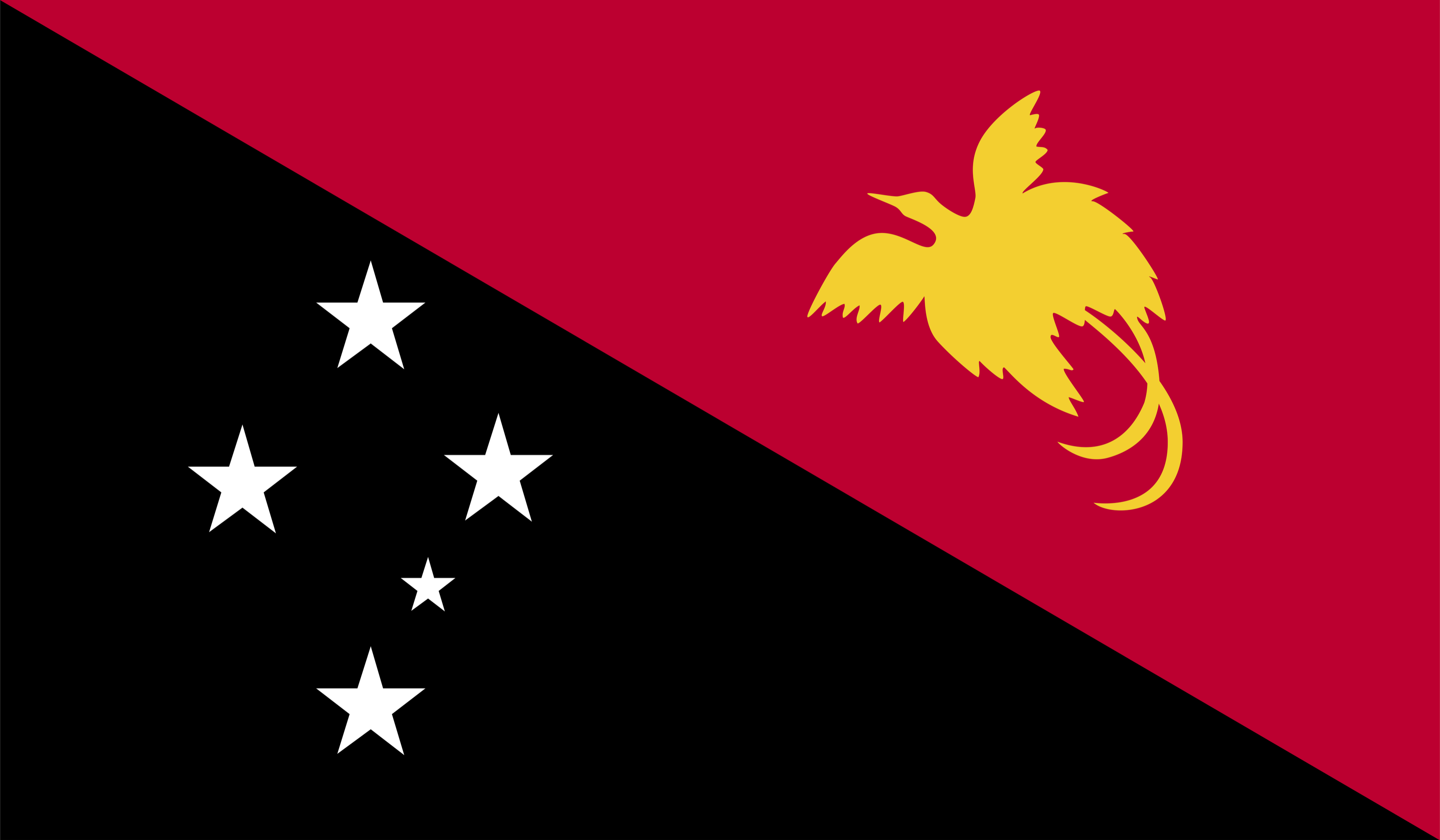
Flag of Papua New Guinea

Before going into details of the Enhanced Corporation Program (ECP) it is important to understand the reasons for Australia’s intervention in Papua New Guinea. PNG were facing severe development challenges in areas of law & order, justice, corruption, poor financial management and governance (Australia, n.d.). The failure of any Prime Minister to serve a full five year term in the Papua New Guinean Government (Australia, n.d.), is an example of a politically unstable nation. Likewise, weak domestic demand & 2% economic growth in 2003 (Australia, n.d.), could be said to have created an unstable economy, alongside trouble in managing borders to ensure transport safety & security (Australia, n.d.), could be classified as a social instability, as this could easily open up scope for terrorism or terrorist groups to enter and setup a base in such countries.

The Enhanced Corperation Program

The Enhanced Corporation Program was signed in December 2003, to address the economic and development challenges in Papua New Guinea (Australia, n.d.). There were about twelve provisions of the ECP agreement. Some of the features of the agreement includes; “Provisions to enable the deployment of Australian police & other personnel to work with PNG government in areas of law & order, justice, governance, financial management and socio-economic progress, decreeing Australian personnel and their families observe PNG laws and regulations, compliance with international laws and Establishing a system to deal with claims against Australian personnel” (Australia, n.d.).

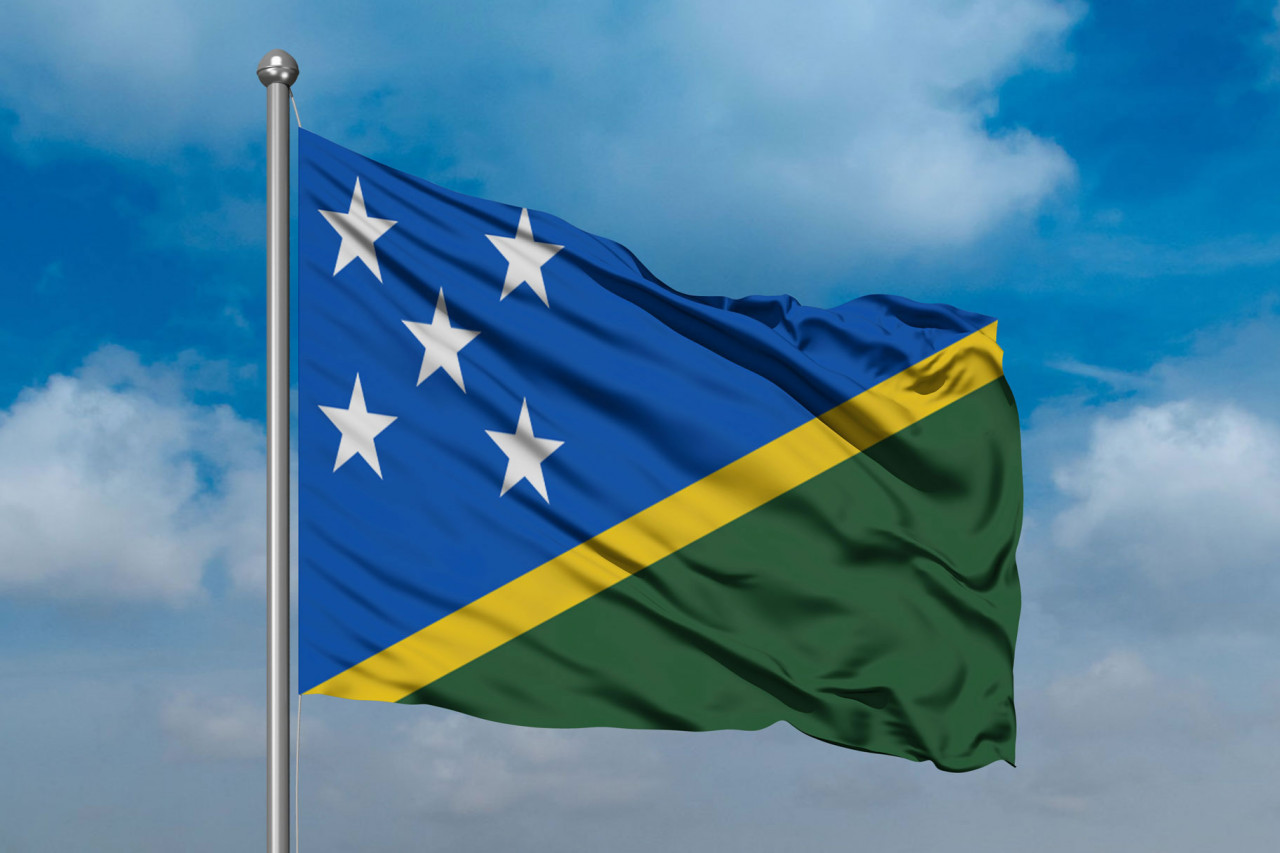
Flag of the Solomon Islands

The Regional Assistance Mission Solomon Island (RAMSI) played a significant role in stabilizing socio-economic and political situation in the Solomon Islands. RAMSI was formed in 2003, when Sir Alan Kemakeza, the then Prime Minister of Solomon Islands called for an urgent request for international assistance (About RAMSI, n.d.). The request was then heard and agreed by the Pacific Islands Forum to form a regional assistance mission funded and led by Australia and New Zealand with the support of other Pacific Island Forum member countries. So, in June 2003, Prime Minister Allan travelled to Australia to formally receive offer of assistance (About RAMSI, n.d.).

RAMSI LOGO

The reason for RAMSI’s establishment was “to address civil unrest, lawlessness, economic decline corruption and significant drop in service delivery and government administrative standards” (About RAMSI, n.d.). This became the basis of the RAMSI Treaty signed on 24th July 2003, to allow the deployment of police and military offices to Solomon Islands” (About RAMSI, n.d.).

As far as success of RAMSI is concerned, the mission has been successful in restoring law and order, rebuilt national institutions and reformed the economy of the Solomon Islands (About RAMSI, n.d.).

To conclude, a failed state is one where the government has no control over its socio-economic and political situation. Both Papua New Guinea and the Solomon Islands faced major social, economic and political instability through failure to maintain law and order, unable to contain corruption, as well as solve finical management and governance issues. The Enhanced Cooperation Program (ECP) in Papua New Guinea and the Regional Assistance Mission Solomon Islands (RAMSI) played an instrumental role in providing a stabled social, economic and political society as it managed to restore law and order, rebuild international institutions and reform the economic system of the Solomon Islands.   

Thank you for reading. You can refer to the list of biblographies given below.

(n.d.). Retrieved October 24, 2020, from About RAMSI: https://www.ramsi.org/about/

Australia, P. o. (n.d.). Retrieved October 19, 2020, from Chapter 4 Enhanced Cooperation Agreement with Papua New Guinea: https://www.aph.gov.au/Parliamentary_Business/Committees/Joint/Completed_Inquiries/jsct/8february2005/chapter4

google. (n.d.). Retrieved October 18, 2020, from https://www.google.com/search?sxsrf=ALeKk010TkHjnWQlLm6LZlLyAmqo2gwwXA%3A1604181535536&source=hp&ei=H96dX5TnHcyTkwX486fICA&q=define+failed+state&oq=define+faiiled+&gs_lcp=CgZwc3ktYWIQAxgAMgcIABDJAxANMgQIABANMgQIABANMgQIABANMgQIABANMgYIABAWEB4yBggAEBYQHjIG

Rotberg, R. I. (2002, Janurary 7). The new nature of non-state failure. The Washington, 25(3), 83-96. doi: 10.1162/01636600260046253

Fiji 50th Inpendence Anniversary

Dear readers. This is a special blog edition to mark the 5oth year of Fiji’s Independence. The article contains a very brief history of Fiji’s independence and how the state has grown overtime to what it is today. The write-up hopes to empower the young population and wishes for a brighter Fiji ahead.

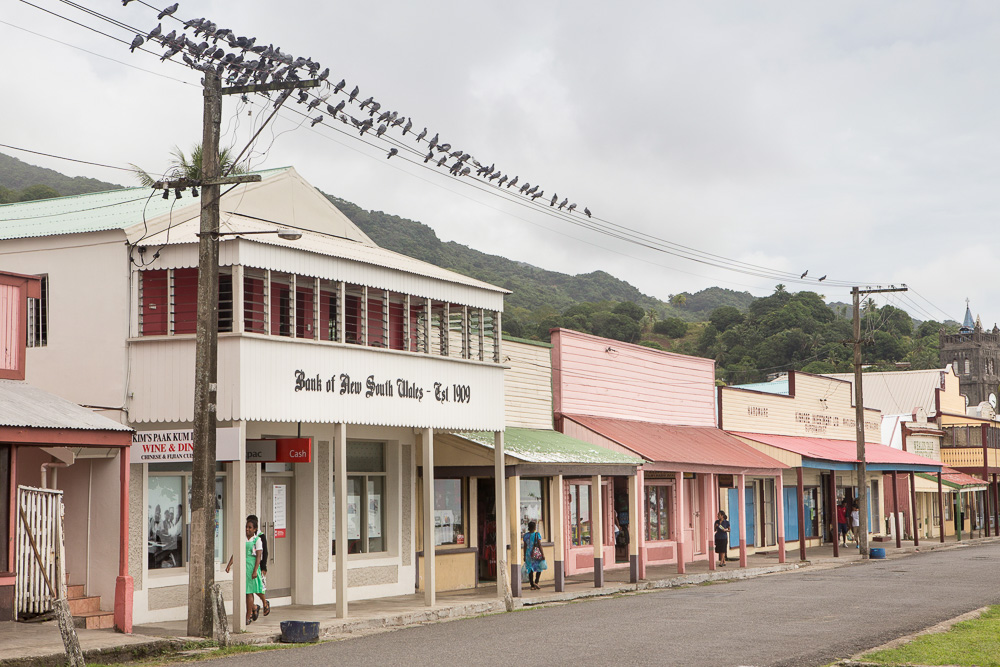
Levuka, the Old Capital of Fiji. Also where the Deed of Cession took place.

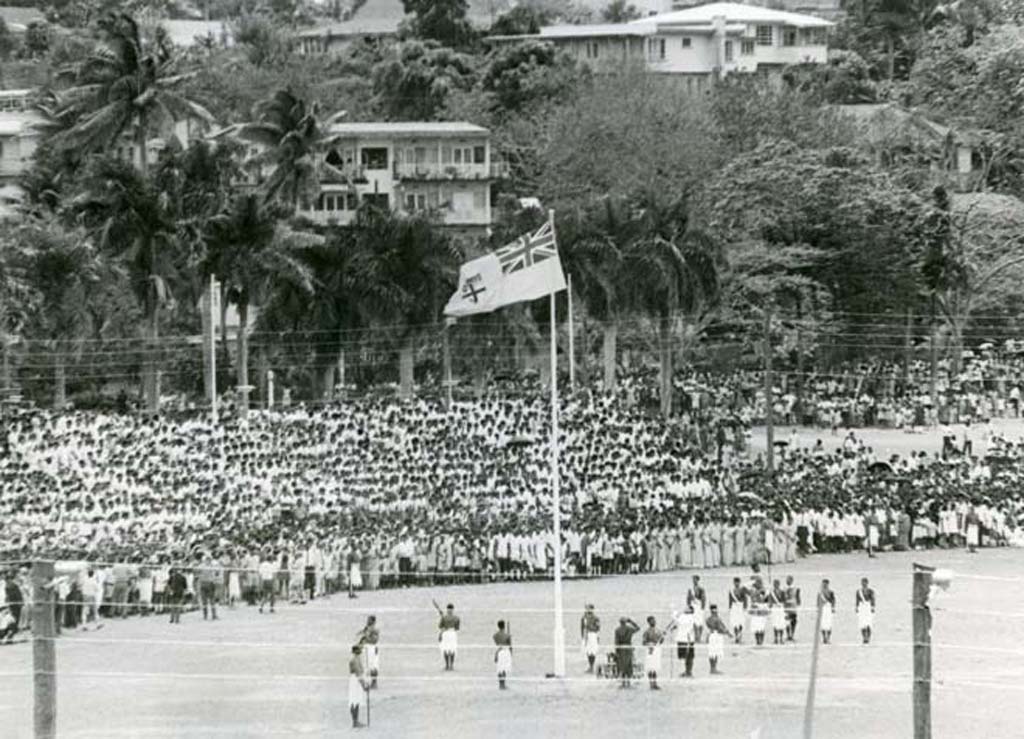
Fiji was ceded to Great Britain in 1874 by Ratu Seru Cakabau and gained independence on 10th October, 1970 at 10am at Albert Park in Suva, Fiji by Prince Charles.

Image of 10th October, 1970 at Albert Park Suva, Fiji

Over the past 50 years, Fiji as a nation has experienced many ups and downs which includes four coups between 1987 and 2006 causing socio-economic and political instability, faced the impacts of Tropical cyclone Kina between December 1992 and January 1993 and Severe Tropical Cyclone Winston in 2016 and could be said to have greater ethnic tensions between the indigenous population and Indo-Fijians in particular.

The Flaying Fiji Flag

However, today Fiji is defined as a multicultural and democratic nation with every citizen given a common identity as “Fijians” and their rights being protected under the 2013 constitution. While the state has progressed politically, socially and economically, its infrastructure and technological advancement cannot be overlooked. People of Fiji now have access better roads, high speed internet connectivity, and access to clean water and electricity in most of rural and maritime islands.

Fiji’s Commemorative 50 Coin & Bank Note

As we mark our 50th year of independence, we must take out time to reflect on the things we have learnt throughout the years and work towards a better future for our country. I urge you all, the young and future leaders of tomorrow to contribute in the best way possible to the development of our beloved nation. I encourage you all to stand united as it reflects the level of diversity that Fiji persist. With those words. Thank you for reading and May God Bless Fiji.     

I Love Fiji

Can Develelopment Journalism Be The Way Forward?

Hi there everyone! Hope you all are well. The following article is a media topic essay which I had written for one of my core unit. The discussion surrounds the concept of “Development Journalism”. Its central focus is on the pros & cons of “Development Journalism.”Before I proceed any further, I must highlight that the “Development Journalism” has been quite commonly used in the Asia-Pacific region. Since I do not wish to make any changes to the presented document it will take a neutral stance and it is up-to the reader to decide whether “Development Journalism”is government say-so journalism.

However, personally I do not support development journalism as I feel it compromises with the traditional watchdog role of the media. While this debatable topic is for a thorough discussion at a later date. Here I present both sides of the story for you to answer “whether “Development Journalism” is government say-so journalism.”

Definition of “Development Journalism”

The origin of the term “development journalism” or sometimes known as development communications goes back to the 1960’s. Development Journalism is a concept at the center of new information order. It happens to be that, supporters and the critics of the formation of the new kind of journalism are not always clear of the meaning or method of application in a particular situation source. Since development journalism has been defined and used in different contexts, it has been linked with larger press freedom against government control issues. This essay will discuss whether development journalism is a government say-so journalism or is it a totally different concept. The paper will unfold in two parts. Firstly, it will argue that development journalism is called government say-so journalism where it will elaborate on one negative effect of media partnership with state, the function of media in in promoting national government agenda and how development journalism challenges the traditional watchdog role of the press. Then, the document will highlight how media partnership with state can be beneficial to both parties, how the concept of development communication can contribute to state development, as well as identify and justify which group best fits into the development journalism concept.

To begin with, one of the negative effect of the press partnering with state is that, the media organization can be very easily influenced by the government in their delivery of news content (Ismail, 2013)The media can also be accused of being the governments puppet which can be harmful to the media organization’s image and credibility   According to Awan Ismail in the article “Exploring the strengths and limitations of Development Journalism in Malaysia” claims that development journalism is the “critical examination, evaluation and report of relevance which demands the press to be independent of government” (Ismail, 2013). Thus, it is important that the press remains an independent body to ensure reporting is fair and balanced.

Similarly, with development journalism model in existence, it has been argued that “the press ideally functions to serve the national agenda and those in power” (Ismail, 2013). It further states that governments through mass media promote whatever an authoritarian government wishes to develop or create (Ismail, 2013), good to compare and contrast multiple sources rather than rely mainly on one source.This can be challenging for media organizations for it may seem the government is undermining or exercising control over its independence. It may also be interesting to note that the state may also use social media as medium of promoting its intension more effectively and quickly.

Likewise, development journalism had be widely criticized by western countries as it raised concerns on the freedom of press (Tshabangu, 2013) as it challenges the rights of journalists and can affect the quality and credibility of information given to the public. Development journalism provides states the opportunity to exercise control over the media. This can be dangerous for the press if the state feels that the media is abusing its power and agitating the state, the government can regulate the media and impose fines on media organizations. For example, in countries such as Malaysia and Indonesia (Romano, 1999). Therefore, development journalism with the traditional watchdog role of the media, as strict laws and fines can create fear among journalists which can affect the quality of work.

5 Major principles of Development Journalism

On the other hand, state partnership with the press can allow governments to advertise vacancies and other information at a lower cost. This concept of media buying (Media Buying, 2020) can be highly beneficial for both the government and the media involved, as it shows “how taxpayers money is being used and on what, cheap advertising price, and flexible framework agreement” (Media Buying, 2020). The government media partnership promotes accountability of taxpayers’ funds and gives the state an opportunity to market its regime with limited cost but it could lead to pro government media as in the case of Fiji Sun and FBCL.

Moreover, development journalism is said to be more solution oriented (McPhail, 2009) as it aims to contribute towards nation-building (Ismail, 2013). The idea of development journalism is to “alert the public of development problems and for the media to work with government and find solutions to matters arising (Ismail, 2013). For example, media reporting in Malaysia may focus on regional reporting rather than internal, as this will help strengthen political relationship within Asia and contribute to improving lives of Asian citizens (Ismail, 2013).  Hence, development journalism is an important mechanism in shaping political relationships between countries as political statements in the press is a way of communicating ideas and thoughts in politics.

Lastly, development journalism concept is greatly recommended for developing and multicultural nations as they are characterized by conflict and opposition and deemed culturally appropriate (Singh, 2020). An example, where this concept can be applied is the Pacific islands region. An area surrounded by oceans and developing states with growing economy (Ismail, 2013) and political instability, development journalism could be the way forward. One way development journalism could be achieved through mindful practices, moral wisdom and ethics training (Pacific Media Centre, 2016).

To conclude, this essay has discussed how development journalism can be classified as government say-so journalism where the press could be influenced through media partnership with state was highlighted, the media ideally functions to serve the national agenda of government and those in power was argued alongside the view that development journalism is a threat to the traditional watchdog role of the media. However, the document also enlightens that there are some positive sides as well, which includes; low cost of advertising if the state and media are in partnership, development journalism is solution oriented journalism, which is highly recommended for developing nations such as Pacific island states as it offers development methods and resolutions.

Below are the list of sources used in the preparation of the essay. Also note that the sources does not include additional sources used in preparing this blog post.

Bibliography

Ismail, A. (2013). Exploring the Strenghts and Limitations of Development Journalism in Malaysia. Adelaide: The University of Adelaide .

McPhail, T. L. (2009). Introduction to Development Communication. Blackwell Publishing Ltd. doi:10.1002/9781444310740

Media Buying. (2020). Government Communication Services. Retrieved May 28, 2020, from https://gcs.civilservice.gov.uk/guidance/media-buying/

Romano, A. (1999). Development Journalism: State versus Practitioner Perspectives in Indonesia. Media Asia, 26(4), 183-191. doi: 10.1080/01296612.1999.11726592

Singh, S. (2020). Development Communication & Development Journalism. Lecture Notes .

Tshabangu, T. (2013). Development Journalism in Zimbabwe: Practice, Problems, and Prospect. Journal of Development Communication Studies, 2, 312-326.

so, before I take leave I would like to share a short video clip on how to be a great journalist. I know for a fact that nowdays we have more citizen journalists than qualified and professional journalists.

so just be careful of the type of information you receive from whom and the source of information and be sure to rely on credible news sources.

Here’s how to be a great journalist

Hope you enjoyed the presentation. Till we meet the next time, thanks for reading. Bye!

Double Trouble for University Students in the Pacific

Hello everyone! The following is a feature article which I had written as an assignment for one of my core units. I hve made some structural changes, as well as modified it a bit by adding my own views at a couple of places.

For many University of the South Pacific students, life was going smoothly until the arrival of the coronavirus (COVID 19) Pandemic.

While the Pacific region was largely spared the chaos and death the virus caused in the developed world, the economic impact was just as resounding.

 It was made worse by Tropical Cyclone Harold, a Category 5 storm which struck the Solomon Islands on the 2nd of April 2020, causing severe flooding’ damaging houses and infrustructure as well as cusing four deaths.

Damage caused by TC Harold

Tropical cyclone then affected other Pacific Island states including; Vanuatu, Fiji and Tonga.

Clink on the link to read more on how Tropical Cyclone Harold and COVID 19 was a double blow to the Pacific Islands https://reliefweb.int/report/fiji/tropical-cyclone-harold-and-covid-19-double-blow-pacific-islands.

According to experts, the double impact of \natural disaster and global pandemic are likely to have a wide-ranging impact on students at USP.

University of the South Pacific, Laucala Campus, Suva, Fiji

 Economic & Mental Health Impacts

Discipline leader psychology at USP’s psychology department, Annie Crookes, said the full extent of the damage caused by the pandemic was still unclear.

The continuing uncertainty could have an impact on the mental well-being of USP students.

 “Not only is there change, disruption and new things to cope with in a short span of time but future employment opportunities, health and wealth of countries are no longer predictable”, Ms Crookes said.

She adds, “Decisions will need to be made about their continuation of studies alongside other priorities.

Image of a stressed student https://s31450.pcdn.co/wp-content/uploads/2018/06/stressed-student-180615.jpg

 Online Learning

The University has implemented an online learning system for the remainder of the academic year.

Online learning can be fun as you do not have to be physically present in class and give attendance.

However, there are some teething issues students are facing which is usually the case with any new system.

Fouzmin Nisha, a Bachelor of Arts & Education student at USP, says online learning has been difficult especially as a person with vision impairment.

“I heavily rely on screen reading software to help me access online content and because information on websites are not too accessible with our technology, we have to depend on other people for help”, Fouzmin Nisha said.

“The University’s Disability Resource Centre has allocated buddies who meet me couple of times a week to help in retrieving information online, they also help me with online quiz and pretty much anything internet related”, she said.   

Furthermore, students’ ability to pressure online learning depends on how well they can focus outside the school environment or when they are left unsupervised.

As a university student, we are expected to be self-learners or sometimes referred to as independent learners which I believe is not an easy task for everyone.

So, here’s what Ms Crookes suggests, “Building a routine, creating a study plan and sticking to it or trying to stick to it for a week or two, “to see if it becomes a habit.”

I personally think this idea is good because it allows you to have more free time, which means you have time for other stuffs like reading a story book, playing video games or spending time with friends and families. In short, it enhances time management skills.

student studying online

First Year Students

The challenge may be steeper for first year students still getting used to the university system.

I think students who have recently joined from high school are going to be particularly affected due to the fact that just as they seemed to have been settling into their chosen mode of study, a pandemic forced everything online.

The excitement of studying on campus and making new friends just got ruined.

While there’s not much we can do, I reemphasize Ms Crookes’s idea of time management which can be beneficial not only in studies but in the near future.   

Tips on how to be a successful online student


The Relationship Between Real Life & Politics

Hello wonderful people. Hope you all are having a good time and if you are not, then I quie sure your good times will come soon.

Nevertheless, I know and understand that many people take a lo of interst im politics and at the same time I am aware that many of us like politics but maybe not that much and some of you don’t like the subject at all.

Regardless of your respective views on this matter. Have you ever thought or wondered the relationship beteen our lives and the subject of politics?

Now, many of you might say “so, who cares?”

But the truth is, whatever decisions nomatter how big or small that choice be, it has massive impact on us as citizens.

Realife Politics

I think I have got to agree with Paul Ginsborg because everything we do whether we are politicians or not is based on one central word “CHOICE“.

It depends on us as individuals as to what we choose which changes our life in a possitive or negstive way.

For example, when we go to the polling station o cast our vote, we make a choice as to whom will we vote for.

Another good example is when we go to the supermarket or grocery store to buy goods, and when we don’t find what we are looking for or let’s say for a specific brend then we think maybe its not made or imported toour country. That is somehow or the other linked to politics.

Jus like in real life we have various relationships like parents with their children and other relatives, in politics we have relationships too.

But these are more of a formal relationship between two or more countries.

The knot that often brings countries together are agreements or a Memorendom of Understandings (MOU) that helps strengthen ties betwen the states involvd, upon signing the agreements or the MOU’s the singnatories agree to work together on a common course.

Like we have close friends and relatives, similarly in the political areana our close friends are known as those states that are within our region.

For example, the friendship beween Fiji with Tonga is a is a regional relationship becaus both countries are located within the Pacific Ocean.

Moreover, countries that do not share the same regional boundaries are often refered to as international boarders.

For instance, Fiji has friendships with China, India or the United Kingdom, it can be referred to as an international relationship.

Sometimes you may have had difference of opinion between families, friends, workmates, to name a few.

This human nature is no different in the political field.

Let’s take climate change for example, people of the Pacific Islands believe that change in wether patterns are actually taking place. But the President of the United States of America, Donald Trump thinks climate change is a hoax.

Trump’s view on Climate change

So now you see it, there’s not much of a diffrence between the relationships we hae with people and politics.

The two can often be seperated by the words “formal” and “informal”. whereby diplometic ties can be called formal and political relationships whereas, the connections with our families, friends and relatives are non-political and informal relationships.

Fiji & Climate Change

Hi there everyone. Today I’ll talk on one of the world’s most preesing and whast I would say is often talked about especially in the Pacific, the topic of Climate Change.

Image result for images on areas affected by climate change in fiji
Climate change Issue in Taveuni- Fiji

Before I dig deep into this topic, it is important to know what climate change is and how it is caused.

The simplest di\efinion of this subject is that climae change is the change in adverse weather pattern which occur over a long period of time. The following link will elebrate more on the definition as well the cause of climate changehttps://www.youtube.com/watch?v=uHbxSYDqTR8

one of the main contributors to climate change is the increase in greenhouse gases into the atmosphere.

This is mainly due to factories and large industries that produce thick black smoke into the atmosphere which is then absorbed by the sun’s rays & ozone layer which leads to global warming.

The ozone layer

Global warming has caused icebergs in the Atlantic ocean to melt which has led to forming clouds and falling as rain. The following link has more in-depth information on the effects of global warming as a cause of the melting icebergs.https://education.seattlepi.com/effect-global-warming-icebergs-4877.html

The Melting Icebergs

Another major cause that has links to both global warming and climate change is tropical cyclones.

Now, if you are wondering what a tropical cycle is ,then let me share some light on it.

Tropical cyclone is very intense low-pressure wind system, forming over tropical oceans and with winds of hurricane force https://www.google.com/search?

Furthermore, tropical cyclones use warm and moist air to generate.

This is why they only form over warm ocean waters near the equatorhttps://www.google.com/.

Formation of Tropical cyclones\ Tropical stoms.

Fiji is one of the Paific Island nation’s located close to the equator which makes them which makes thwm vulnerable to tropical cyclones.

Fiji on he map

The Fiji group was hit by the bigest cyclone in the world named Tropical cyclone Winston, in 2016 which claimed 44 lives accross the country https://www.google.com/.

TC Winston in the iji group in 2016

There’s one more interesting factor contributing to the effects of climate change, this is deforestration.

Deforestration is simply the cutting down of trees and leaving the land bare.

This causes soil to erode by the use of mechanisms such as wind, water, animals and hmans.

Example of Deforestration
Example of Soil erossion

One way to fight climate change is through collectivism. By this I mean all relevant stakeholders whether be it governmental, non-governmental and civil society organization will have to work togeher to fight this pressing issue, especially the Pacific contries like Fiji who are facing the full brunt of the change in climate.

Wih the process of reafforestation, which is replanting of trees can help overcome the problem of deforestration and soil reosion.

Example of reafforestation

As a Pacific islander, I feel the need for global dialogue is vital especislly having a collective voice of the Pacific where all Pacific Island sates come together as one and make their voices heard in the international arena.

Fiji’s Conference of Parties (COP) 23 Presidency in 2017 in Bonn, Germany is a good example of Small island states leading discussions on climate change.

COP23 conference Headed by Fiji

Whether or how successful the COP23 was? Is another debatable question which I prefer to discuss at a later date.

In the meantime, feel free to like, comment or share this post.

Than you.