Accessibility: A Right for Persons with Disabilities Report by Dhruvkaran Nand PART 3

Hello everyone! Welcome to another presentation of IN THE WHITE. Hope you all are doing well, as well as in good health.

This is the third and final part of the “Accessibility: A Right for Persons with Disabilities” report.

If you have not yet read the previous two parts, then I would suggest going through them first for a better understanding of this content. 
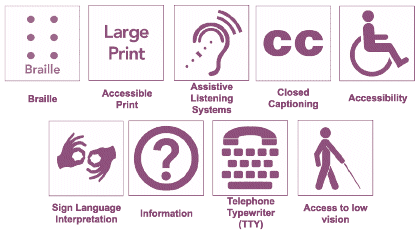
How to plan for events everyone can attend

RECOMMENDATIONS

Upon conducting thorough research on access to infrastructure, information, and education for persons with disabilities in Fiji, this paper wishes to provide the following recommendations to strengthen disability inclusion and improve disability access in the specific areas mentioned in this report.

For an advanced infrastructure, all office blocks must have provisions for ramps, lifts, and side railings while buildings are undergoing the planning phase. This will allow wheelchair accessibility as well as assist the blind and visually impaired in navigating the premises.

The transport sector needs more attention as highlighted in the audit report cited in this document, due lack of knowledge within the Land Transport Authority, laws such as “priority seats for persons with disabilities in busses” (OAG Performance Audit-on the Access for Persons with Disabilities to Public Offices and Public-Transport, 2020) needs effective implementation with government assistance in providing the service in a cost-efficient manner.

The state should invest in screen reading and Optical Character Recognition, OCR software (Kirsty Williamson, 2001) to enable digital access to information for persons with vision difficulties. The OCR converts scanned documents and Portable Document Format (PDF) files or images caught via a digital camera and enables reading or editing information. Government should consider subsidizing the costs of such software if persons with disabilities cannot afford to purchase it on their own.

An extensive level of community awareness needs to be carried out by the National Council for Persons with disabilities (fncdp.org, 1992), the coordinating body dealing with the care and rehabilitation of persons with disabilities, the Fiji Disabled Peoples Federation (fdpf.org, 2012) founded to be the voice for and of persons with disabilities in Fiji, together with its affiliates must do more to change the mindset of society, which would influence societal organizations such as mainstream school managements to enroll and cater for the needs of children with disabilities in their institutions.
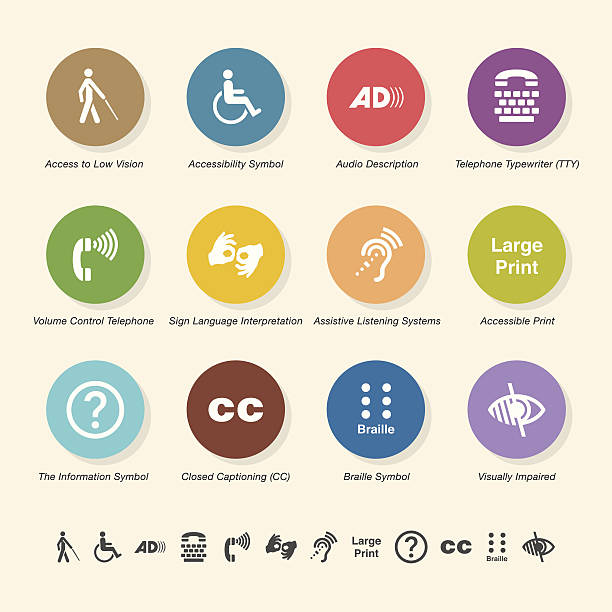
Disability access icon color circle series

CONCLUSION

In conclusion, after Fiji ratified the Convention on the Rights of Persons with Disabilities on 7th June 2017, it introduced the Rights of Persons with Disabilities Act within a year, which showed the government and state’s commitment to building a disability-inclusive society. The paper acknowledges the different impairments that exist within communities and understands the versatile needs of differently abled individuals, as well as the importance of a developed infrastructure, the role of advanced technologies to access information online, and the requirement of robust community awareness by non-government organizations dealing with the welfare of children, adults alongside the elderly with disabilities. These awareness campaigns could prove an essential tool in influencing current or future government and its statutory body policies which greatly impact ordinary citizens’ lives, including persons with impairments.

Some notable findings of this report include; the inability of all offices and public transports to be disability friendly, the fact that physical barrier to accessing information is not the only challenge persons with disabilities are faced with but obtaining data online could be difficult if screen reading software’s, optical character recognition and the magnifier technology is not available or provided.

Apart from the above-mentioned point, it is pretty evident that the major issue surrounding accessibility development, maintenance, and law enforcement is the lack of knowledge of organizations and limited no financial capacity to meet the accessibility demands of persons with disabilities. The document suggests subsidizing modern technologies to accommodate the availability and affordability of resources and construction grants must be given to schools and other public facilities to facilitate ramps, lifts, side railings, and proper signage for persons with disabilities.

Finally, with regulations in place to cater to the necessities of persons with disabilities in Fiji, more effort is required from the government to practically enforce the legislations for which government and non-government agencies along with other stakeholders must work together in achieving a disability-inclusive Fiji.

Moving beyond Disabiliy to Accessibility

Thank you for reading this article, as well as enjoyed watching he video. Although the video shows accessibility as a challenge for persons with disabilities in India, it is relatable in the case of Fiji.

Accessibility: A Right for Persons with Disabilities Report by Dhruvkaran Nand PART 2

Hello everyone! Welcome to another presentation of IN THE WHITE. Hope you all are doing well, as well as in good health.

This is the second part of the “Accessibility: A Right for Persons with Disabilities” report.

If you have not yet read part 1, then I would suggest going through that first for a better understanding of this content.  

Hope you will find this interesting and informative.

ACCESS TO INFRASTRUCTURE

Outside & Roadside Ramp

The most important component in terms of accessibility for persons with disabilities is infrastructure. Without this element persons with disabilities will not be able to move around freely and independently, especially those in wheelchairs. The report identifies two types of disabilities, namely the visually impaired and the physically challenged who are the most vulnerable to accidents if“reasonable access to all indoor and outdoor places, public transport and reasonable adaptation of buildings, infrastructures” (Rights of Persons with Disabilities Acts 2018, 2018) are not met. Providing a strong infrastructure is not only a government’s duty to be fulfilled, but is a motivation for persons with impairment to live an independent life, which further encourages them to achieve the different individual goals they ought to accomplish. Whether it be going to school, work or shopping via public transport like buses and taxies or interisland travel by boats, ships or aircraft, “persons with disabilities have full rights to access such services on an equal basis with others” (Rights of Persons with Disabilities Acts 2018, 2018).    

Althougsectionson 29 (a) and (d) of the rights of Persons with Disabilities Act 2018 assures access to indoor and outdoor places, public transport, and buildings, it is worth noting, not all office blocks are disability friendly. A report by the office of the Auditor General of the Republic of Fiji titled “Performance-Audit on the Access for Persons with Disabilities to Public Office and Public Transport” highlights twenty-seven venues in Suva City, Fiji of which some were partially accessible while others were not accessible completely (OAG Performance Audit-on the Access for Persons with Disabilities to Public Offices and Public-Transport, 2020). The report further mentions of “poor footpath conditions and the lack of curb rumps” (OAG Performance Audit-on the Access for Persons with Disabilities to Public Offices and Public-Transport, 2020) makes it impossible for wheelchair users to cross roads independently.

Similarly, access to public transport remains a test for physically impaired individuals in particular as “none of the public service vehicles are user-friendly” (OAG Performance Audit-on the Access for Persons with Disabilities to Public Offices and Public-Transport, 2020). It must be taken into account that section 61 (1) affirms the right to access public transport for persons with disabilities, but “lack of knowledge within relevant institutions and policymakers it has not been well enforced which acknowledged in the audit report cited in this paper.

ACCESS TO INFORMATION

The Job Access With Speech (JAWS) Software

Access to information is a crucial element that Persons with disabilities need to communicate effectively. Disseminating information to the public is an important responsibility for any institution, keeping in mind persons with disabilities are included when any piece of information is shared with the public. When passing a message to persons with impairments, how a piece of information is disseminated must be considered given the different varieties of impairments that exist and the kind of disability or disabilities people are faced with. There are various ways the Fijian government has stated in the Rights of Persons with disabilities act 2018, to ensure individuals with impairments are informed, which include; information through signage, forms in braille as well as in easy to read and understand modes” (Rights of Persons with Disabilities Acts 2018, 2018) must be available in an office block and other facilities open to the public. Pictures, tactile diagrams, and, video clips with the use of sign language interpretation or in cooperation with subtitles are some effective tools that can be useful in getting messages across to persons with disabilities.    

Section 25 (1) (a) and (b) of the 2013 Constitution of the Republic of Fiji gives the right of “access to information held by any public officer including another person and required for the exercise or protection of any legal right” (Constitution of the Republic of Fiji, 2013), does not exclude information given to persons with disabilities. This right is further reflected under accessibility in the Rights of Persons with Disabilities Act 2018. Section 29 (a) reaffirms access to information apart from accommodating indoor and outdoor facilities and public transport (Rights of Persons with Disabilities Acts 2018, 2018).

However, one must understand physical access to information is not the only barrier persons with disabilities are up against, accessing information online is equally as challenging as that. Digital access to information can be more difficult for the visually impaired in particular, if “screen reading software’s such as Job Access with Speech (JAWS) or Non-Visual Desktop Access (NVDA)” (Kirsty Williamson, 2001) is not provided to such persons. Those with some vision often or may rely on a “screen magnification program” (Kirsty Williamson, 2001) which enlarges text or images enabling the person to see and read. These instruments alongside “optical character recognition” (Kirsty Williamson, 2001) have been utilized globally including the Pacific region which Fiji is also part of, it has proven effective in improving the lives of the visually impaired and the way information is accessed online.

ACCESS TO EDUCATION

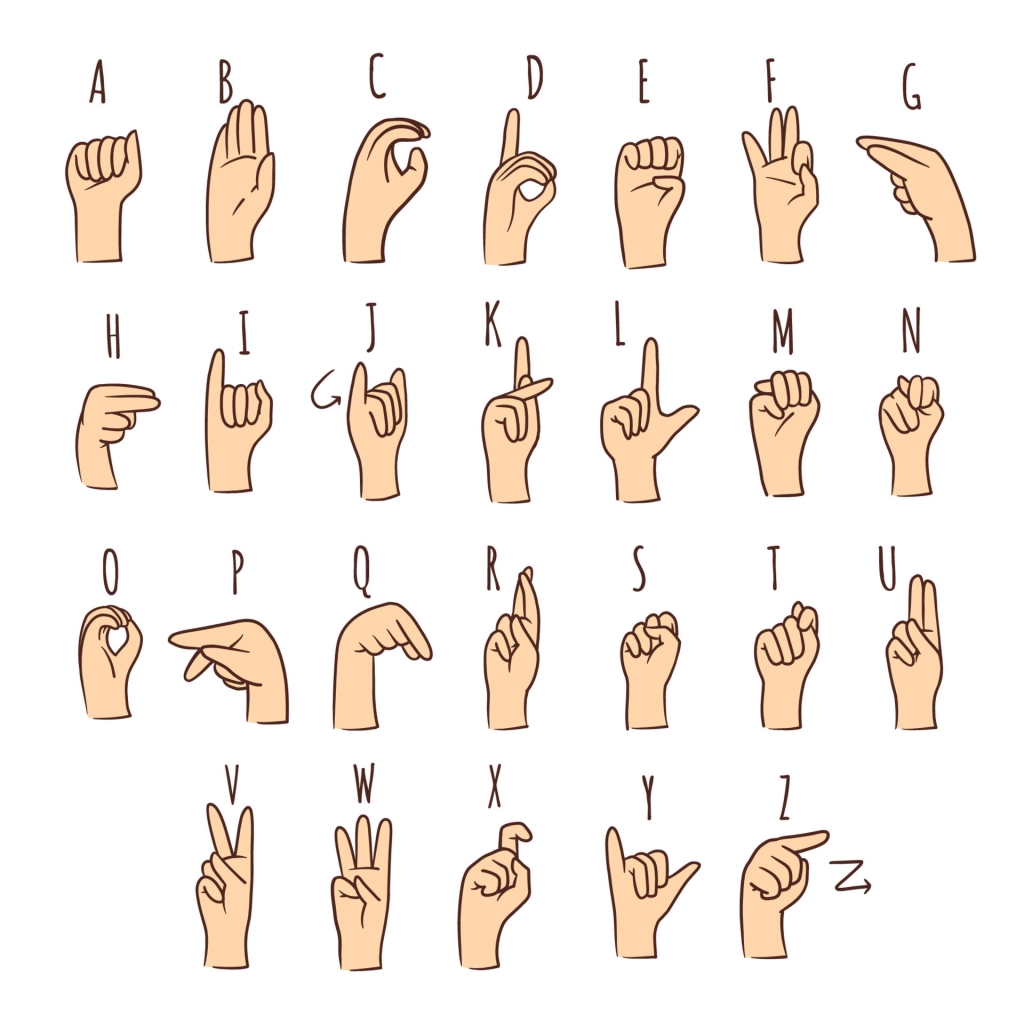
English Alphabets in Sign Language

Access to education is essential for both children and adults of Persons with disabilities for a promising future and sustainable livelihood. A checklist (Tara Wood) could play a key role in assuring accessibility needs are met to accommodate education requirements for children and persons with special needs. Services such as ramps to classrooms, interpreters for the deaf, and braille machines for the visually impaired (Tara Wood) are necessary facilities that must be available to make learning disability inclusive. It also provides an opportunity for abled-bodied individuals to mingle and learn from the differently abled children and adults, which would further enhance understanding of the different disabilities that exist within society and help combat “discrimination based on disability” (Rights of Persons with Disabilities Acts 2018, 2018) in the community.

The “Special and Inclusive Education Policy” (Policy on Special and Inclusive Education, 2016) developed by the Education Ministry is a reflection of Fiji’s commitment to the inclusion of children with special needs in the education arena. Section 2.3 of the policy assures “necessary support to schools through adequate staffing, teaching/learning resources, and infrastructure” (Policy on Special and Inclusive Education, 2016) to facilitate children with disabilities.

The barrier in the effort to implement the legislation could be understood in an article titled “Mobilising School and Community Engagement to Implement Disability-Inclusive Education through Action Research: Fiji, Samoa, Solomon Islands and Vanuatu”, which highlights challenges namely the expensiveness of constructing rumps in schools and the conservative mindset of school management that represent community values continue to hinder education inclusivity.

Accessibility: A Right for Persons with Disabilities – Report by Dhruvkaran Nand – PART 1

Hello everyone! Welcome to another presentation of IN THE WHITE. Hope you all are doing well, as well as in good health.

Today’s write-up is the start of a publication of a report titled “Accessibility: A Right for Persons with Disabilities.” I wrote this document a few years ago, as a 300-level Politics student at The University of the South Pacific.

Different diagrams dipicting the different typs of inpairments

Due to the length of the report, I have decided to publish the report on this platform in three parts. The first part consists of the Executive Summary and Introduction of the report. Part two will discuss three subheadings namely “Access to Infrastructure, Access to Information, and Access to Education” in more detail. While part three will consist of the Conclusion, Recommendations, and list of sources as the Bibliography used to compile the research.

I hope you will find this piece of writing interesting and informative as I release Part One of the “Accessibility: A Right for Persons with Disabilities” report.

EXECUTIVE SUMMARY

Promoting the United Nations Convention on the Rights of Persons with Disabilities

Since the rights of persons with disabilities are on the rise, accessibility in general terms would play a vital role in the sustainability of the lives of the disadvantaged. Accessibility allows persons with disabilities equal opportunity to actively participate in socio-economic activities and decision-making. The Convention on the Rights of Persons with Disabilities guarantees equality in all aspects of human life and provides a scope of development to improve the livelihood of this vulnerable group.

For the purpose of this research paper, the document seeks to focus on article 9 of the Convention on the Rights of Persons with Disabilities CRPD, which primarily concentrates on accessibility. The write-up examines the extent to which Fiji has fulfilled its obligation to article nine of the CRPD.

The information installed in this research document has been extracted from credible sources such as the United Nations Convention on the Rights of Persons with Disabilities, the Universal Declaration of Human Rights, and Fiji’s Rights of Persons with Disabilities Act 2018. It is important to note that the research does not include primary data such as interviews due to the lack of time to be ethically prepared to out on the field. Therefore, it will rely solely on the collection of secondary material.

Overview of Findings

Disability Rights Are Human Rights – Poster

Upon ratifying the convention on the rights of Persons with disabilities in 2017, the Fijian government introduced the “Rights of Persons with Disabilities Act 2018”, which reflects the state’s efficiency and commitment to improving the lives of persons with disabilities in Fiji.

Some of the key areas the report will elaborate on include; access to infrastructure, access to information, and access to education. It will then provide a suitable recommendation for each of these areas to create a better living environment for the less fortunate.  

INTRODUCTION

Promoting Article 9 on ACCESSIBILITY of the Convention on the Rights of Persons with Dissabilities

Fiji ratified the convention on the Rights of Persons with Disabilities on 7 June 2017. To enforce the ratification, Fiji introduced the “Rights of Persons with Disabilities Act 2018.” Section 29 of the act ensures the right to accessibility for all disabled individuals in any circumstances. It could be said, accessibility is the backbone of the Convention on the Rights of Persons with Disabilities because, without a disability-friendly environment, it is not possible to include individuals with impairments.

It is the role of the government to ensure persons with disabilities are considered part of the community and given adequate care with the right support they need to live a sustainable life. The need for stricter laws and effective monitoring of the legislation is necessary to boost the morale of the disabled community so they feel safe and confident enough to fight for their right under any jurisdiction.

It is also important to note and acknowledge that different impairments exist within the disability sector which makes every differently abled individual unique and their needs versatile. It is worth noting that many people around the globe live with more than one disability. For instance, if someone is suffering from hearing impairment they may face speech difficulty or physical disability at the same time. For such cases, extra help or any additional support from the government or Non-governmental organizations could prove vital in improving the lives of disabled individuals.

This research paper proposes to focus on accessibility, article nine of the convention on the rights of persons with disabilities with areas confined to infrastructure accessibility, access to information, and education.

WRITING FOR  KIDS IS BEST FEELING EVER!

Hello everyone. Welcome back to another presentation on IN THE WHITE. Today, I wish to share a very special feeling through this short article.

It is not about an object, a gift I received, or a meet-up with anyone. It is about a group of individuals who some of us love, enjoy our time playing with, and watch growing up.

Now, given such hints, I am pretty sure my smart readers must have gaged about what which population I am talking about, especially if you are a parent, then at this moment for sure.

So if your thought was about a child or children after reading the above line, then your guess was right. This write-up will be on “CHILDREN,” as I look to share my experience of writing books for children.

As an author of children’s books for the past couple of years, it has been a pleasure and a great learning experience to write books for kids, under The Asia Foundation banner.

Hailing from the Fiji islands, in the South Pacific region, where local writers may not be as many as in the other parts of the world, I am glad to have been allowed to showcase my writing skills by producing two books, each varying on two separate topics.

Forest Friends Front Cover

The first was in September 2021, with the topic being “Oceans and Inclusive Climate Action.” Due to the COVID-19 Pandemic restrictions, the Book lab event had to be conducted virtually, through the zoom platform.

The writing workshop which aimed to produce ten (10) books for primary school children, especially for year 1-3 students was what I see as a great initiative to maintain children’s interest in reading books.

As a writer with no experience in writing children’s books before this, I knew this was a huge responsibility and felt necessary to deliver a good and quality product efficiently.

As far as preparations are concerned, I remember meeting all participants virtually, a couple of weeks before the start of the Book lab. Although this was an introductory meeting, writers were encouraged to start thinking of their storyline and characters.

A part of my preparedness was to write a mock story related to the topic. All thanks to my dad for this idea, which worked well.

When I initially introduced the story at the official Book lab event, the sentences were too long, the storyline was highly complex and some vocabulary could have been difficult for young children to understand.

This forced me to make drastic changes to the story structure and words that were suitable for the younger population.

After numerous drafts, the story was finalized, illustrations completed and an electronic version was released, which could be found here.

Image from Forest Friends- Page 9

In March this year (2022), I got another chance to write a children’s book. This time the theme was “Human Rights and the Inclusion of People with Disabilities”.

I could feel a strong connection to the topic, having been a part of the disability sector for quite some time now.

This also presented me with an opportunity to share my experience in session 2 of the opening day of the Booklab, along with other colleagues from the disability faculty.

Jimmy’s New Glasses- Front cover

Since this was a face-face event, participating in group activities or working in pairs was a lot more fun, than in the breakout room in zoom.

I used the same strategy as used in the first one, where I prepared a mock story to take at the event.  

I had written another story during the Booklab session but chose to go with the first mock story, as the content of the second story contained a lot of characters, making the storyline a little too complex.

Also, this time I tried applying lessons learned from the last Book lab to avoid unnecessary errors. So I tried keeping my sentences shorter, simple, and easy to understand.

Although I had refined my version of the story, there was still a lot of work to do with the editors, especially with the sentence structure and page alignment.

When the deadline for submission of the story neared, I was happy to let it go for illustrations. And now, I am pleased to share the link to the electronic version of the story titled “Jimmy’s New Glasses”.

Overall, booth Book lab events were a great success. It generated a lot of excitement, and a high level of intensity, as well as provided a different learning experience on both occasions.

With those words, thank you for reading, and do not forget to check out the links provided in this article.

Jimmy (Left) talking to Mojo (Right)

APARTHEID IN SOUTH AFRICA

The Rise & Fall of Apartheid

Hello everyone! Welcome back to another presentation on IN THE WHITE. I hope you all are taking good care of yourselves and loved ones, as we continue to battle the COVID-19 Pandemic.

In today’s article, I will be talking on the Apartheid in South Africa. I had mentioned this term in an earlier blog post titled “Say No to Racism”, where I used apartheid as an example of racism. In this write-up, I will be discussing on apartheid in more detail.

But before I even dive into this topic thoroughly, let’s first know what apartheid really is. In historical context, it is a policy or system of segregation or discrimination on grounds of race.

Historical Background

A visual history of Apartheid

The apartheid period in South Africa began in 1948, when the National Party came into power.

Soon after taking charge, the government started to enforce existing policies of racial segregation.

Under the new law, non-whites, which consisted majority of the indigenous population were forced to live in separate areas from the whites, and used different public facilities, such as schools hospitals and shops.

Even purchase of land for non-whites were criminalized. It is said to learn that the natives of South Africa (Afrikans).

Between 1961 and 1994, around 3.5 million Africans were forced to relocate, while their lands were sold to white farmers at a cheaper price.

Apart from the deprivation of land, education and other services, freedom of movement was restricted as well.

The non-whites carried a passbook to enter different areas. If I deeply think about this, then I would describe it as keeping the blacks as hostages in their own country.

The End of Apartheid    

South Africa’s last white President- Frederik Willem de Klerk

It would not be wrong to say that the fight against apartheid was always peace. The battle to end apartheid also had violence that emerged from widespread protests.

It all started in 1976, when students outside Johannesburg voiced against the use of Afrikaana language requirement for black African students.

With things getting out of control, police had to use tear gas and bullets to get the situation under control.

Protest pressure, government crackdown and economic recession drew great international attention.

The United Nations then publically declared apartheid illegal and restricted the sale of arms to South Africa.

International pressure caused the governing leader of the National Party, Pieter Botha to eradicate pass laws and remove the ban on interracial sex and marriage, but was not enough to install confidence in Botha’s government, forcing him to step down. 

Frederik Willem de Klerk’s government abrogated the Population Registration Act, alongside other laws that formed the baseline for apartheid.

He was also the man who freed Nelson Mandela from prison and contributed to the formation of a new constitution that abolished apartheid, and set the platform for a new South Africa, which was free from discrimination and one where everyone had equal rights.

It is fascinating to learn the history of this “Rainbow Nation” and the way it has grown out of the apartheid era, even though the country has faced numerous political and social instability following independence in 1961, we can only hope that things change for the better.

Before I bring this piece of writing to a close, there are a few questions for us to dwell on.

Firstly, given that apartheid is no longer legal, have we really grown out it? Secondly, has governments of states and the international community done enough to combat discrimination around the world. And thirdly, who takes responsibility for acts of discrimination, if international institutions become perpetrators of it themselves.    

With those thoughts and questions, I hope you enjoyed this short presentation and will be looking forward for more as time progresses.

Thank you for reading.

SAY NO TO RACISM

Hello everyone. Welcome back to another presentation on IN THE WHITE. I hope you all are in good health and enjoying your time back at work, home, and school or wherever you are, it is a pleasure to start a new writing series on some human rights issues.

Say no to racisn banner

In today’s session, I will be touching on one of the most sensitive but important topics that is “Racism”.

Now, those of you who might not know what racism is, well, it is simply “discrimination by an individual, community or institution against a minority or marginalized group of people

The best example of racism I could give is “Apartheid”. Even though it was a policy that segregated blacks from whites in South Africa, the concept of racism is no different.

It is unfortunate to witness or hear cases of racism, despite living in a more developed and educated world.

This raises serious questions on not only the perpetrators, but also those who let it happen.

Perhaps an even bigger question come towards our society, of what type of community we want to live in? Do we want a world of discrimination or a world of peace? And the biggest question we must ask ourselves as individuals is “why are we doing this in the first place?”

England players at the center of racism

Looking at the sporting world, it hurts to learn that professional footballers like Marcus Rashford, Jadon Sancho and Raheem Sterling were racially victimized on social media following their penalty shootout loss to Italy at the 2020 (2021) European Championship final. 

I must say, I am pleased with the fact that players are taking a knee in English Premier League matches, in an effort to fight against racism.

I strongly feel stricter laws needs to be implemented to deter players, fans or any other individual from judging people on the bases race.

Even governments need tighter social media policies, since digital media is now a major platform from which things like racism can be easily spread.  

We also cannot only rely on lawmakers and law enforcing bodies like police or the court to ensure every person is viewed equally, but I believe it comes down to individual character, values and how we perceive people in our respective communities.

I see it as our duty of care to create a world free from any form of discrimination, whether be it against race, color, gender, religion or ethnicity.

Before I end this write-up, I know putting a permanent end to discrimination may seem over ambitious, but I remain optimistic that if we stop viewing people on their cast, race, religion, skin color or social status, but see every individual as a normal human being then I am sure we can at least reduce discrimination in our society to some extent.

With those words, I hope you liked this short presentation and found it interesting, as well as informative.

Thank you for reading.

Enjoy this short video

Psychological Impact of the Coronavirus Pandemic & How can we Deal with it

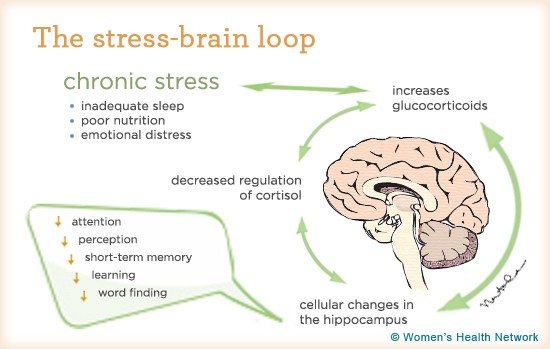
Diagram of the stress- brain loop

Hello everyone! Welcome back to another presentation on IN THE WHITE. Today, I will be discussing some of the psychological impact of the COVID-19 Pandemic and how we can deal with it.

To start things off, I must say that the Coronavirus Pandemic is not anything new to us given that we have been up against it for more than a year now.

As of 10th August 2021, there has been 204,641,443 Coronavirus cases recorded globally alongside 183,727,933 recoveries and 4,324,427 deaths. I know the numbers are scary right? But that is how things stand at the moment.

At this point in time I feel it necessary to mention that within a year we have managed to get a vaccines such as Pfizer- BioNTeh, Modena, Johnson & Johnson’s Janssen available. Regardless of the fact there are different types of vaccines administered worldwide, there is no doubt that each of them have one factor in common and that is to provide immunity to every human being keeping in mind of the variety of strengths and weaknesses each one possess.

Image of the Coronavirus wallpaper

Moving on to the central theme of today’s topic, saying that the global Pandemic has one way or the other affected us all would be an understatement, as we are now all are aware that not even a newborn is risk free from the virus and the mental health impacts it brings to adults, children, the elderly and the society as a whole.

There are numerous factors causing stress which is why people are behaving in a certain way these days.

The number one reason I would attribute the tensions to be the longer period of lockdowns or the constant lifting and imposing of COVID-19 measures can be tiring and frustrating at times.

Unemployment or working on reduced hours and pay can easily add to the rising tension of food security and survival despite the number of people a family might have, having sufficient food supply for everyone is always a challenge, especially when there is only one breadwinner in the family of many.

Tensed home environment and other social instability factors like robberies and domestic violence are some issues we can be faced with and must be handled carefully and with great understanding so the socio-economic effect can be overcome.

Talking about vulnerable groups who must be really cared for are our children. I do understand it may be difficult at times to control them, particularly from outdoor activities but it is important that they also follow the protocols in place such as mask wearing,  to ensure that they do not contract and transmit the virus onto others. 

There is no two ways about the point that children’s education has greatly been affected by the Pandemic, especially for small island developing states like Fiji, who has been battling the second wave of the disease for nearly four months now, with schools still closed and students encouraged to do online learning via worksheets provided by the Education Ministry along with the opportunity to learn from the Bula Kids television series which was launched in May this year, in partnership with UNICEF.

This shapes nicely to the next part of the write-up which tries explaining what we can do in such circumstances.

How to deal with Mental Health Issues

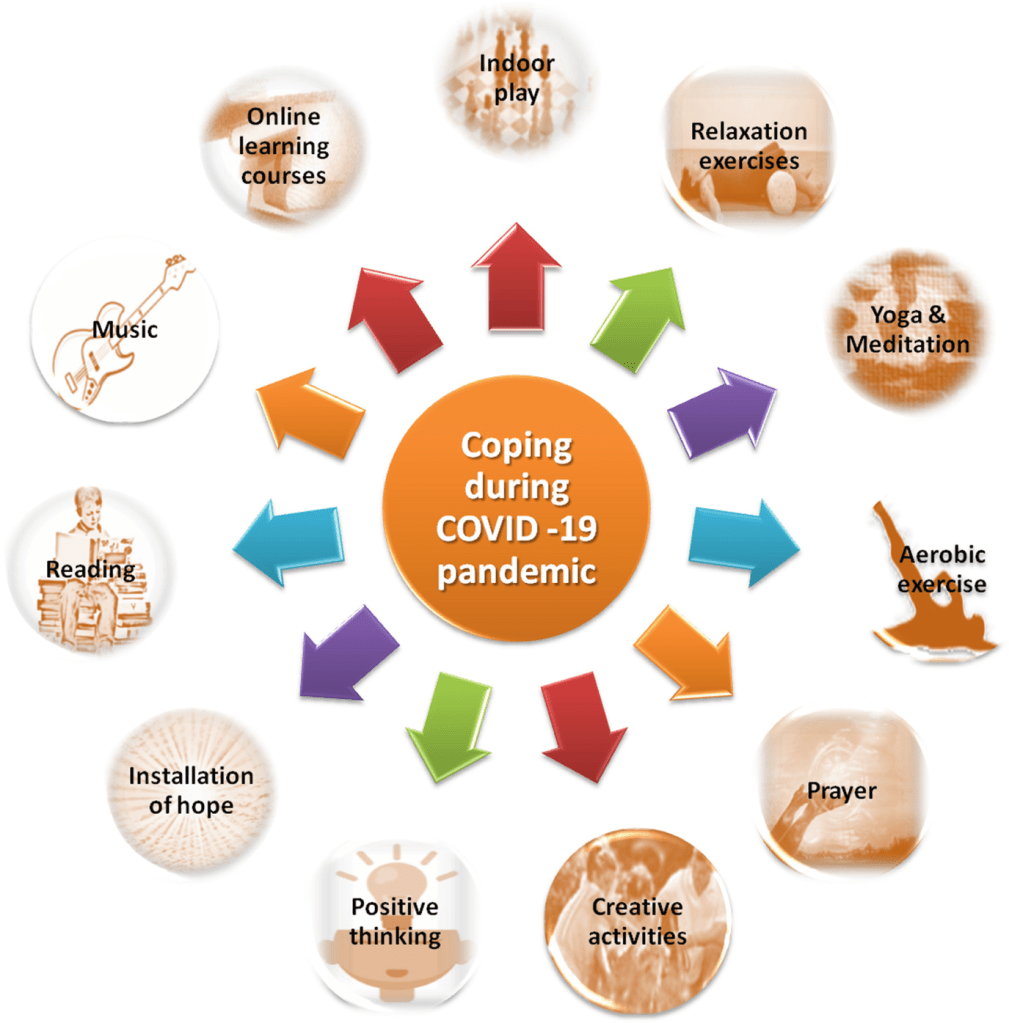
Coping with Mental Health Issues during COVID_19 Pandemic

Given the fact that we often associate mental health with depression and emotions, it is important to stay in contact with friends and families, as this a time where we need each other the most.

I know it is easier said than done but communication at this point in time could not have been much simpler and easier with the use of mobile phones and technological features such audio and video calls. Arguably, video calling may not reduce physical presence of a person but it certainly provides a form of relief whereby you could actually see the person you are chatting with.

Doing regular exercises and eating healthy food can keep one’s body and mind active at all times. This can keep a person happy and stress free.

Listening to music is another way to divert your mind from stress and change the way a person thinks and acts.

Last but not the least, doing something you are good at can make one feel better and who knows you could possibly earn a few dollars which could provide some form of finical support one needs for survival this stage of the Pandemic. Click here for more tips on mental health.  

Short video on Mental Health

With that being said, this short piece of writing comes to an end. Hope you enjoyed reading it and was helpful and informative.

Adopting The New Normal

Life can be cruel as it has the ability to put one in numerous situations. Greetings to one & all. I hope everyone is doing well regardless of where you are in the world and are reading this article. I know times are tough are tough at this stage given the fact that we have been hit hard by the global pandemic known as COVID-19.

The New Normal

Today, I will be discussing a concept that most of us are now aware as well as part of. This is the idea of “The New Normal”. While I do understand that people have fair knowledge of this terminology, I acknowledge those that may not be familiar with word.   

This leads me to a very important question, what is the definition of the term “New Normal” and how do we define it.

Well, from what I understand and somewhat define it in my own words, The New Normal is a change in time and approach towards various sectors of life.

I see this ideology ofThe New Normalas a paradigm shift in many aspects of humanity, especially our social & economic lifestyle.

The longer lockdowns, curfews and gathering restrictions are in place, the tougher it will be for a state’s economy to recover from the effects of the Pandemic.

New Scope

New Opportunities Board

Needless to say that the Coronavirus phenomena has provided scope of something new. For instance, delivery of goods and services online. I know for many Asian and European countries this is an old concept but for developing countries, especially those residing on the islands and atolls, this is certainly something different.

It is wise to acknowledge that those who were once an employee could or are now their own bosses with the start of their personal business which they may had planned for later.

It is likely for businesses to take longer to settle and resume the economy, but once it restarts such industries could help bring some normalcy to people’s lives.

Adopting the New Normal

The Changing Time

Adopting to the new normal is likely to take time and how we rebuild our lives totally depends on every individuals and how they cope with the environment around them.

At this point in time I suggest to give yourself some time and space to think and re-plan your lives for an even better, brighter and secured future.

I know the Pandemic has taught us a lot of things and it is high time that we change our approach towards our lives and turn the negatives into positives accepting the changes the world is going through and identifying the best in ourselves by exploring new ideas & techniques with the help of modern technologies surrounding us.

Learn about the new normal here

Thanks for reading & watching the video.

Learning Life In Lockdown

 Hi there everyone. I hope and pray that that you all are doing whatever it takes to avoid becoming a victim of this global Pandemic which has drastically changed our lifestyle in over a year. I do not wish to talk more on the COVID-19 crisis as I understand people of all ages have been impacted significantly since its commencement towards the end of 2019. I also feel that the effects of the virus can be discussed in future blogs as time progresses.

For the purpose of this document, I intent to share my experience of online learning and how the second wave of COVID-19 in Fiji is impacting me as an individual.  

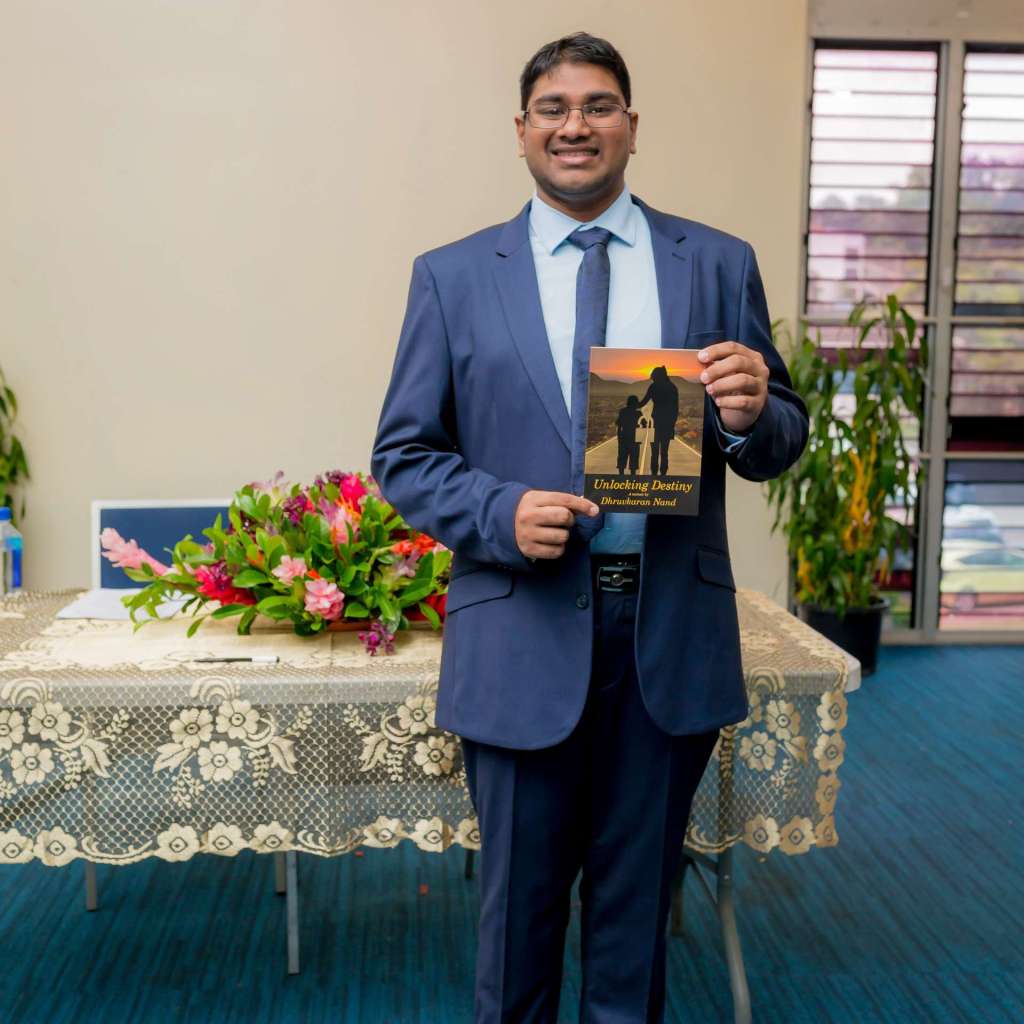
Dhruvkaran Nand

To start things off, I wish to share some light about myself. My name is Dhruvkaran Nand. A 22 year old, person with low vision who resides in the densely populated area of Nasinu, located in Viti Levu, one of the larger islands in Fiji, which is perhaps called the “Hub of the Pacific”.

Having gone through the traditional school system like every other child, I entered into the gates of The University of the South Pacific, commonly known as USP, which is one of the renowned educational institution in the Pacific.

 A journey that started in 2017, as a Foundation Arts student, was the first time when I was introduced to online learning platform called MOODLE. This term was familiar to me because of the fact that my brothers were already part of the university having completed their studies at the institution and had used the mentioned mechanism.  

USP Laucala campus Enterence

Today, I am on the verge of completing my Bachelor of Arts program in Journalism, a field I have passion and love for together with Politics, an area in which I developed interest much later in life.

Now shifting to the central topic, I generally do not have problem with online learning, except the fact that it bards me from moving one place to another, which I usually like doing while on campus, especially being the case of a Face-Face class.

As much as the effectiveness of the mode of study is concerned, I would say it depends on individuals and their preference or their idea on which they believe they can cope better.

For me, it does not really matter which one sits best as I think I have the capacity to manage in either setting.

However, it is important to acknowledge that there are drawbacks in both modes of learning. Such as, studying online may save travelling time and money but do you understand what you are studying is the question every online student should ask themselves?

This is a critical question to answer as it allows one to gage their learning and if they feel the idea is not working then they can probably look at alternatives.

The recent lockdown caused by the second wave of the Pandemic here in Fiji has had some form of impact on me as I have been staying for more than a month now, and the resumption of classes on 100 percent online has somewhat kept me occupied.

At times it is frustrating as I cannot or simply just do not want to take the risk of going out as I fear being infected from the virus which could possibly harm those around me.

So, to keep myself busy after I am done with studies, I usually spend time with family, spend time on YouTube listening to horror stories, watch horror shows, movies or cartoons and treating myself a game of PlayStation 4 on weekends.   

That’s how things stand for now, hopefully lives return to normal soon.

Thanks for reading.

The Moral Values

Hi evwryone. I know it has been a really long time since I had blogged about something. But tody’s topic is something different from my favorite and usual topic of sports & politics.

Today, I have decided to shift my focus to the topic of “Moral Vales”. But before I dig deep into the details of this topic, I want to mention that moral values do not only apply to children.

I see it as a set of values applied universally regardless of an individual’s race, gender, ethnicity or skin clour.

Now, let’s move to the central quesion of what actually moral vales are?

one ofthe definitions I came across was this: ” Moral values are the standards of good and evil, which govern an individual’s behavior and choices” https://www.allaboutphilosophy.org/moral-values-faq.htm.

I may very well agree with the staement above, especially with key terms like “standard of good, evil, govern and individuals”. https://www.allaboutphilosophy.org/moral-values-faq.htm

Now, let’s look at some of the moral values that we as humans are expected to have or behave in society.

Let’s look at some of these values in a bit more detail. I have identified a few from the list above, which I think are the most essenial once.

Firstly, responsibility- this simply means being accountable for your actions. if you know you have done something wrong such as robery or murder then the person commiting he offence is responsible for that particular action. This link will provide a beter definition of this term. so do take a look https://www.youtube.com/watch?v=cvv4CEi1mDc.

Secondly, honesty- this in the most simplified form means truth. If a person is truth in thoght, word & deed they are often considered honest by virtue. Well speaking of the truth, the next link is song on honesty and if you have small kids at home make them watch this for sure https://www.youtube.com/watch?v=uo1n3JzEt7Y

Another essential element to become a good person is to sommitment in whatever axtivity you are participating in. it does not necessarily mean to be commitited to work all the time. It can also mean commiting to relationship, family or even frends. The following link shows what commitment really is https://www.youtube.com/watch?v=vZFZdUKTZoQ

I’ll conclude this writeup by saying, in my view the moral values that I have dosscussed among other moral themes which I have not talked abot all come from one very imporant place and that is or various religous text and scriptures. So stay devoted to god and be happy.

Thank you.And feel free to comment, like or share.

Disclaimer: The views posted on this blog are of my own and it does not intent to cause harm or discriminate against any other belief.