

Hello everyone! Welcome to another presentation onIN THE WHITE. I hope you all are doing fine and in good health too.
Today’s presentation is a special one for me, as it is an essay I wrote for one of my politics course at The University of the South Pacific.
The write-up discusses Fiji media reporting during elections and political events leading up to the polls.
Since the article is based on a particular country, please note the author does not intend to support any political party or government through this writing, and wishes to inform its readers that the information provided in this write-up has been trough desk research.
Introduction
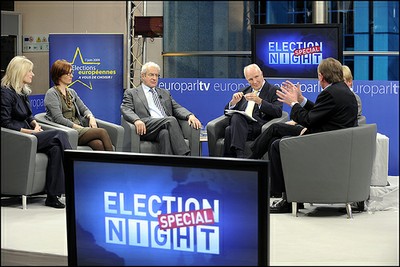
The media is a vital institution of any government as it is tasked to disseminate information and keep the public informed at all times. In a developing country like Fiji, the pressure can get doubled given its history of political instability due to coups between 1987 and 2006. Although criticisms and skepticism from the public and stakeholders are part of the journalism life, in an ideal democracy media’s way of reporting election related matters should be free and fair but in Fiji it has sometimes been seen biased and unjust. This paper wishes to examine if Fiji’s traditional media such as newspapers, television and radio has covered elections freely and fairly post-independence.
With Fiji’s media outlets enjoying a “self-regulated media “framework for a long time under an ineffective “Fiji Media Council” established after 1970 (Robie, 2008). The self-regulation came under real threat following Bainimarama’s takeover in 2006 (Singh, 2015). The document provides an analysis on the self-regulated media function in a country battling political upheavals amid ethnic tensions. It discusses media’s role and environment under self-regulation rule and the 2010 Media Industry Development Decree together with the laws impact on the Political situation of Fiji and it’s after independence elections.
It is necessary to note after the 2006 military takeover Fiji did have elections until 2014, which saw the rise of media censorship and a lot of executive power vested in the Prime Minister and the Attorney General who control major appointments. Apart from the 2010 media decree, other laws like “Public Emergency Regulations 2009 (PER) (Singh, 2015) and “Television Cross-Carriage Designated Events Decree 2014” (Morris, 2015) were used to control the media.
As mentioned, 2014 marked a significant year with Fiji’s return to democracy after eight years. The write-up argues that the media was somewhat “neutral as well as bias towards certain political parties (Anon., 2014) in the 2014 general election, as highlighted in the 2014 report of the Multinational Observer Group.
The essay concludes by looking at social media’s role in Fiji’s 2018 general election. With key focus on FijiFirst’s Facebook page and reactions such as “most loved, laughed and angered” (Tarai, 2019) social media posts. In its final remarks, the document looks at some of the recommendations proposed in the 2014 general elections report of Multinational Observer Group.
Literature Review

The first article reviewed for this project is “The evolution of media laws in Fiji and impacts on journalism and society”. Written by Shailendra Singh, the article elaborates on the Media Industry Development Decree 2010 (Singh, 2015). It argues that the current media law has put journalism under threat, and since the Bainimarama government took power following the 2006 coup, media censorship was a challenge faced by many news organization. It emphasizes that regulating the media was in the minds of many politicians but no action had been taken until the introduction of the 2010 Media Decree. However, it acknowledges various sections of past legislations such as the “1997 Constitution, the Crimes Act 2009 and the Public Emergency Regulation” (Singh, 2015). Singh also indicated signs of media biasness, particularly by “The Fiji Times” as it refused to publish advertisement of political party during the 1999 general election campaign (Singh, 2015).
The second article up for review is labeled “Fiji media regulation: Emerging from ‘worst of times’ to the ‘best of times’” by Ricardo Morris. It provides a strong understanding of the current media environment by arguing that the present media decree is “repressive and intimidating” (Morris, 2015). It cites the effects of “brain drain as a result of 1987 coup” which saw mass migration of skilled population including journalists. It claims those experienced reporters that remained were either moved to non-controversial roles or forced to keep their mouths shut (Morris, 2015).
Morris states that the 2010 media law is not the only legislation lawfully binding media outlets in Fiji. But other laws such as “Television (Cross carriage of Designated Events) Decree 2014” also has a role. He says the Fijian media is not only restricted to covering of local events but international as well. While discussing the visit of Chinese President, Xi Jinping to Fiji in November 2014, and Morris claims only Chinese journalists accompanying the President were allowed to listen to his speech, with the local media excluded and told to get official transcripts from “Xinhua News Agency.” In this way foreign officials impose themselves on local media. And the Fijian press could not force themselves into the event because of the fear of fines that could cripple any news agency because of the media decree. (Morris, 2015).
“‘Unfree and unfair’? Media intimidation in Fiji’s 2014 elections” by David Robie is the third document reviewed for this assignment. It lays out for challenges to “freedom of information “that impacts media freedom in Fiji. Robie claims “excessive power is held by the office of the Prime Minister and the attorney-General (Robie, 2016), as they legalize appointments of the judiciary and independent commissions, therefore, Fiji’s 2013 constitution fails to offer structural protection for the courts independence. Political appointment of the Chief Justice fears journalists of abuse of power and that the court system could be used against them as a shield.
Robie further discusses “limitations on many rights “under the Bill of Rights of the 2013 Constitution (Robie, 2016) will not need to be justified by future governments as vital in a free and democratic state. “Self-censorship of the media has perhaps been a key factor in Fiji’s media industry before the 2014 election and has been the influencing factor ever since its presence.
The author also disputes about the blackout period in Fiji just 48 hours before Election Day (Robie, 2016) where the press was restricted from providing media coverage on either traditional or new media platforms.
Another article of David Robie titled “Freedom of the gatekeepers: A free media study of NZ and Fiji – self-regulation or state intervention?” he provides an outline of how Fiji’s media functioned following the country’s independence in 1970. Robie states about the concept of free media and mentions the “Self-regulation” (Robie, 2008) of the press. It highlights the review of the structure, roles of the “Fiji Media Council” as well as reforms of some of the media laws such as “Official Secrets Act, the Newspapers Registrations Act and Defamation Act” (Robie, 2008). Robie’s document also cites a media statement, claiming that the Bainimarama administration used the survey report to justify the plan to merge all media laws under the “Public Order Act” (Robie, 2008), when he took power after the 2006 military coup.
The 2014 Fijian Elections Final Report by the Multinational Observer Group is another important document for the purpose of this research as it highlights the “media environment, the Media Industry Development Decree and the effectiveness of the press” (2014 Fijian Elections Final Report of the Multinational Observer Group, 2014) during the 2014 election. It suggests recommendations for the government to consider under each of the subheadings mentioned. The report notes “restrictive and unclear media framework” (2014 Fijian Elections Final Report of the Multinational Observer Group, 2014) provided media limited ability to investigate allegations made by candidates and political parties (2014 Fijian Elections Final Report of the Multinational Observer Group, 2014). Jope Tarai’s document “Social media and Fiji’s 2018 national elections” provides commentary on the use of social media during the 2014 and 2018 Fijian general election, with particular focus on the 2018 one. It defies the role of social media in the two general elections by arguing that “FijiFirst, the current governing party had great advantage in the country’s social media scenery” (Tarai, 2019). The write-up notes an increase in the use of social medial platform like “Facebook” (Tarai, 2019), from the 2014 election, by political parties and candidates to gain maximum votes. Tarai shows interesting data such as “Reactions to Party before polling day, analytical data from official political party pages and Facebook audience insights” (Tarai, 2019).
Shailendra Singh in the article labelled “Life under Decree No. 29 of 2010: The Fiji Media Development Decree” looks at the impact of the media Decree in Fiji questioning its ability to introduce similar laws in other Pacific island countries, in trying to control the media. He claims the legislation brings an end to the formerly used self-regulated media (Singh S. , 2010). Singh disputes that fines and jail terms proposed by the current government is harsh. The author carefully discusses the “Emergency Regulations and the Media Industry Development Decree” and raises questions the applicability of orthodox journalistic approaches, which places priority on conflicts as a news value (Singh, 2010).
Overview of research question, Aim & Objective of the research and Research method

Research Questions
Some of the important questions that this document seeks to address includes; how did the political parties perceive the media in Fiji after independence and its role in post-independence elections? What was the media environment like before the 2010 Media Decree was introduced? Where there existing laws to govern the media and its impact on the media industry? Was the 2014 General Election freely and fairly reported by the Fijian media and what are the areas of improvement outlined by the Multinational Observer Group? What role has social media played in Fiji’s 2014 and 2018 general elections?
Aim/ Objectives
The purpose of this research is to find out how the Fijian media covered elections and whether the media outlets did free and fair reporting or not. The writing will focus on the reaction of political parties to reports of media favoritism, discuss laws that were implemented in the post-colonial era and the impact it had on media organizations and how it formed the political situation in the country.
Research Method
This will be a desk research since a field study cannot be carried out due to restrictions in place caused by the Coronavirus Pandemic. The study will use data collected from credible sources such as journals, books, websites and other online published materials relevant to the research topic.
Research Findings & Analysis

To begin with the discussion of the findings, it is important to understand that prior to the introduction of the “Media Industry Development Decree 2010”, Fiji used a more free style “self-censorship” (Robie, 2008) media where there were no strict legislations governing the press. Now, saying this does not that there was no media control at all. The “Fiji Press Council” (Robie, 2008) was created to deal with media complaints which failed in its objectives. Later, the institution was rebranded as “Fiji News Council” (Robie, 2008), where the Fijian government carried out a revision of the “Official Secrets Act, the Newspapers Registration Act and Defamation Act” (Robie, 2008) in an effort to strengthen the “council’s independence, public credibility and effectiveness” in handling complaints against the media (Robie, 2008).
In 1998, a “Self-regulatory Media Council” (Robie, 2008) was set-up together with a “Complaints Committee”, but both elected and non-elected governments continued to blame the council for its inconsistent behavior and inability to enforce ethical guiding principles and professional standards (Robie, 2008). A common problem encountered by the Fijian media council was that, its entities were publishing unbalanced news items and were unwilling to correct mistakes (Robie, 2008). It would not be wrong to say that this attitude of the press has cost them dearly in the form of the 2010 Media Decree.
David Robie in his article “Freedom of the gatekeepers: A free media study of NZ and Fiji – self-regulation or state intervention?” attributes the “lack of ethical guideline and deficiency in professionalism” to the brain drain caused by the 1987 coup (Robie, 2008), which saw many experienced and trained journalists leave our shores, and the ones left behind do not have the expertise to meet the required criteria.
When a review on the “media freedom in Fiji” (Robie, 2008) was conducted under the Rabuka government, it was found that there was a large loophole in information pertaining to media independence, and press freedom in Fiji, especially data relating to “Media ownership, media workers, censorship and advanced technologies” (Robie, 2008). Evidence of the failure of the “Fiji Media Council” also reflects in its inability to provide a through information on media complaints and legal judgments despite having an official webpage (Robie, 2008). This lack-city by the council could be seen as a major cause of hostile media laws being imposed on the media industry. With the lack of data, a proper legislation benefiting the press cannot be drafted.
Although it had taken long, but a media law was finally introduced in 2010, which put an end to the self-regulatory system of the media (Singh, 2015). Commonly known as the “Media Industry Development Decree 2010” (Singh, 2015) is now the rulebook governing all media organizations in Fiji. Where others failed, the Bainimarama government brought in the decree to improve media professionalism standards and create “social stability” (Singh, 2015), which had been under threat as a result of ethnic tensions both before and after independence.
Many politicians had been pushing for a regulated media after it had been accused of biasness to political parties. The oldest newspaper of Fiji, “The Fiji Times” had been frequently a frequent victim of the Fiji Labor Party. In an article published by the Pacific Islands News Association titled “The Fiji Times rejects allegations of news media bias in elections”, where Mahendra Chaudhry, leader of the Fiji Labor Party blamed the newspaper for giving “more coverage to other political parties and deny his party the chance to win the 1999 general election” (Anon., 1999). Chaudhry also pointed finger at a Hindi radio station, Radio Navtarang for refusing to air a Fiji Labor Party campaign advertisement, while the General Secretary of a coalition party blamed “The Fiji Times” of attempting to keep the 1987 coup leader Sitiveni Rabuka in power (Anon., 1999).
The Labor Party leader did not seem to stop his attacks on the media, particularly The Fiji Times, when it was once again accused of using the newspaper as a mode to further their own interests (Singh, 2015). He further accused the news agency of “rebellious action, infuriating racism and sedition” (Singh, 2015).
The 2000 coup shielded media freedom in Fiji, as the Chaudhry govern collapsed, causing future governments to increase media censorship. After being elected in 2001, the Laisenia Qarase government tabled the “Media Council of Fiji Bill”, bur had to postpone the idea due to continuous pressure through a “No media bill campaign” led by members of the press industry (Singh, 2015). However, Qarase was determined to enforce a media law after being reelected in 2006. But again failed, when Bainimarama’s military took over government by force.
A point to note is that, not all media organizations were badly treated the Fiji Sun” has been well-known to be supportive of the government, especially of the Bainimarama regime. It is often believed and witnessed that the newspaper has been “loudly supportive of government’s policies and visions” (Morris, 2015). Claims have also been made of the Fiji Sun being greatly rewarded for its efforts in marketing the government’s agenda in the form of government advertisements alongside government entities being advertised exclusively in the Fiji Sun (Morris, 2015). Morris in his article, “Fiji media regulation Emerging from ‘worst of times’ to the ‘best of times’” believes that this was done to “punish The Fiji Times for its anti-government behavior in the post 2006 coup era” (Morris, 2015).
The “Public Emergency Regulation (PER) came into effect on 10th April 2009, which gave the government the authority to censor news and cancel licenses of guilty media agencies (Singh, 2015). The PER was constantly in force till 2012 and was replaced with the 2010 Media Industry Development Decree. The right to censor news and cancel media licenses was reflected in the media decree. The impact of the provision was strongly felt by Fiji Television Limited, who at one point were granted license of only six months, whereas Fiji Broadcasting Cooperation whose Chief Executive Officer is the brother of the Attorney-General has an operating license of twelve years (Morris, 2015).
Not only that, but Fiji Television was force to share live feed of the Gold Coast Sevens tournament with FBC Television and Mai TV, which Fiji TV had exclusive rights to. The television company was forced to comply with the “2014 Cross-Carriage of Designated Events Decree” (Morris, 2015), which binds television companies to share broadcasts of events concerning national interest. Interestingly, FBC is excused from complying with this law (Morris, 2015).
The Media Industry Development Decree was legitimized under the 2013 Fijian constitution gave powers to the Prime Minister and the Attorney-General (Robie, 2016), to appoint all judiciary and commissions, which worry the media fertility, especially journalists who fear that the court may not be fair in its rulings given the political appointments (Robie, 2016). A case of 2009 can be attributed to this situation whereby the “High Court” fined “The Fiji Times” for publishing an admission of contempt of court in in relation to publication of a letter to the editor from a person living in Australia. It is alleged that the Attorney-General was not happy with the newspaper’s apology and urged the judiciary to put heavy penalties for the offenders (Anon., 20009).
The final report of the Multinational Observer Group on the 2014 general election noted “neutrality and partiality among local media” (Anon., 2014) during the campaign period. The report highlights while some broadcasting media outlets like Fiji Television Limited and Communications Fiji Limited allocated airtime through special election programs, others alluded to biasness by leaning towards FijiFirst and other larger parties, with smaller parties struggling to get their views across the country to some extent. However, the observer report does mention of access to the media for political parties was there, for the people to make their choice (Anon., 2014).
Another critic of the 2014 general election was the “48 hour blackout period” (Robie, 2016), which prohibited the media from covering election related materials or broadcasting any political campaign advertisements and only allowed information provided by the “Fijian Elections Office”, vetted by the Media Industry Development Authority to be published. This was highly condemned by the International Federation of Journalists, believe the blackout rule violates press freedom at a time when the public needs the media the most (Robie, 2016). This rule also applied to international journalists who were accredited with the Media Industry Development Authority to cover the general election.
The FijiFirst social media audience was the largest in both the 2014 and the 2018 general elections, which has been assisted through its “political position within the country’s affiliated resources” (Tarai, 2019). As FijiFirst (FFP) was the governing party, it is fair to note that it attracted (110,694 individuals, which was the biggest fan base compared to its major political rivals the National Federation Party (34,407) and Social Democratic Liberal Party (SODELPA) (25,665) (Tarai, 2019). The FFP page also had the highest number of reactions (76,961) shares (4652) and comments accounted for (20,465).
Another attractive fact about the 2018 online campaign is the reactions to political party posts. The content that generated the most anguish reaction was a 2 hour 43 minute video during a campaign rally in Savusavu, which was ranked 8th in the most loved category generated an estimated 2,498 comments in heated exchange between FijiFirst and SODELPA fans (Tarai, 2019). This content also received the most LOL (Laugh Out Loud) reaction along with five other posts falling in the same category with all of them posted on the FijiFirst Facebook page (Tarai, 2019).
The highest loved content in the top ten “most loved” grouping was a 2 minute 37 second video posted by Lynda Tabuya of SODELPA four days before election which earned more than 65,000 view, “was shared more than 750 times, got over 7,000 reactions virtually and got more than 450 comments (Tarai, 2019).
Conclusion & Recommendations

Conclusion
To conclude, it can be understood that Fiji’s media was under self-regulation for much of post-independence period. It was governed by the Fiji Media Council which was accused of not having enough capabilities to handle media complaints. The Fiji Times had been constantly blamed by political parties, especially by the leader of the Fiji Labor Party who accused the newspaper and Hindi radio station Radio Navtarang for refusing to publish or broadcast their party advertisements. The Fiji Sun is considered to be the government’s mouthpiece, certainly after the Bainimarama military takeover in 2006 which saw the rise in media censorship and massive control of the press. Laws such as Public Emergency Regulations 2009, Media Industry Development Decree 2010 and Television Cross Carriage of Designated Events Decree 2014 were used to keep the media in check.
The report on the 2014 general election by the Multinational Observer Group highlights neutrality and partiality by Fijian media in the buildup to the 2014 polling day, while institutions such as International Federation of Journalists greatly criticized the 48 hour blackout period, citing violation of press freedom. Social media, Facebook in particular played a crucial role in 2018 Fijian general election where candidates and political parties adopted an online campaign strategy, where the ruling FijiFirst Party had the largest fan base of over 110,000. The party’s 2 hour 43 minute campaign video generated great interest and was in the top ten most angered and laughed video respectively. Alongside, SDELPA’s Lynda Tabuya’s 2 minutes 37 seconds video clip was the most loved in the top ten most loved category.
Recommendations
It is recommended that:
Stronger laws and an independent institution be setup to deal with media biasness and create an equal level playing field for candidates during elections (Anon., 2014).
If the Media Industry Development Authority is to be maintained in future, an independent organization should be established to maintain the media’s independence and hold the press accountable for its actions. If found guilty of any breach, it must be punished according to law set by the court and in accordance with the country’s constitution (Anon., 2014).
Powers vested in the Prime Minister and the Attorney General must be reviewed and given to an independent media regulated body to avoid abuse of power.
All major appointments relating to media’s main governing body such as media councils or associations must be carried out independently, to indicate freedom of the press and impartiality of government.
So with that, this presentation comes to an end. I hope you found it interesting and informative.
Below are the list of sources which were used to copile this research. The author once again wishes to emphsize to its readers that it does not support any political party or cause any form of instability in the country mentioned in this article.
Bibliography
Anon., 1999. “The Fiji Times” rejects allegations of news media bias in elections, s.l.: Pacific Islands News Association.
Anon., 20009. “Fiji Times” fined over article, newspaper publisher and editor receive suspended prison sentences, s.l.: Pacific Islands News Association..
Anon., 2014. 2014 Fijian Elections Final Report of the Multinational Observer Group, s.l.: Parliament of the Republic of Fiji.
Morris, R., 2015. Fiji media regulation Emerging from ‘worst of times’ to the ‘best of times’. Pacific Journalism Review, May.
Robie, D., 2008. Freedom of the gatekeepers: A free media study of NZ and Fiji – self-regulation or state intervention?, s.l.: AUT University.
Robie, D., 2016. ‘Unfree and unfair’?:Media intimidation in Fiji’s 2014 Election. Canberra : Australian National University Press.
Singh, S., 2010. Life Under NO.29 of 2010:The Fiji Media Development Decree. Pacific Journalism Review, December.
Singh, S., 2015. The evolution of media laws in Fiji and impacts on journalism and society. Pacific Journalism Review, March .
Tarai, J., 2019. Social media and Fiji’s 2018 national election. Pacific Journalism Review, July .Volume 25.
 IN THE WHITE