
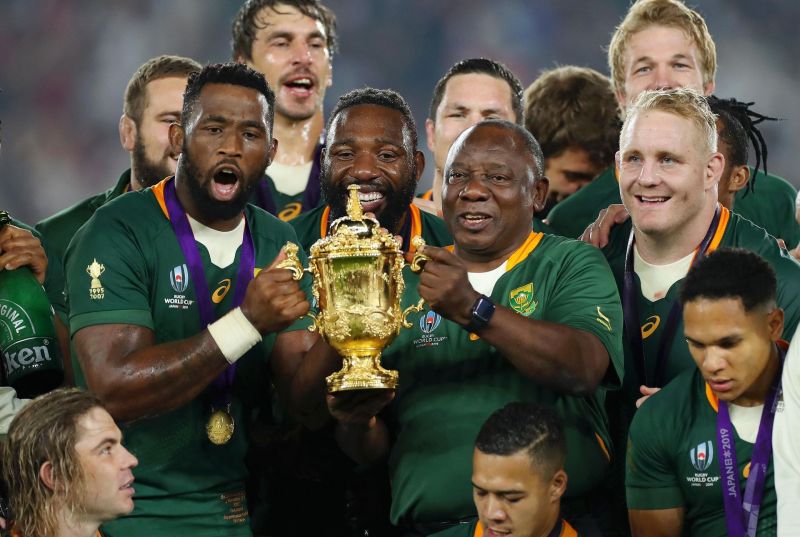
It is South Africa commonly known as the springboks who have claimed the 2019 Rugby World Cup after a comprehensive 32-12 victory over England.
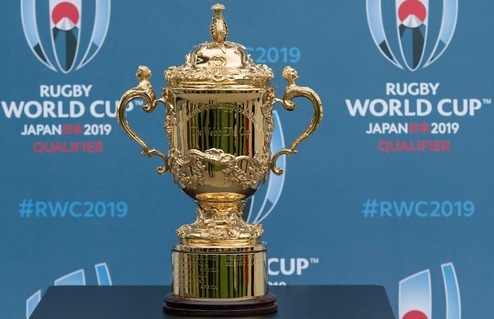
20 teams came to Japan to battle for the most prestigious trophy in world rugby history, known as the “WEBB ELIS CUP“.
The reason why this cup is so special is that, it is a world cup trophy which is contested for once every 4 years.
South Africa’s last rugby world cup win was way back in 2007 when the side defeated England 15-6 in the final, in Paris.
The side failed to retain the title after a 11-9 loss to Australia in the quatter- finals of the 2011 world cup in Newzeland https://www.theguardian.com/ followed by an 18-20 defeat to the All Blacks in the 2015 world cup semi-final in England https://www.bbc.com/.
However, this time the story was entirely different as the boks were the first team to arrive in Japan, not only to participate in the tournament but also play the host in their final warm-up game which South Africa comfortably won 41-7 https://www.sport24.co.za/.
On 21st September 2019, the Springboks opened their world cup campaign agaist the defending champions of that time the mighty ALL BLACKS.
The boks started the game very well but two sudden quick tries in the 1st half shifted the momentum and some basic errors throughout the game saw them end the match in a 23-13 defeat.
A week later, the side took on Namibia in a must win fixture to stay in the fight of a quater-final spot.
Having a perfect 100 % win record against Namibia, the springboks were booming with confidence which did no harm to their style of play as they finished 57-3, collecting their first bonus point win of the tournament.
For their third group encounter, the springboks travelled to Shizuoka to play Italy.
The Italians found themselves battling not only on the scoreboard but through massive injries to some of their key players.
The major blow was during their scrum as the scrum-half’s including the substitutes were sidelinded due to injuries, forcing refree Wayne Barnes to restrict players from engaging at scrum time throughput the match, as there were no scrum experts available for the Italians on the bench.
Things even got worse for the European nation as one of their player’s was sent off late in the first half.
South Africa played more attacking rugby and were and were of good value for their 49-3 victory.
The Boks then faced Canada in their final pool game in Kobe City, where they thumped the Canaidians 66-7 and booked a spot in the last 8 of the world cup.
In the cup quatter- final South Africa were up against the host’s Japan.
In a game which was evenly matched on paper, Japan had an advantage of home crowd support plus they had qualified as pool A winners , meaning they had not lost a single game in the competition.
The confidence of the Japanese players was clearly reflected in their gain the first half where they just trailed the Springbosks 5-3 athe break.
In the second half, South Africa pulled their gear upwards and scored 21 unanswered points, which saw them through to the world cup semi-finals.
The Semi- Final was against Wales who were also in good form having won all 4 group matches and a 20-19 Quatter- final win over France saw them facing two time world champions South Africa.
The Semi- final against the Welsh was a mouthwatering one as both teams went neck-neck and were 16 all at one stage of the game, which was then decided by Handre Pollard’s late penalty goal, with the final score 19-16 to South Africa.
On the other hand, the 2003 world cp winners England created a major upset by defeating the 1987, 2011 and 2015 champions the All Blacks by 19-7.
This saw the three time world cup holders playing in the Bronze medal play-off against Wales, while England went onto face the Springboks in the Grand Final.
After a narrow Semi-Final win against Wales, South Africa made a good start in final after missing his first kick of the night Handre Pollard found his way with the boot and got South Africa on the scoresheet.
Skipper Owen Farrell got England lavel with a penalty goal.
The penalty goal game continued for sometime in the first half as the Springboks took a 9-3 lead at half-time.
The same penalt goal tactic continued in the second half for a little longer as South Africa took a 12-3 lead which was moments later cut short t0 six points with another Owem Farrell penalt goal.
But it was the men in green who took the initative and scored two tries and a few more extra three points to take the scoreboard to 32– while Farrel could only add another three before the final whistle.
Final score England 12- Soth Africa 32
 IN THE WHITE